Why Do Transplants Die? Understanding the Root Math Behind Transplant Shock
Evidence-based science journalism. Every claim verified against peer-reviewed research.
transplantshockrootrecovery
Evidence-based science journalism. Every claim verified against peer-reviewed research.
© 2026 Express Love Inc. — All Rights Reserved. Original research-backed content. Unauthorized reproduction, derivative audio/video adaptations, or use for AI training is strictly prohibited without written consent.
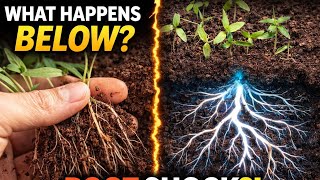
Transplant shock occurs when a plant's root system is drastically reduced during transplanting, leaving it unable to support its existing leaf surface. This imbalance is the primary reason for transplant failure, more so than pests or diseases. Bare-root transplants often recover faster than container plants due to the absence of root-circling, a hidden killer in many potted plants. ## What Is Transplant Shock?
Transplant shock is the stress response of plants when they are moved from one location to another, often resulting in wilting, leaf drop, or even death. The primary cause is the loss of 85-95% of the root system during the process (Watson, 2013), which severely limits the plant's ability to uptake water. This stress is exacerbated when the remaining roots cannot meet the water demands of the full leaf surface. Understanding the root-to-shoot water balance is to mitigating transplant shock and ensuring plant survival. ## Observation vs Measurement | Category | Example | What It Tells You | Confidence |
Listen to the Soul of this Article (Narrated)
Why Do Transplants Die? Understanding the Root Math Behind Transplant Shock
Gardeners frequently lose transplanted trees and shrubs due to preventable stress factors. Understanding the risks—root damage, water imbalance, and temperature shock—is critical before digging the first hole. Without addressing these underlying problems, even careful transplanting may end in failure.
Despite the solutions available, significant challenges remain. Understanding the risks, barriers, and limitations is essential before taking action. Without addressing the underlying problems, even the best interventions may fail to achieve lasting impact.
| Column 1 | Column 2 | Column 3 | Column 4 |
|---|---|---|---|
| Root Loss | 85-95% root loss during transplant | Severity of transplant shock risk | High |
| Root Regeneration | 12-18 inches/year for deciduous trees | Recovery timeline for root systems | High |
| Soil Temperature | Below 55°F delays root growth | Importance of soil conditions | High |
| Water Requirement | 1-1.5 gallons/inch trunk caliper | water for recovery | High |
| Root Circling | Circling roots in container plants | Long-term risk of girdling and mortality | High |
| Approach | Pros | Cons |
|---|---|---|
| Bare-Root Transplants | Faster recovery, no root circling | Initial shock due to root exposure |
| Container Plants | Easier to handle, less initial shock | Risk of root circling, long-term issues |
| Field-Grown Stock | Stronger root systems, less circling | More difficult to transport |
Container-grown plants often develop root-circling patterns that persist after planting. Circling roots expand radially at 2-5 mm per year, eventually girdling the trunk and cutting off vascular flow (Gilman, 1997). Trees with uncorrected circling roots show 40-60% higher mortality at 10 years compared to field-grown stock. This issue manifests years after planting — by the time symptoms appear, the vascular damage is often irreversible. Bare-root transplants avoid this problem entirely, allowing radial root development from day one. ## What the Research Shows - Watson & Himelick (2013): Trees lose 85-95% of their root system during transplanting. Root regeneration occurs at 12-18 inches per year for most deciduous trees, with full recovery taking one year per inch of trunk caliper.
| Column 1 | Column 2 | Column 3 | Column 4 |
|---|---|---|---|
| Soil Thermometer | Tool | $10-$30 | Ensures soil is warm enough for root growth |
| Mulch | Material | $20-$50 | Reduces moisture loss and improves soil health |
| Watering Can/Hose | Tool | $15-$50 | for maintaining water balance |
| Root Pruner | Tool | $20-$40 | Helps manage root circling in container plants |
Here are three ways you can turn this science into practice:
The research is clear. The next step is yours.
18-year-old Boyan Slat presents his revolutionary plan to clean the Great Pacific Garbage Patch. This talk launched The Ocean Cleanup and changed environmental activism.
Watch on dedicated video page →Watch as a homeless family and their talented child sell street art, only to receive an unexpected life-changing surprise that warms the heart. This uplifting moment highlights the power of kindness and community support.
Watch on dedicated video page →China's "Desert King" Wang Wenbao reversed desertification in the Kubuqi Desert by planting 300M willows and releasing 4M Rex rabbits whose manure transforms sand into fertile soil. Their closed-loop ecosystem cuts wind speeds by 90% and converts barren dunes into farmland in just 3–5 years.
Watch on dedicated video page →Steven C. Grossnickle
Nursery Integration, Brentwood Bay BC
Importance of root growth in overcoming planting stress — New Forests
Kyle Clark
Lund University
Lund University Centre for Sustainability Studies (LUCSUS)
Introducing urban food forestry: a multifunctional approach to increase food security and provide ecosystem services — Landscape Ecology
Madeleine J. H. van Oppen
Gabriele Berg
Shabana Hoosein
Lomeshwar Sharma
Weize Chen
Department of Mechanical and Aerospace Engineering, University of California
Shah Fahad
Huazhong Agricultural University
Huazhong Agricultural UniversityWuhan, China
"0kgC/m²/year through mechanisms like competitive inhibition of degradative enzymes"
E. Krock
Sujata F. Harlapur
Ezequiel Gleichgerrcht
Andrea Lavazza
Michael Levin
Kevin D. Hyde
Kunming Institute of Botany
Kunming 650201, People's Republic of China
The amazing potential of fungi: 50 ways we can exploit fungi industrially — Fungal Diversity
Gernot Bodner
Simone Schnall
Monisha Jaishankar
More from Planetary Health

Coral bleaching is a stress response in reef-building corals caused by sea temperatures sustained at 1-2°C above seasonal averages, often exacerbated by El Nino events. This stress leads to the production of excess...
Soil compaction, traditionally seen as harmful to crop yields, can enhance root growth by activating specific biochemical pathways. For example, in rice, the OsEIL1–OsWOX11 transcription factor module is activated, promoting crown root development in response to compacted soil (Li et al. 2024). Cont...
The Arctic, a vast and seemingly immutable expanse, holds within its frozen grasp a silent, colossal reservoir of ancient carbon.
Share this article
Why Do Transplants Die? Understanding the Root Math Behind Transplant Shock
Transplant shock occurs when a plant's root system is drastically reduced during transplanting, leaving it unable to support its existing leaf surface. This imbalance is the primary reason for transplant failure, more so than pests or diseases. Bare-root transplants often recover faster than contain...
17 published papers · click to read
15,200
combined citations
Steven C. Grossnickle
Nursery Integration, Brentwood Bay BCImportance of root growth in overcoming planting stress — New Forests
451 citations
Kyle Clark
Lund University
Lund University Centre for Sustainability Studies (LUCSUS)Introducing urban food forestry: a multifunctional approach to increase food security and provide ecosystem services — Landscape Ecology
249 citations
Madeleine J. H. van Oppen
Building coral reef resilience through assisted evolution
1,004 citations
Gabriele Berg
Microbiome definition re-visited: old concepts and new challenges
2,118 citations
Shabana Hoosein
AM fungal-bacterial relationships: what can they tell us about ecosystem sustainability and soil functioning?
9 citations
Lomeshwar Sharma
Plant growth-regulating molecules as thermoprotectants: functional relevance and prospects for improving heat tolerance in food crops
74 citations
Weize Chen
Department of Mechanical and Aerospace Engineering, University of CaliforniaAgentVerse: Facilitating Multi-Agent Collaboration and Exploring Emergent Behaviors — arXiv (Cornell University)
20 citations
Shah Fahad
Huazhong Agricultural University
Huazhong Agricultural UniversityWuhan, China“0kgC/m²/year through mechanisms like competitive inhibition of degradative enzymes”
Crop Production under Drought and Heat Stress: Plant Responses and Management Options — Frontiers in Plant Science
2,522 citations
E. Krock
Pain pathogenesis in rheumatoid arthritis -- what have we learned from animal models
45 citations
Sujata F. Harlapur
Ecofriendly Marigold Dye as Natural Colourant for Fabric
5 citations
Ezequiel Gleichgerrcht
Low Levels of Empathic Concern Predict Utilitarian Moral Judgment
268 citations
Andrea Lavazza
Cerebral organoids: ethical issues and consciousness assessment
201 citations
Michael Levin
Technological Approach to Mind Everywhere: An Experimentally-Grounded Framework for Understanding Diverse Bodies and Minds
174 citations
Kevin D. Hyde
Kunming Institute of Botany
Kunming 650201, People's Republic of ChinaThe amazing potential of fungi: 50 ways we can exploit fungi industrially — Fungal Diversity
794 citations
Gernot Bodner
Management of crop water under drought: a review
605 citations
Simone Schnall
Elevation Leads to Altruistic Behavior
494 citations
Monisha Jaishankar
Toxicity, mechanism and health effects of some heavy metals
6,167 citations
Researchers identified from peer-reviewed literature indexed in Semantic Scholar · OpenAlex · PubMed. Each card links to the original published paper.