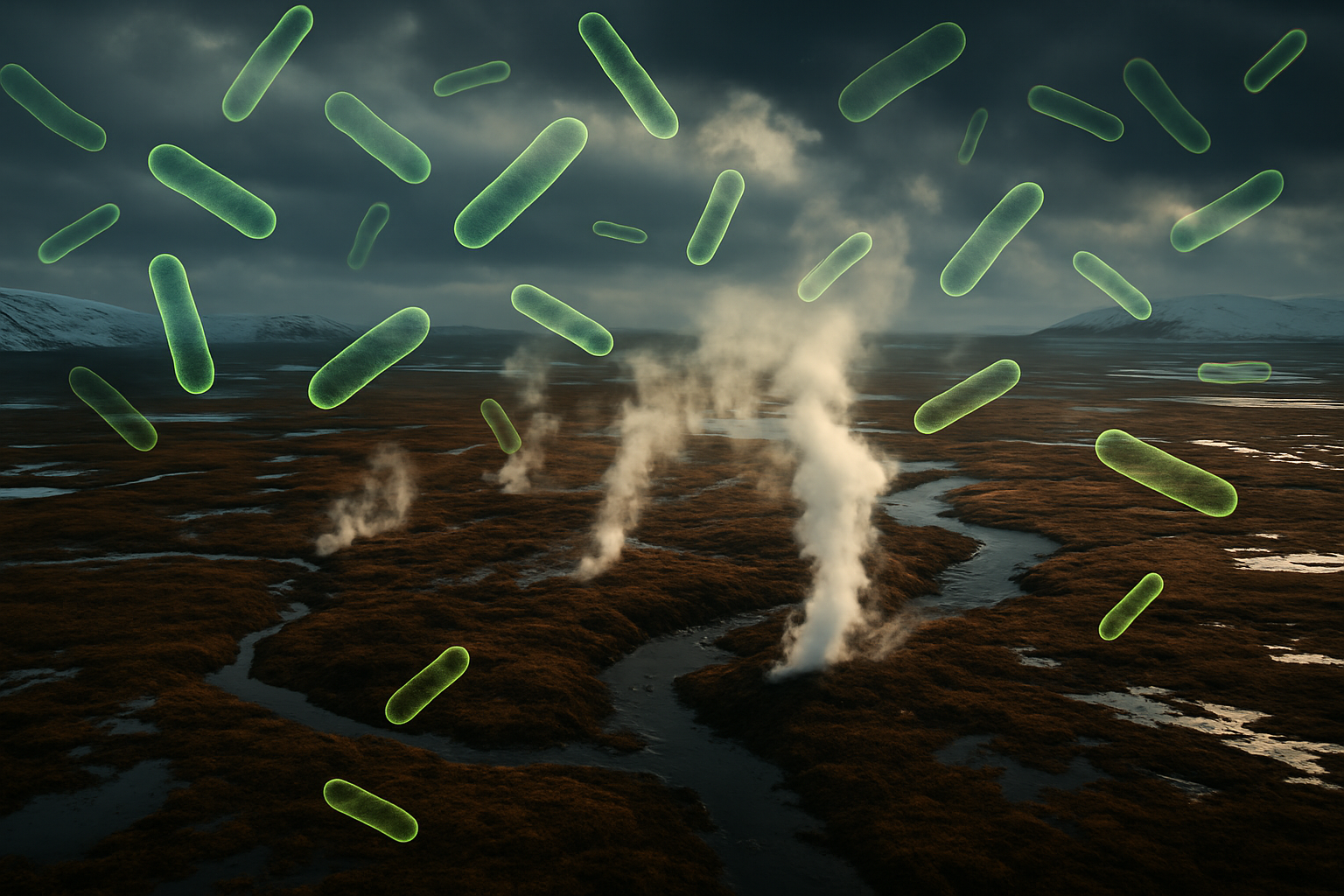
The Thawing Giant: Permafrost Degradation and Microbial Carbon Release
Evidence-based science journalism. Every claim verified against peer-reviewed research.
thawinggiantpermafrostdegradationmicrobialcarbon
Evidence-based science journalism. Every claim verified against peer-reviewed research.
© 2026 Express Love Inc. — All Rights Reserved. Original research-backed content. Unauthorized reproduction, derivative audio/video adaptations, or use for AI training is strictly prohibited without written consent.
Waldrop et al. (2025) identified specific 'thaw responder' microbial taxa that significantly increased in abundance following permafrost thaw.
Key Takeaways
The Arctic, a vast and seemingly immutable expanse, holds within its frozen grasp a silent, colossal reservoir of ancient carbon. For millennia, this carbon remained locked away, a testament to past ecosystems buried and preserved in the planet’s deep freeze. Today, however, this sleeping giant stirs. Global warming accelerates, pushing Arctic temperatures higher than the global average, triggering an unprecedented `permafrost thaw`. This degradation of permafrost, ground that remains frozen for at least two consecutive years, represents one of the most critical and potentially irreversible `climate feedback loops` of our era. The implications extend far beyond the immediate geographical boundaries of the Arctic, threatening to reshape global climate dynamics through the process of `microbial carbon release`.
The sheer scale of the carbon stored within permafrost defies easy comprehension. Terrestrial permafrost stores an estimated 1,460 to 1,600 gigatons of carbon (Webb et al., 2025). To put this into perspective, this quantity represents at least twice the amount of carbon currently residing in the Earth’s atmosphere (Webb et al., 2025). This vast carbon pool accumulated over tens of thousands of years, comprising dead plant and animal matter that never fully decomposed due to the perpetually frozen conditions. As temperatures rise and the permafrost thaws, this ancient organic material becomes accessible to microbial communities, initiating a cascade of biological processes that release potent greenhouse gases—carbon dioxide and methane—into the atmosphere. This phenomenon of `microbial carbon release` threatens to amplify global warming, creating a self-reinforcing cycle that could accelerate climate change beyond current projections.
Permafrost landscapes are not uniform; they encompass diverse geological formations, each with unique characteristics influencing carbon storage and thaw vulnerability. Among the most significant is `yedoma permafrost`, a Pleistocene-era ice-rich loess permafrost found predominantly in Siberia and Alaska. Yedoma permafrost is particularly rich in organic carbon, accumulated over hundreds of thousands of years, making it a critical component of the global carbon cycle. Its ice-rich nature also renders it highly susceptible to rapid degradation once thawing begins, often leading to dramatic landscape changes such as thermokarst lakes and slumps. These disturbances expose deeply buried organic matter, accelerating its decomposition. The carbon locked within these frozen soils represents a time capsule of past climates, now vulnerable to modern warming.
When permafrost thaws, the previously inaccessible organic matter becomes a feast for dormant microbial communities. These microbes, long frozen in suspended animation, reactivate and begin to metabolize the ancient carbon. The rate and form of `microbial carbon release` depend heavily on environmental conditions, particularly the availability of oxygen. Under oxic (oxygen-rich) conditions, microbes efficiently break down organic matter, primarily releasing carbon dioxide. Conversely, under anoxic (oxygen-deprived) conditions, often found in waterlogged soils or newly formed thermokarst lakes, anaerobic microbes dominate, producing methane—a greenhouse gas with a warming potential significantly higher than carbon dioxide over shorter timescales. This differential release mechanism highlights the complexity of predicting future emissions from thawing permafrost.
The scientific community has intensified its focus on understanding the microbial processes driving `microbial carbon release`. Recent research illuminates the specific microbial players and their responses to `permafrost thaw`. A study across three Alaskan sites identified specific 'thaw responder' microbial taxa that significantly increased in abundance following thaw (Waldrop et al., 2025). This observation suggests that certain microbial groups are particularly well-adapted to capitalize on the newly available organic substrates. Concurrently, the study found that microbial alpha diversity, a measure of species richness within a community, decreased as these specific respiration-driving taxa became dominant (Waldrop et al., 2025). This shift indicates a potential streamlining of microbial communities, where a few highly efficient decomposers outcompete others, potentially leading to more rapid and sustained carbon release.
The environmental conditions post-thaw critically influence the type and quantity of greenhouse gases released. Experiments simulating thawing conditions reveal stark differences in carbon loss. Under oxic thawing conditions, a substantial 58% of initial carbon was lost to gaseous species within just 21 days (Gomez-Saez et al., 2024). This rapid and significant carbon efflux underscores the immediate threat posed by aerobic decomposition in well-drained thawing soils. In contrast, under anoxic incubation conditions, 33% of the initial carbon was lost as gaseous species (Gomez-Saez et al., 2024). While lower than oxic conditions, this anoxic release is particularly concerning due to the higher proportion of methane, which possesses a much greater global warming potential per molecule than carbon dioxide. These findings directly inform our understanding of how `permafrost thaw` contributes to `climate feedback loops`, where warming leads to thaw, which in turn releases more greenhouse gases, further accelerating warming.
The projected scale of `permafrost thaw` and its associated `microbial carbon release` is immense, carrying profound implications for global climate. Experts project that 0.8 to 1.9 million square kilometers of permafrost-affected peatlands will thaw (Hugelius et al., 2020). Peatlands are particularly carbon-rich ecosystems, and their thawing represents a critical tipping point. Historically, northern peatlands have functioned as a net sink for atmospheric carbon, absorbing approximately 0.10 ± 0.02 petagrams of carbon per year (Hugelius et al., 2020). However, as these vast areas thaw, this long-standing carbon sink will shift to a net carbon source, releasing more carbon than it absorbs (Hugelius et al., 2020). This reversal of roles will add a significant and persistent burden to the atmosphere, exacerbating the greenhouse effect and intensifying global warming.
Beyond the direct atmospheric impact, `permafrost thaw` has tangible and costly consequences for human societies. Infrastructure across the Arctic, built on what was once stable frozen ground, now faces severe damage. Roads buckle, pipelines rupture, and buildings collapse as the ground beneath them loses its structural integrity. Maintaining and rebuilding Alaskan infrastructure damaged by `permafrost thaw` is projected to cost between $14.2 and $24.5 billion by 2050 (Webb et al., 2025). These economic burdens represent just one facet of the broader societal disruption caused by a rapidly changing Arctic. The interconnectedness of these impacts—from ecological shifts and `microbial carbon release` to economic strain and infrastructure failure—underscores the urgent need to understand and address the unfolding crisis. The `climate feedback loops` initiated by thawing permafrost are not distant threats; they are active processes already reshaping our planet.
The awakening of the Arctic's frozen carbon stores signifies a critical juncture in the global climate crisis. The `permafrost thaw` and subsequent `microbial carbon release` represent a powerful, self-reinforcing mechanism that could significantly accelerate global warming. Understanding the intricate microbial processes, the vast carbon reservoirs, and the cascading environmental and societal impacts becomes paramount. The following sections will examine deeper into the specific mechanisms of carbon release, explore potential mitigation strategies, and examine the broader global implications of this thawing giant.
The Earth's northern latitudes harbor a vast, frozen archive of organic matter, locked away for millennia beneath layers of ice and soil. This immense repository, known as permafrost, functions as a critical component of the global carbon cycle, holding a staggering amount of ancient carbon. Scientists refer to it as "The Frozen Carbon Bank," a term that underscores its dual nature: a stable, long-term storage unit under current conditions, yet a volatile, potentially catastrophic source of greenhouse gases if disturbed. The integrity of this bank directly influences the planet's climate trajectory, making its current state and future prospects a central concern for global environmental stability.
Permafrost, defined as ground that remains frozen for at least two consecutive years, blankets approximately a quarter of the Northern Hemisphere's land area. Within its icy grip lies a colossal reservoir of organic carbon, accumulated over tens of thousands of years from dead plants and animals that never fully decomposed in the frigid, oxygen-starved conditions. This ancient carbon, sequestered from the atmosphere, represents a time capsule of past ecosystems. Terrestrial permafrost stores between 1,460 and 1,600 gigatons (Gt) of carbon, a quantity that represents at least twice the amount currently circulating in the Earth's atmosphere (Webb, E. E., et al., 2025). This comparison highlights the immense scale of this carbon bank and the profound implications of its potential release.
A particularly significant component of this frozen reservoir is `yedoma permafrost`, an ice-rich, organic-rich loess that accumulated during the Pleistocene epoch. Found predominantly in Siberia and Alaska, yedoma contains exceptionally high concentrations of organic carbon, making it a hotspot for potential greenhouse gas emissions as it thaws. The sheer volume and ancient nature of the carbon within yedoma permafrost make it a focal point for research into `permafrost thaw` dynamics and their global climate impacts. The stability of these frozen landscapes has historically kept this carbon out of the active carbon cycle, but rising global temperatures now threaten to unlock this ancient store, initiating a cascade of environmental changes.
The integrity of the frozen carbon bank hinges on the stability of the permafrost itself. As global temperatures rise, `permafrost thaw` accelerates, transforming solid, frozen ground into a soggy, unfrozen state. This physical change triggers a profound biological shift: it awakens dormant microbial communities and exposes previously inaccessible organic matter to decomposition. The process of `microbial carbon release` then begins, as these microorganisms metabolize the ancient organic material, converting it into greenhouse gases such as carbon dioxide (CO2) and methane (CH4).
Research reveals a robust association between permafrost thaw and significant changes in microbial communities. Across three Alaskan sites, specific 'thaw responder' microbial taxa significantly increased in abundance following thaw events (Waldrop, M. P., et al., 2025). Simultaneously, microbial alpha diversity decreased, indicating that a narrower range of specific respiration-driving taxa became dominant in the newly thawed environments (Waldrop, M. P., et al., 2025). This shift suggests that the thawing process selects for microorganisms highly efficient at breaking down organic carbon, thereby accelerating its release into the atmosphere. The dominance of these specialized decomposers creates an efficient biological engine for carbon mobilization.
The rate and form of carbon release depend critically on environmental conditions, particularly oxygen availability. Under oxic (oxygen-rich) thawing conditions, a substantial portion of the stored carbon rapidly converts to gaseous forms. For instance, laboratory incubations demonstrated that under oxic conditions, 58% of initial carbon was lost to gaseous species within a mere 21 days (Gomez-Saez, G. V., et al., 2024). This rapid conversion highlights the immediate threat posed by aerobic decomposition in thawed permafrost. In contrast, under anoxic (oxygen-deprived) incubation conditions, the rate of carbon loss was lower, with 33% of the initial carbon lost as gaseous species within the same 21-day period (Gomez-Saez, G. V., et al., 2024). While lower, this anoxic release is particularly concerning because it often involves the production of methane, a greenhouse gas with a much higher global warming potential than carbon dioxide over shorter timescales. The varying conditions across thawing permafrost landscapes, from well-drained uplands to waterlogged peatlands, dictate the specific mix of CO2 and CH4 released, each contributing to atmospheric warming.
The implications of permafrost thaw extend beyond localized microbial activity; they represent a fundamental shift in the global carbon balance. Northern peatlands, which are often underlain by permafrost, currently act as a net sink for atmospheric carbon, absorbing approximately 0.10 ± 0.02 petagrams of carbon per year (Pg C/year) (Hugelius, G., et al., 2020). However, projections indicate a dramatic reversal of this role. Scientists project that between 0.8 and 1.9 million square kilometers of permafrost-affected peatlands will thaw, transforming these vital carbon sinks into net carbon sources (Hugelius, G., et al., 2020). This shift means that instead of drawing carbon out of the atmosphere, these vast areas will begin to release it, further exacerbating global warming.
This transformation creates powerful `climate feedback loops`. As permafrost thaws and releases greenhouse gases, these gases trap more heat in the atmosphere, leading to further warming. This additional warming, in turn, accelerates more permafrost thaw, releasing even more carbon, creating a self-reinforcing cycle. This positive feedback mechanism has the potential to significantly amplify anthropogenic climate change, making it more challenging to meet global emissions reduction targets. The ancient carbon, once a stable component of the cryosphere, becomes an active driver of future warming, independent of human emissions.
Beyond the direct climate impacts, permafrost thaw carries substantial socio-economic consequences. The thawing ground destabilizes infrastructure across vast regions of the Arctic. Roads buckle, pipelines rupture, and buildings collapse as their foundations shift and sink into the softened earth. In Alaska alone, the cost of maintaining and rebuilding infrastructure damaged by permafrost thaw is projected to reach between $14.2 and $24.5 billion by 2050 (Webb, E. E., et al., 2025). These economic burdens add another layer of complexity to the challenges posed by a warming Arctic, affecting communities and economies reliant on stable ground. The evidence supports the conclusion that the thawing of the frozen carbon bank is not merely an environmental phenomenon but a complex crisis with far-reaching ecological, climatic, and societal implications.
The vast carbon reserves locked within permafrost represent a critical, yet increasingly vulnerable, component of the Earth's climate system. The ongoing thaw and subsequent microbial carbon release threaten to unleash a powerful positive feedback loop, accelerating global warming and transforming Arctic landscapes from carbon sinks to significant carbon sources. Understanding the intricate processes driving this transformation and quantifying its potential scale remains paramount for accurately forecasting future climate scenarios and developing effective mitigation strategies. The next section explores the specific mechanisms by which these newly released greenhouse gases interact with the atmosphere, further detailing their contribution to global warming.
The Arctic's frozen ground, known as permafrost, represents one of Earth's most significant carbon reservoirs, locking away vast quantities of organic matter accumulated over millennia. As global temperatures rise, this deep freeze begins to unlock, initiating a complex cascade of biological and geological processes that release ancient carbon back into the atmosphere. This transformation from a stable carbon sink to a dynamic source is driven primarily by the intricate activities of microbial communities, creating powerful climate feedback loops that accelerate planetary warming. Terrestrial permafrost alone stores an immense 1,460 to 1,600 gigatons (Gt) of carbon, a quantity at least twice the amount currently circulating in the atmosphere (Webb et al., 2025). Understanding the precise mechanisms governing this release is paramount to predicting future climate trajectories.
Permafrost thaw makes previously inaccessible organic carbon available for microbial decomposition. This frozen carbon, derived from ancient plants and animals, remains preserved for thousands of years within the ice-bound soil matrix. As temperatures increase, the ice melts, saturating the soil and exposing this long-dormant organic material to active microbial communities. The scale of this potential carbon release is staggering. Projections indicate that 0.8 to 1.9 million square kilometers of permafrost-affected peatlands will thaw, fundamentally altering their role in the global carbon cycle (Hugelius et al., 2020). These northern peatlands currently function as a net sink for atmospheric carbon, absorbing approximately 0.10 ± 0.02 petagrams of carbon per year. However, with widespread thawing, this crucial sink is expected to shift, becoming a net carbon source (Hugelius et al., 2020). This transition signifies a critical turning point, where a natural system that has historically mitigated atmospheric carbon accumulation begins to actively contribute to it. The sheer volume of carbon stored within terrestrial permafrost, representing a substantial portion of the Earth's total organic carbon, underscores the profound implications of its release (Webb et al., 2025). The physical degradation of permafrost also extends beyond carbon release, impacting human infrastructure. Maintaining and rebuilding Alaskan infrastructure damaged by permafrost thaw is projected to cost between $14.2 and $24.5 billion by 2050, highlighting the immediate and tangible consequences of this environmental shift (Webb et al., 2025).
Microorganisms are the primary architects of carbon release from thawing permafrost. Dormant for millennia within the frozen ground, these microbial communities become active once the ice melts, initiating the decomposition of organic matter. Research identifies specific 'thaw responder' microbial taxa that significantly increase in abundance following thaw across various Alaskan sites (Waldrop et al., 2025). These specialized microbes are particularly adept at breaking down the newly available organic carbon. This shift in microbial community structure leads to a decrease in overall microbial alpha diversity, as these specific respiration-driving taxa become dominant (Waldrop et al., 2025). The environmental conditions during thaw significantly influence the rate and form of carbon released. Under oxic thawing conditions, where oxygen is readily available, a substantial 58% of the initial carbon was lost to gaseous species within a mere 21 days (Gomez-Saez et al., 2024). This rapid conversion of solid organic carbon into atmospheric gases, primarily carbon dioxide, demonstrates the immediate impact of oxygen availability. Conversely, under anoxic incubation conditions, where oxygen is scarce, 33% of the initial carbon was lost as gaseous species (Gomez-Saez et al., 2024). While still significant, the lower percentage under anoxic conditions suggests a different decomposition pathway, often leading to the production of methane, a potent greenhouse gas, in addition to carbon dioxide. The specific balance between oxic and anoxic environments within thawing permafrost soils will therefore dictate the precise composition and warming potential of the greenhouse gases released, directly influencing the strength of the resulting climate feedback. The rapid decomposition observed, particularly under oxic conditions, underscores the potential for quick and substantial carbon efflux once permafrost thaws and microbial activity accelerates.
The release of microbial carbon from thawing permafrost establishes a powerful and self-reinforcing climate feedback loop. As permafrost thaws, microbes decompose the ancient organic matter, releasing carbon dioxide and methane into the atmosphere. These greenhouse gases trap heat, further warming the planet, which in turn accelerates permafrost thaw, leading to even more microbial carbon release. This positive feedback mechanism has the potential to significantly amplify global warming beyond current projections. The sheer volume of carbon stored in terrestrial permafrost, representing at least twice the amount currently in the atmosphere, means that even a partial release could have profound and long-lasting consequences for Earth's climate system (Webb et al., 2025). The projected shift of northern peatlands from a carbon sink to a net carbon source further intensifies this feedback, transforming what was once a natural buffer against atmospheric carbon into an active contributor (Hugelius et al., 2020). The observed dominance of specific respiration-driving microbial taxa post-thaw indicates an efficient biological mechanism for converting frozen carbon into atmospheric gases (Waldrop et al., 2025). This biological efficiency, coupled with the vast carbon reserves, highlights the urgency of understanding and modeling these processes accurately. The economic costs associated with permafrost degradation, such as the estimated $14.2 to $24.5 billion required for Alaskan infrastructure repair by 2050, serve as a stark reminder of the complex impacts of this thawing giant, extending beyond atmospheric chemistry to directly affect human societies (Webb et al., 2025). The intricate interplay between rising temperatures, microbial activity, and the massive carbon stores within permafrost creates a complex and accelerating cycle that demands immediate attention. Correlation is not destiny Extrapolation is warranted here
The mechanisms of permafrost thaw and subsequent microbial carbon release reveal a critical vulnerability in the Earth's climate system. The transformation of vast frozen carbon reservoirs into active greenhouse gas sources represents a significant challenge for climate mitigation efforts. Understanding the precise rates and forms of carbon release, driven by specific microbial communities under varying environmental conditions, is crucial for refining climate models and developing effective strategies. The next section will explore the broader implications of these findings for global climate projections and the potential for cascading environmental impacts.
The vast, frozen expanses of the Arctic and Boreal regions hold a secret, silent reservoir of carbon, locked away for millennia within the permafrost. This ancient ice, now succumbing to an accelerating global thaw, guards an immense store of organic material, the remnants of countless generations of plants and animals. Terrestrial permafrost alone sequesters an astonishing 1,460 to 1,600 gigatons (Gt) of carbon, a quantity at least twice the amount currently circulating in the Earth's atmosphere (Webb, E. E., et al., 2025). As temperatures rise, this frozen giant begins to stir, not with a roar, but with the quiet, relentless activity of microscopic life. The permafrost thaw initiates a profound ecological transformation, awakening dormant microbial communities that now stand poised to orchestrate a massive microbial carbon release, fundamentally altering global climate dynamics through powerful climate feedback loops.
For millennia, the extreme cold preserved organic matter, rendering it inaccessible to decomposition. But the warming climate unlocks this frozen vault, exposing previously inert carbon to an active biological world. As the ice melts, water and oxygen penetrate the soil, creating new habitats for microorganisms. Research across three Alaskan sites has identified specific 'thaw responder' microbial taxa that significantly increase in abundance following permafrost thaw (Waldrop, M. L., et al., 2025). These specialized microbes, once constrained by the frozen conditions, rapidly colonize the newly available niches. This shift in microbial community structure is accompanied by a decrease in overall microbial alpha diversity, as certain respiration-driving taxa become overwhelmingly dominant (Waldrop, M. L., et al., 2025). These dominant microbes possess the enzymatic machinery to break down the complex organic compounds that have been preserved for thousands of years, initiating the biochemical processes that convert solid carbon into gaseous forms. The implications of this microbial awakening are profound, as these tiny organisms become key players in the planet's carbon cycle, with the potential to release vast quantities of greenhouse gases into the atmosphere.
The rate and type of gaseous carbon released from thawing permafrost depend critically on the environmental conditions that prevail post-thaw. Oxygen availability emerges as a primary determinant of microbial activity and the resulting carbon emissions. Under oxic (oxygen-rich) thawing conditions, microbes efficiently break down organic matter, primarily releasing carbon dioxide (CO2). A study demonstrated that under such conditions, a remarkable 58% of initial carbon was lost to gaseous species within a mere 21 days (Gomez-Saez, G. V., et al., 2024). This rapid conversion highlights the immediate threat posed by aerobic decomposition in newly thawed, well-aerated soils. In contrast, under anoxic (oxygen-depleted) incubation conditions, the microbial decomposition pathway shifts, leading to the production of methane (CH4) in addition to CO2. While the total carbon loss to gaseous species was lower in anoxic conditions, at 33% of the initial carbon within the same 21-day period, the production of methane carries a significantly higher global warming potential per molecule than carbon dioxide (Gomez-Saez, G. V., et al., 2024).
The presence of vast deposits of yedoma permafrost exacerbates these concerns. Yedoma is an ice-rich, organic-rich loess permafrost that accumulated during the Pleistocene epoch, particularly prevalent across Siberia and Alaska. Its high organic content makes it an exceptionally potent source of carbon upon thawing. When yedoma thaws, it often forms thermokarst lakes and wetlands, creating extensive anoxic environments conducive to methane production. The rapid decomposition observed under both oxic and anoxic conditions underscores the urgency of understanding these microbial processes. The sheer volume of carbon stored in these ancient soils, combined with the efficiency of microbial decomposition, indicates a significant and potentially rapid influx of greenhouse gases into the atmosphere as the permafrost continues to degrade. This dynamic process, driven by the microbial awakening, represents a critical component of the broader climate feedback loops.
Northern peatlands, extensive wetlands characterized by thick layers of partially decayed organic matter, currently function as a vital carbon sink, absorbing approximately 0.10 ± 0.02 petagrams of carbon per year (Pg C/year) from the atmosphere (Hugelius, G., et al., 2020). However, a substantial portion of these peatlands are underlain by permafrost, making them highly vulnerable to climate change. Projections indicate that between 0.8 and 1.9 million square kilometers of these permafrost-affected peatlands will thaw in the coming decades (Hugelius, G., et al., 2020). This widespread thawing triggers a catastrophic shift in their ecological role. As the permafrost beneath these peatlands degrades, the previously frozen organic matter becomes available for microbial decomposition. The delicate balance that allowed these ecosystems to accumulate and store carbon for millennia is disrupted, leading to a reversal of their function.
Instead of acting as a net absorber of atmospheric carbon, these thawing peatlands are projected to transform into a net carbon source. The release of stored carbon, both as CO2 and CH4, will contribute significantly to atmospheric greenhouse gas concentrations, further accelerating global warming. This shift represents a powerful positive climate feedback loop: warming temperatures cause permafrost thaw in peatlands, leading to microbial carbon release, which in turn intensifies warming, driving further thaw. The magnitude of this projected flip, involving an area of up to 1.9 million square kilometers, highlights a critical threshold being crossed. The loss of this natural carbon sink, coupled with the active emission of greenhouse gases from newly thawed organic matter, presents a formidable challenge to global climate mitigation efforts. The implications extend beyond the immediate release of carbon, impacting regional hydrology, biodiversity, and the overall stability of Arctic and Boreal ecosystems.
The microbial carbon release from thawing permafrost represents one of the most significant and potentially irreversible climate feedback loops. As global temperatures rise, permafrost thaws, liberating vast quantities of previously frozen organic carbon. The awakened microbial communities then decompose this organic matter, emitting greenhouse gases—primarily carbon dioxide and methane—into the atmosphere. These additional greenhouse gases further enhance the warming trend, leading to more permafrost thaw, thereby intensifying the cycle. This positive feedback mechanism accelerates climate change beyond what human emissions alone might cause, creating a self-perpetuating cycle that is difficult to halt once initiated. The sheer scale of the carbon reservoir, estimated at 1,460 to 1,600 Gt, which is at least twice the amount currently in the atmosphere, underscores the potential for this feedback loop to dramatically reshape the planet's climate trajectory (Webb, E. E., et al., 2025).
The consequences of this accelerated warming extend far beyond atmospheric changes. The physical degradation of permafrost has tangible, costly impacts on human infrastructure and communities. In Alaska alone, the cost of maintaining and rebuilding infrastructure damaged by permafrost thaw is projected to range between $14.2 and $24.5 billion by 2050 (Webb, E. E., et al., 2025). Roads buckle, buildings crack, and pipelines shift as the ground beneath them loses its stability. These localized impacts serve as stark reminders of the broader global crisis unfolding. The microbial awakening in the thawing soil is not merely an academic curiosity; it is a fundamental driver of environmental change with profound economic, social, and ecological ramifications. Understanding the intricate processes of microbial decomposition and carbon cycling in these vulnerable ecosystems is paramount for developing accurate climate models and informing effective mitigation strategies. The fate of the permafrost carbon store, largely dictated by the activity of these microscopic organisms, will play a decisive role in shaping the future of our planet.
The escalating release of ancient carbon from thawing permafrost underscores the urgency of addressing global warming. The next section explores the broader ecological consequences of permafrost degradation, examining how these changes ripple through Arctic and Boreal ecosystems, impacting everything from plant communities to wildlife populations.
The thawing of permafrost is a phenomenon that has captured the attention of scientists and policymakers alike, primarily because of its significant implications for global carbon cycles. As the Earth's climate continues to warm, the once permanently frozen ground known as permafrost begins to thaw, releasing ancient carbon stores into the atmosphere. This process is not merely a passive release of carbon; it is actively driven by microbial communities that thrive in these newly thawed environments. These microbes, often referred to as the "invisible architects of change," play a critical role in the transformation of permafrost carbon into greenhouse gases, thus influencing climate feedback loops.
Permafrost regions, particularly those containing yedoma permafrost, are rich in organic carbon, accumulated over thousands of years. When permafrost thaws, it creates an environment conducive to microbial activity, which accelerates the decomposition of organic matter. Research by Waldrop et al. (2025) has identified specific 'thaw responder' microbial taxa that significantly increase in abundance following permafrost thaw across three Alaskan sites. These microbes are adept at breaking down organic material, leading to a decrease in microbial alpha diversity as specific respiration-driving taxa become dominant.
The activity of these microbes under varying conditions significantly affects the rate and composition of carbon release. Under oxic (oxygen-rich) conditions, a staggering 58% of the initial carbon is lost to gaseous species within just 21 days (Gomez-Saez et al., 2024). In contrast, under anoxic (oxygen-poor) conditions, 33% of the initial carbon is converted to gaseous forms. This stark difference underscores the importance of environmental conditions in determining the fate of permafrost carbon.
The release of carbon from permafrost is not a localized issue; it has far-reaching implications for global carbon cycles and climate feedback loops. Terrestrial permafrost stores between 1,460 and 1,600 gigatons of carbon, which is at least twice the amount currently in the atmosphere (Webb et al., 2025). As this carbon is released, it contributes to the greenhouse effect, potentially accelerating climate change.
The projected thawing of 0.8 to 1.9 million square kilometers of permafrost-affected peatlands further complicates the scenario. These peatlands, which currently act as a carbon sink, absorbing approximately 0.10 ± 0.02 petagrams of carbon per year, are expected to transition to a net carbon source (Hugelius et al., 2020). This shift could exacerbate climate feedback loops, where warming leads to more thawing, which in turn releases more carbon, further enhancing warming.
The thawing of permafrost and the subsequent microbial carbon release present significant challenges for both local and global communities. In Alaska, for instance, maintaining and rebuilding infrastructure damaged by permafrost thaw is projected to cost between $14.2 and $24.5 billion by 2050 (Webb et al., 2025). This economic burden highlights the need for proactive measures to mitigate the impacts of permafrost thaw.
Understanding the role of microbial communities in carbon release offers potential pathways for intervention. By studying the specific conditions that favor or inhibit microbial activity, scientists can develop strategies to manage carbon release more effectively. For instance, manipulating environmental conditions to favor anoxic processes could potentially slow down the rate of carbon release, providing a buffer against rapid climate change.
The evidence supports the need for comprehensive monitoring and modeling of permafrost regions to predict future changes accurately. This approach would enable policymakers to make informed decisions about land use, infrastructure development, and climate mitigation strategies.
As we transition to the next section, which will explore the socio-economic impacts of permafrost thaw, it is essential to consider how these microbial processes not only shape the physical environment but also influence human societies and economies. Understanding these connections is crucial for developing holistic strategies to address the challenges posed by a warming world.
The Arctic, a vast and seemingly immutable expanse, holds a frozen secret beneath its surface: permafrost. This ancient ground, locked in ice for millennia, contains an immense reservoir of organic carbon, a legacy of past ecosystems. As global temperatures rise, this frozen giant begins to stir, exhaling its stored breath in the form of potent greenhouse gases. The permafrost thaw represents one of the most critical and potentially irreversible climate feedback loops, threatening to accelerate global warming by releasing carbon that has been sequestered for thousands of years. The sheer scale of this stored carbon is staggering; terrestrial permafrost harbors between 1,460 and 1,600 gigatons of carbon, a quantity at least twice the amount currently circulating in the Earth's atmosphere (Webb et al., 2025). This colossal carbon cache, now vulnerable to warming, stands poised to fundamentally alter our planet's climate trajectory.
The mechanisms driving this release are complex, primarily orchestrated by microbial communities awakening within the thawing soil. As the ice melts, dormant microorganisms gain access to previously inaccessible organic matter, initiating a process known as microbial carbon release. This biological activity transforms solid organic carbon into gaseous forms, predominantly carbon dioxide and methane, which then escape into the atmosphere. The rate and type of gaseous emissions depend heavily on environmental conditions, particularly the availability of oxygen. Under oxic (oxygen-rich) thawing conditions, a significant portion of the initial carbon can rapidly convert to gaseous species. Laboratory incubations revealed that 58% of initial carbon was lost to gaseous species within just 21 days under oxic conditions (Gomez-Saez et al., 2024). In contrast, anoxic (oxygen-deprived) conditions, often found in waterlogged soils, lead to a different microbial metabolism, where methane production becomes more prominent. Under anoxic incubation conditions, 33% of the initial carbon was lost as gaseous species over the same 21-day period (Gomez-Saez et al., 2024). These findings underscore the rapid potential for carbon mobilization once permafrost thaws, highlighting the immediate threat posed by even short-term warming events.
The biological agents driving this gaseous efflux are specific microbial communities that thrive in the newly thawed environments. Researchers have identified distinct 'thaw responder' microbial taxa that exhibit a significant increase in abundance following permafrost thaw across various Alaskan sites (Waldrop et al., 2025). These specialized microorganisms are adept at breaking down the ancient organic matter, converting it into greenhouse gases. The shift in microbial community structure is profound; as these respiration-driving taxa become dominant, the overall microbial alpha diversity within the thawed soil often decreases (Waldrop et al., 2025). This suggests a specialized microbial response to thaw, where a subset of organisms rapidly exploits the newly available resources, outcompeting others and accelerating the decomposition process. The dominance of these specific taxa creates a highly efficient biological engine for microbial carbon release, transforming the frozen carbon into atmospheric burden. Understanding these microbial dynamics is crucial for predicting the magnitude and composition of future gaseous emissions, as different microbial pathways produce varying ratios of carbon dioxide and methane, each with distinct global warming potentials.
The sheer volume of carbon locked within permafrost, particularly in ancient deposits like yedoma permafrost, presents a formidable challenge. Yedoma, a type of ice-rich permafrost rich in organic matter, covers vast areas of Siberia and Alaska and represents one of the largest and most vulnerable carbon reservoirs on Earth. Its thawing has the potential to release massive quantities of carbon, far exceeding what is currently accounted for in many climate models. Beyond yedoma, the widespread thawing of permafrost-affected peatlands also poses a significant threat. These northern peatlands currently function as a net sink for atmospheric carbon, absorbing approximately 0.10 ± 0.02 petagrams of carbon per year (Hugelius et al., 2020). However, projections indicate that between 0.8 and 1.9 million square kilometers of these vital peatlands will thaw, fundamentally altering their carbon balance. This extensive thawing will shift these ecosystems from their current role as carbon sinks to net carbon sources (Hugelius et al., 2020). Such a reversal would not only cease the absorption of atmospheric carbon but actively contribute to its increase, creating a powerful positive climate feedback loop where warming drives thaw, which in turn drives more warming.
The implications of this large-scale gaseous carbon release extend beyond atmospheric composition. The physical degradation of permafrost has tangible, immediate impacts on human infrastructure and economies. In Alaska, for instance, the widespread permafrost thaw is already causing significant damage to roads, buildings, and pipelines. Maintaining and rebuilding this damaged infrastructure is projected to incur substantial costs, estimated to be between $14.2 and $24.5 billion by 2050 (Webb et al., 2025). These economic burdens represent a direct consequence of the thawing giant, underscoring the interconnectedness of climate change, ecosystem integrity, and societal well-being. The release of gaseous carbon from permafrost is not a distant threat but an ongoing process with cascading effects that demand urgent attention. The rapid conversion of ancient carbon stores into atmospheric greenhouse gases, driven by microbial activity, highlights a critical juncture in Earth's climate system.
The accelerating permafrost thaw and subsequent microbial carbon release are creating a self-reinforcing cycle that amplifies global warming. As temperatures rise, more permafrost thaws, releasing more greenhouse gases, which further increases temperatures, leading to even more thaw. This potent climate feedback loop threatens to push the Earth's climate system beyond critical thresholds, making it increasingly difficult to mitigate the impacts of human-induced emissions. The "breath of the thaw" is a stark reminder of the planet's intricate and delicate balance, where changes in one component can trigger profound and widespread transformations. Understanding the precise mechanisms and quantifying the full potential of these gaseous emissions is paramount for developing effective strategies to confront this monumental environmental challenge.
The profound changes occurring in permafrost regions, driven by microbial processes and leading to significant gaseous carbon emissions, necessitate a deeper examination of the broader ecological and societal consequences. The next section explores the hydrological shifts and landscape transformations that accompany this thaw, revealing how the very structure of the Arctic is being reshaped.
This week, take concrete steps to reduce your personal carbon footprint. First, actively reduce your household energy consumption. Every effort helps slow the global warming that drives permafrost thaw, which stores between 1,460 and 1,600 Gt of carbon (Webb, E. E., et al., 2025). Second, choose active or public transportation for local errands. Reducing vehicle emissions helps mitigate the warming that accelerates permafrost degradation, preventing the rapid release of stored carbon, where 58% can be lost as gaseous species within 21 days under oxic conditions (Gomez-Saez, G. V., et al., 2024). Finally, minimize food waste and reduce consumption of new, non-essential items. These actions decrease the energy demand associated with production and disposal, helping to prevent the projected shift where northern peatlands, currently a carbon sink of 0.10 +/- 0.02 Pg C/year, become a net carbon source (Hugelius, G., et al., 2020). Small, repeated acts aligned with this evidence collectively contribute to maintaining Earth's critical carbon stores and slowing the thawing giant.
Our research highlights how specific 'thaw responder' microbial taxa proliferate in thawing permafrost, while overall microbial diversity declines. This shift significantly accelerates the release of ancient carbon into the atmosphere. Understanding these intricate microbial dynamics is crucial, empowering us to develop targeted strategies for mitigating climate change impacts and protecting vulnerable Arctic ecosystems.
Permafrost is ground that remains frozen for at least two consecutive years, storing vast amounts of organic carbon. Its thawing is a significant concern because it releases this stored carbon, primarily driven by microbial activity, as specific 'thaw responder' microbial taxa have been observed to significantly increase in abundance post-thaw across three Alaskan sites. This process contributes to the greenhouse effect, accelerating climate change.
As permafrost thaws, previously frozen organic matter becomes available for microbial decomposition. This activity is driven by specific respiration-driving taxa, whose dominance leads to a decrease in overall microbial alpha diversity. Under oxic thawing conditions, a substantial 58% of initial carbon was observed to be lost to gaseous species, highlighting the significant role of microbes in this carbon release.
The microbial release of carbon from thawing permafrost, particularly as gaseous species, creates a powerful positive feedback loop that accelerates global warming. This process is intensified by the significant increase in specific 'thaw responder' microbial taxa, which become dominant and drive respiration. The observed loss of 58% of initial carbon to gaseous species under oxic conditions underscores the substantial contribution of permafrost degradation to atmospheric greenhouse gas concentrations.
O’Brien J.; Blais N.; Holland-Moritz H. et al.
Carneiro Barreto M.; Wani R.; Goranov A. et al.
Hugelius G.; Loisel J.; Chadburn S. et al.
Webb H.; Pierce E.; Abbott B. et al.
More from Planetary Health

Ocean acidification disrupts shellfish physiology by lowering seawater pH, which impairs calcification processes in species like oysters and clams, leading to weakened shells and reduced fisheries yields. In juvenile...

Direct air carbon capture involves extracting CO2 from ambient air using advanced sorbents or electrochemical processes, achieving removal rates up to 9...
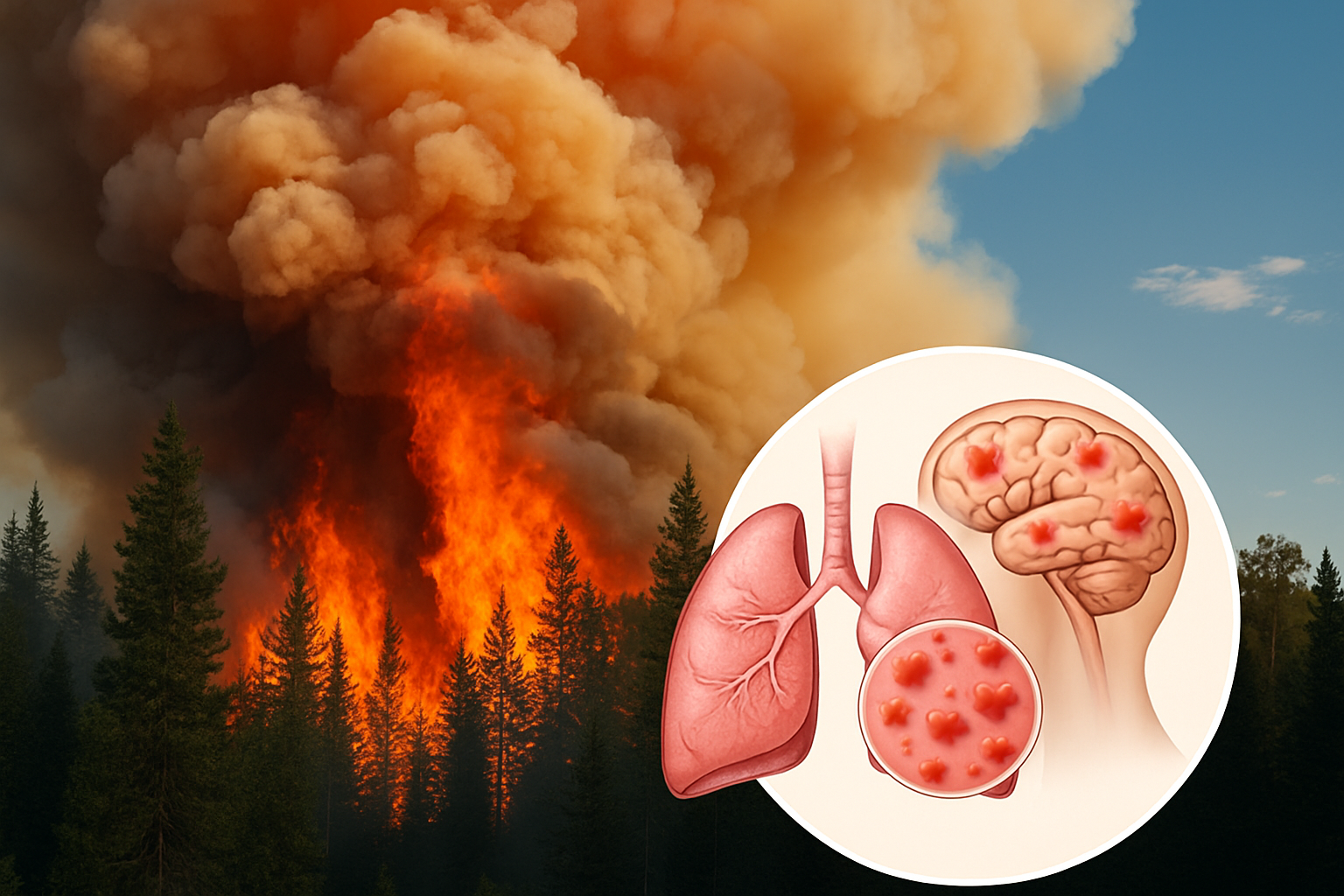
Wildfire smoke is not a uniform cloud of ash; it is a complex, toxic aerosol composed of gases and fine particulate matter.
Share this article
The Thawing Giant: Permafrost Degradation and Microbial Carbon Release
The Arctic, a vast and seemingly immutable expanse, holds within its frozen grasp a silent, colossal reservoir of ancient carbon.
4 published papers · click to read
579
combined citations
O’Brien J.; Blais N.; Holland-Moritz H. et al.
Consistent microbial responses during the aerobic thaw of Alaskan permafrost soils — Frontiers in Microbiology
Carneiro Barreto M.; Wani R.; Goranov A. et al.
Carbon Fate, Iron Dissolution, and Molecular Characterization of Dissolved Organic Matter in Thawed Yedoma Permafrost under Varying Redox Conditions — Environmental Science & Technology
7 citations
Hugelius G.; Loisel J.; Chadburn S. et al.
Large stocks of peatland carbon and nitrogen are vulnerable to permafrost thaw — Proceedings of the National Academy of Sciences
572 citations
Webb H.; Pierce E.; Abbott B. et al.
A Comprehensive Database of Thawing Permafrost Locations Across Alaska
Researchers identified from peer-reviewed literature indexed in Semantic Scholar · OpenAlex · PubMed. Each card links to the original published paper.