Is the Air You Breathe Alive?
Take a breath. You just inhaled approximately 10,000 living biological particles — bacteria, fungi, pollen, and invisible chemical signals released by trees.
Air is not empty space. It is a living conveyor belt of microorganisms that actively shape your immune system, your mood, and even your cognitive performance. Most people have never been told this.
What Are Phytoncides?
Walk into a pine forest and breathe deeply. That clean, sharp scent is alpha-pinene — one of hundreds of antimicrobial volatile organic compounds called phytoncides that trees release as self-defense.
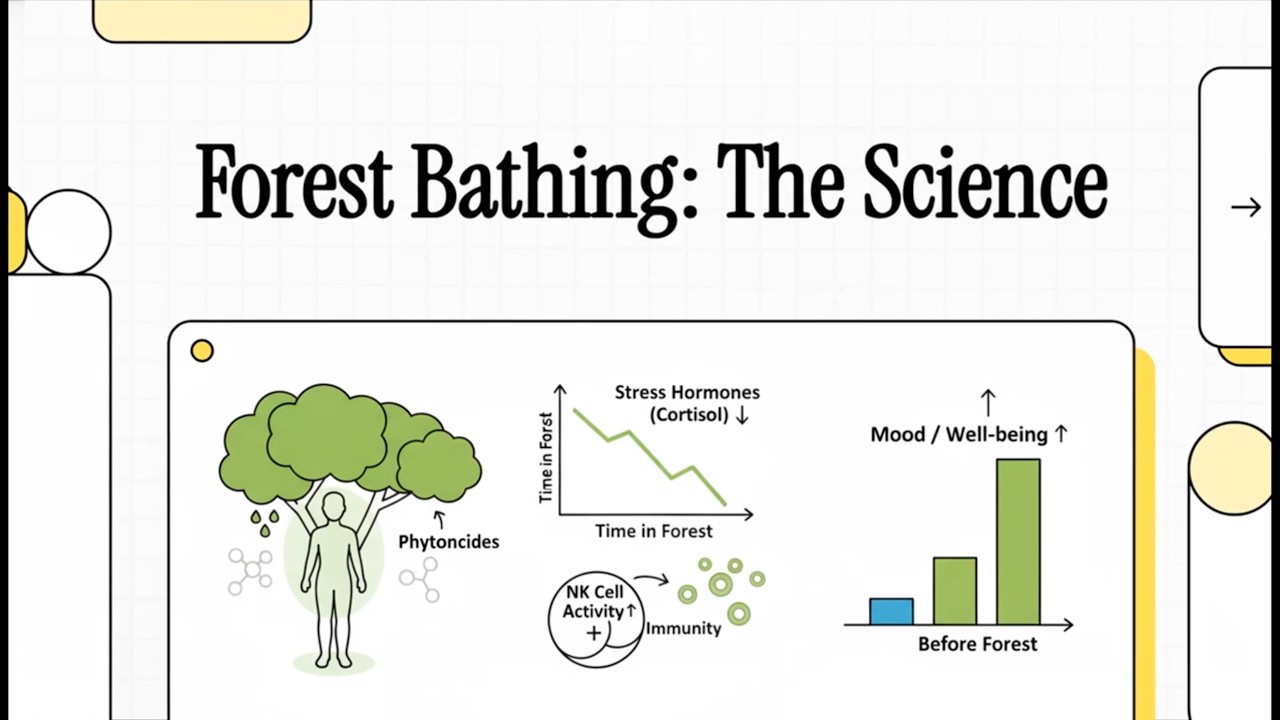
When humans breathe phytoncides, something remarkable happens. Dr. Qing Li's research — which earned him recognition as the world's leading forest bathing scientist — showed that forest exposure increases Natural Killer cell activity by up to 50%. These are your body's frontline anti-cancer immune cells. The effect lasts more than 30 days after a single forest trip.
Trees are not just producing oxygen. They are broadcasting an invisible pharmacy into the air.
How Does Indoor Air Affect Your Brain?
A Harvard study revealed something alarming: indoor CO2 levels above 1,000 parts per million — common in classrooms and offices — reduce cognitive function by 15 to 50%. At 1,400ppm, crisis-level decision-making drops 93%.
Most people spend 90% of their time indoors breathing air that is literally making them less intelligent. The fix is absurdly simple: open a window.
Why Is City Air Biologically Dead?
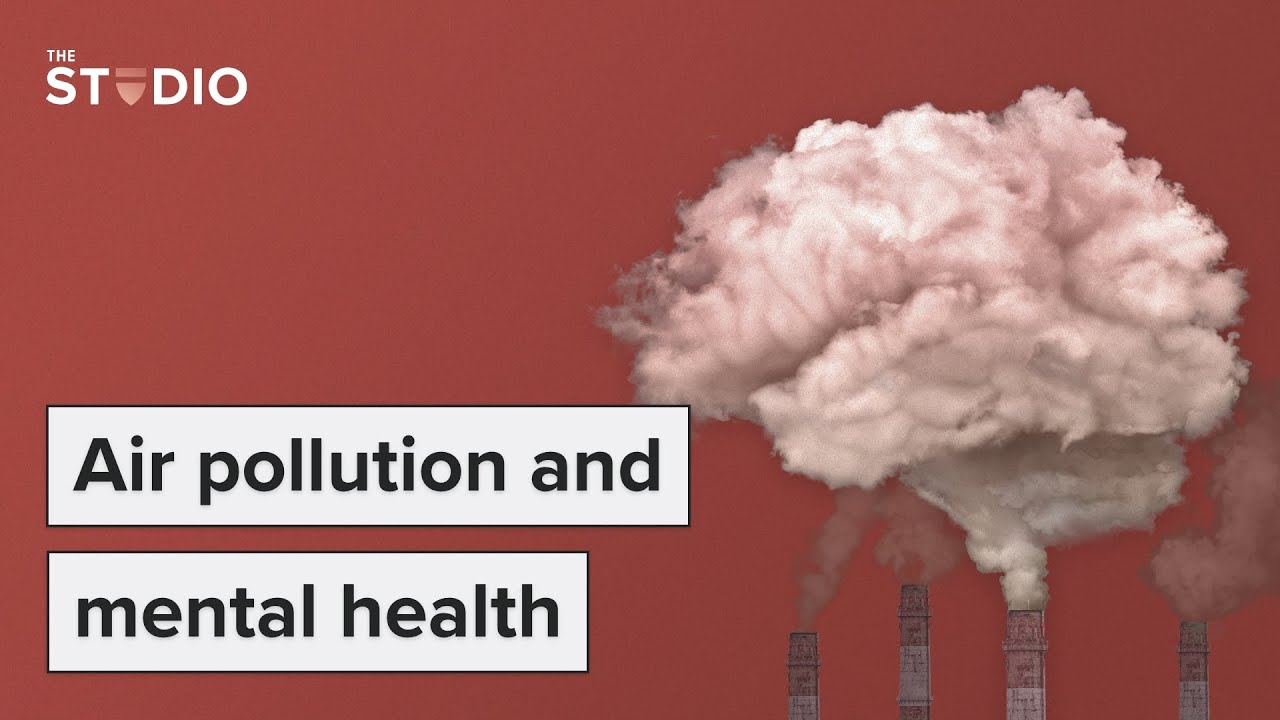
Rural air contains 3 to 5 times more microbial diversity than urban air. Cities have created biologically impoverished atmospheres where PM2.5 particles kill beneficial airborne microbes while transporting pathogenic bacteria.
This matters because of the hygiene hypothesis: modern sterile environments deprive the immune system of the microbial training it needs to develop properly. Without diverse exposure, the immune system turns on the body itself — contributing to the epidemic of asthma, allergies, and autoimmune disorders.
A Finnish experiment proved this dramatically: children whose daycare playgrounds were enriched with forest floor soil showed measurable immune system improvements within just 28 days.
What Is Petrichor?
That earthy scent after rain has a name: petrichor. And it is not just a pleasant smell — it is the scent of soil microbes being launched into the air you breathe.
When raindrops hit dry soil, they physically aerosolize bacteria into the atmosphere. Opening your windows after rain literally reinoculates your indoor environment with diverse biological signals from the earth.
The connection between healthy soil and healthy air is direct: degraded soil releases fewer beneficial microbes, while excess synthetic fertilizers wash into waterways, eventually creating dead zones that reduce the ocean's oxygen output.
Why Does Biodiversity in Air Reduce Anxiety?
Populations exposed to higher microbial diversity in ambient air show lower cortisol levels and reduced markers of chronic stress. This is not speculation — it is measured in blood samples.
Biological diversity in the air is directly anti-anxiety. Your nervous system evolved in a microbially rich world. When you breathe sterile indoor air, your body registers something as missing.
Every person carries a unique "personal microbial cloud" — a signature of bacteria as individual as your fingerprint. You are constantly exchanging microbes with your environment. The question is: what kind of environment are you exchanging with?
What Can You Do Right Now?
Open your windows after rain — petrichor carries soil microbes into your home. Spend two hours in a forest this week — the NK cell boost lasts a month. Remove synthetic air fresheners — they kill beneficial airborne microbes. Keep living soil indoors — one pot per 100 square feet acts as a biological air filter.
And remember: one acre of trees removes 13 tons of particulate matter from the air every year. Planting trees is not just climate action. It is healthcare infrastructure.
The air you breathe is not empty. It is a conversation between every living system on Earth — and your body is listening.## How Do Bacteria Command the Weather?
The atmosphere plays host to a remarkable phenomenon where microorganisms, particularly bacteria like Pseudomonas syringae, significantly impact weather patterns. This bacterium is notable for its ability to produce ice nucleation proteins that catalyze water freezing at temperatures as high as -2°C, compared to mineral dust particles that generally require temperatures around -15°C. Such biological ice nucleation has significant implications on atmospheric precipitation processes, underscoring a striking example of microbial influence on nature. Christner et al. (2008) highlight that approximately 70%% of snowfall across many regions is biologically nucleated, providing substantial evidence to support the role of microbes in weather modulation.
The notion of a bioprecipitation feedback loop suggests an interaction where microorganisms are lofted into the atmosphere and propagate clouds through ice nucleation, eventually returning to the earth\'\'s surface via precipitation. When they reach the ground, these microbes can facilitate plant processes or even infect plants, promoting an ongoing cycle where they are reintroduced into the atmosphere. This loop enhances microbial survival and dispersal, underscoring their unsuspected yet powerful role in hydrological phenomena. Consequently, the contribution of microbes like Pseudomonas syringae to weather modulation is not only a critical ecological function but also demonstrates a form of biogeographical influence that is global in scale.
The understanding of how bacteria can command the weather not only enriches climate modeling efforts but also implies potential biotechnological applications. By engineering microbes with specific ice nucleation properties, it may one day be possible to influence precipitation patterns in a controlled manner, offering innovative solutions to mitigate climate-related challenges such as droughts. Hence, the intersection of microbiology and meteorology opens new horizons in understanding and potentially managing our changing climate systems.
How Do Bacteria Command the Weather?
Pseudomonas syringae possesses ice-nucleating proteins that mimic the hexagonal lattice structure of ice crystals. These proteins trigger water to freeze at -2 degrees Celsius — while mineral dust requires -15 degrees and pure supercooled water can remain liquid down to -38 degrees.
Christner et al. (2008) in Science quantified this: biological ice nucleators are present in approximately 70%% of global snowfall. Microbes are not incidental passengers in clouds. They are the primary hardware that converts atmospheric water vapor into precipitation. Hartmann et al. (2013) in Nature Geoscience extended this to fungi.
This is the bioprecipitation feedback loop: microbes are lofted from soil and vegetation into the atmosphere, trigger rain formation, and are washed back to the surface. The forest literally programs the clouds to water itself.
Is the Atmosphere a Microbial Habitat?
DeLeon-Rodriguez et al. (2013) in PNAS found viable bacteria at 10 kilometers altitude — well into the upper troposphere. These microbes were not dormant spores. They remained metabolically active, capable of repairing UV-induced DNA damage and processing atmospheric organic compounds.
The atmosphere is not a sterile transit zone between surface ecosystems. It is a functional microbial habitat where bacteria metabolize, reproduce, and evolve. Burrows et al. (2009) estimated that 10 to the 21st through 10 to the 25th microorganisms are lofted into the atmosphere annually from soil, oceans, and vegetation.
How Many Microbes Do You Inhale Per Hour?
Prussin et al. (2015) established quantitative inhalation dose models: adults inhale 10 to the 6th through 10 to the 7th bacterial cells per hour outdoors, and approximately 10 to the 5th indoors. This microbial exposure is not pollution. It is immune system training.
The Biodiversity Hypothesis (Von Hertzen et al. 2012) explains why: reduced exposure to diverse environmental microbiota is the key driver of rising allergic and autoimmune diseases in developed countries. Your immune system requires daily contact with environmental microbes to properly calibrate T-regulatory cells. Without this training, the immune system attacks the body's own tissues.
What Is the Saharan Dust Microbe Highway?
Dust storms from the Sahara and Gobi deserts carry viable bacteria, fungi, and archaea across entire oceans. These atmospheric 'microbial highways' connect continents, delivering African soil microbes to the Amazon rainforest and Asian microbes to North America.
This intercontinental dispersal creates a global genetic seed bank. If a local soil microbiome is destroyed by fire or development, the atmospheric backup provides the microbial diversity for recolonization. The air is not empty. It is the planet's distributed backup drive.
What Connects Air to Every Other System?
The soil microbiome is the primary source of atmospheric bacteria — tilling releases massive microbial plumes. Marine plankton produce DMS that becomes cloud condensation nuclei. Plant VOCs from forests become the ice-nucleating particles that trigger rain. Forest phytoncides boost NK cell activity by 50%% in the human holobiont for 30+ days after a single forest visit.
The air microbiome is the connective tissue of the entire Circle of Life — the planetary nervous system that links every surface ecosystem through a continuous exchange of biological information.
How Is the Atmosphere Stratified as a Microbial Habitat?
The planetary boundary layer (0-2 km) is the surface exchange zone where microbial diversity is highest, dominated by local sources from soil and ocean. The free troposphere (2-10 km) is an extremophile environment.
High-altitude microbes use carotenoid pigmentation to shield their DNA from intense UV-C radiation and develop desiccation tolerance to survive humidity as low as 1%%. Microbes smaller than 20 micrometers become aerosolized and enter the global atmospheric conveyor — bacteria from the Sahara are regularly found in the Amazon, a cross-continental update of biological software.
How Does the Bioprecipitation Feedback Loop Work?
Pseudomonas syringae's ice nucleation proteins act as a template for water molecules, forcing phase transition from liquid to solid at -2 degrees Celsius. The microbe triggers rain to crash-land back into the nutrient-rich leaf surface of plants. This is a planetary handoff between the air and phytosemiotics.
The feedback loop is self-sustaining: microbes facilitate the clouds that protect them from UV, then use those clouds as vehicles to migrate to new habitats. Up to 70%% of global snowfall is biologically nucleated (Christner 2008). Forest fungal spores contribute additional ice-nucleating activity (Hartmann 2013). The forest literally programs the clouds to water itself.
How Does Human Activity Reshape the Air Microbiome?
Urban air is dominated by human-associated bacteria — skin commensals, gut flora, and respiratory microbes shed by 8 billion people. Rural and forest air is dominated by soil bacteria, plant-associated microbes, and fungal spores. Microbial richness is 3-5x higher in forests than in cities.
This urban-rural divide has health consequences. The biodiversity hypothesis predicts that reduced exposure to diverse environmental microbiota drives the global rise in allergies and autoimmunity. Agricultural ammonia emissions further shift atmospheric microbial communities. Microbial source tracking can now identify whether airborne bacteria originated from human skin, livestock, soil, or ocean spray — connecting the soil microbiome to the air you breathe.