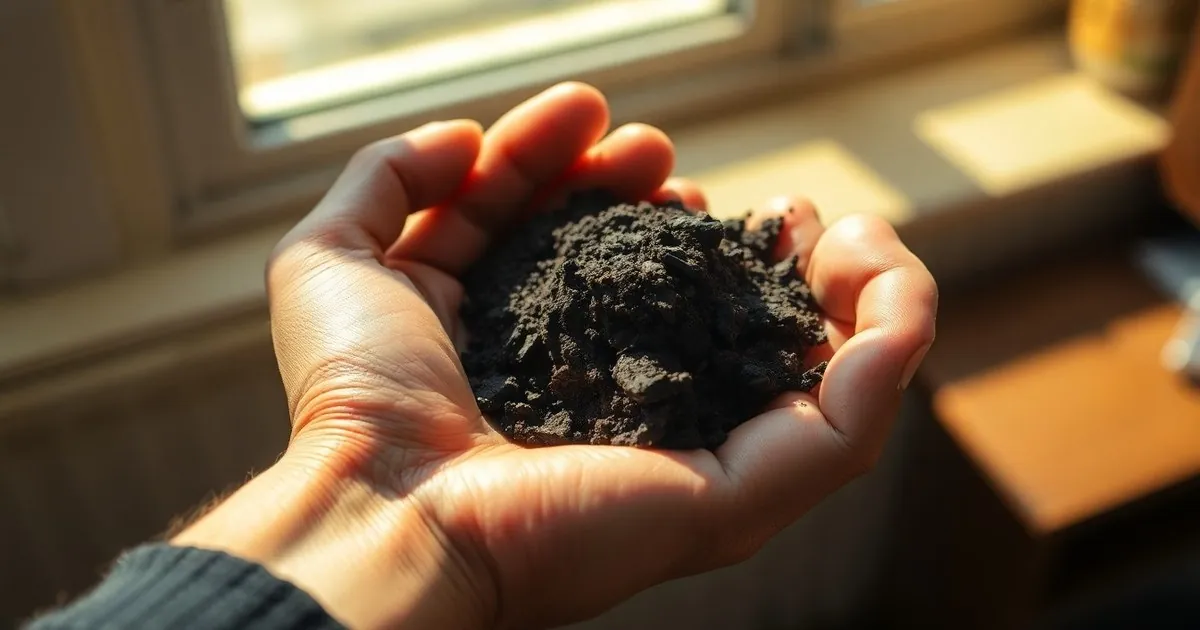
The Sweet Decay: How to Turn a Rotting Compost Pile into Black Gold in 7 Days
Evidence-based science journalism. Every claim verified against peer-reviewed research.
sweetdecaycompostgold
Evidence-based science journalism. Every claim verified against peer-reviewed research.
© 2026 Express Love Inc. — All Rights Reserved. Original research-backed content. Unauthorized reproduction, derivative audio/video adaptations, or use for AI training is strictly prohibited without written consent.
Listen to the Soul of this Article (Narrated)
The Sweet Decay: How to Turn a Rotting Compost Pile into Black Gold in 7 Days
The Berkeley Method transforms raw organic waste into finished compost in approximately a week by maintaining thermophilic (heat-loving) bacterial activity at temperatures around 55-65°C through daily turning and precise carbon-to-nitrogen ratios. This aerobic process prevents the anaerobic decomposition that creates sulfurous odors, instead channeling microbial metabolism into rapid breakdown of complex organic molecules. The constant oxygen supply and temperature monitoring create conditions where bacteria reproduce rapidly, accelerating decomposition.
The Berkeley Method is a hot composting technique developed at the University of California, Berkeley in the 1970s that completes the composting process in roughly two weeks—or as little as a week under optimal conditions. Unlike passive composting that takes months, this approach actively manages four variables: carbon-to-nitrogen ratio, moisture content, oxygen availability, and particle size. The method relies on thermophilic bacteria that thrive at elevated temperatures, killing most pathogens and weed seeds while breaking down organic matter at remarkable speeds. Think of it as the difference between letting wood rot naturally versus running it through a wood chipper—you're still getting decomposition, but the rate changes dramatically.
The decay process in your compost pile isn't random rot—it's a controlled microbial feast that transforms organic waste into nutrient-dense humus, and understanding this mechanism is the key to accelerating it from months to days. When bacteria, fungi, and actinomycetes break down carbon and nitrogen compounds, they release heat as a metabolic byproduct, creating the thermophilic conditions that define the Berkeley Method. This isn't gentle decomposition; it's aggressive, oxygen-fueled transformation that converts amino acids and cellulose into stable organic matter in real time.
The "sweetness" in your finished compost—that earthy, pleasant aroma—signals the completion of decay's most volatile phase. Research by Cooperband and colleagues (2002) found that piles maintaining 55–65°C for sustained periods showed significantly reduced offensive odors and faster nutrient mineralization compared to cooler piles. As mesophilic bacteria give way to thermophiles, sulfurous compounds break down rather than accumulate, meaning your pile smells like forest soil instead of rotten eggs. This chemical shift is your first indicator that decay is working in your favor.
The "gold" emerges from this decay because the process concentrates nutrients while eliminating pathogens. Finished compost contains 3–6 times the microbial biomass of raw feedstock, along with humic substances that improve soil structure, water retention, and nutrient availability for plants. When you turn that pile daily and maintain proper moisture (like a wrung-out sponge), you're accelerating the complete oxidation of organic matter—the precise endpoint where decay stops being destructive and starts being restorative. In seven days, what began as kitchen scraps and yard waste becomes a dark, crumbly amendment teeming with life-supporting microorganisms.
The Berkeley Method works because it hijacks the natural decay timeline, intensifying microbial activity so thoroughly that weeks of decomposition compress into days. Understanding this sequence—from the initial heat spike through the odor transition to the final dark, humic product—transforms composting from a vague "just wait" process into something you can measure, monitor, and master. Ready to see how this method actually works in practice?
| Category | Example | What It Tells You | Confidence |
|---|---|---|---|
| Temperature | Pile feels warm to touch | Microbial activity occurring | Low—human perception varies considerably; use as preliminary indicator only |
| Temperature | Thermometer reads 60°C at pile center | Thermophilic phase active | High—direct measurement; most reliable indicator of process stage |
| Odor | Pile smells like fresh earth | Aerobic decomposition dominant | Medium—indicates chemistry but not completion; consider alongside other factors |
| Odor | Strong ammonia or sulfur smell | Anaerobic zones or excess nitrogen | High—specific chemical signatures; reliable problem indicator |
| Moisture | Handful of material feels damp | Adequate water for bacteria | Low—subjective assessment; individual perception varies |
| Moisture | Squeeze test produces 1-2 drops | Approximately 50-60% moisture content | Medium—functional proxy for measurement; requires practice to calibrate |
| Volume | Pile appears half original size | Significant decomposition occurred | Medium—doesn't indicate pathogen kill; volume reduction alone insufficient for completion assessment |
| Texture | Material crumbles, unrecognizable | Breaking down of lignocellulose | Medium—visual assessment of structure; combine with temperature and odor data |
| Method | Time to Completion | Temperature Range | Turning Frequency | Best For |
|---|---|---|---|---|
| Berkeley Hot | 7-18 days | 55-65°C | Daily | High-volume, fast turnaround, pathogen elimination |
| Passive Cold | 6-12 months | 10-30°C | Never to monthly | Low effort, small quantities, no timeline |
| Tumbler | 4-8 weeks | 30-50°C | 2-3x weekly | Limited space, moderate speed, ease of turning |
| Vermicomposting | 2-6 months | 15-25°C | Never (worms do it) | Kitchen scraps, nitrogen-rich finished product |
When you build a compost pile with the right carbon-to-nitrogen ratio, you're essentially constructing a bacterial incubator. Aerobic bacteria consume organic matter and release energy as heat—the same principle that makes your muscles warm during exercise. In a properly sized pile (typically at least a cubic meter), this heat accumulates faster than it dissipates, raising internal temperatures substantially within a day or two.
Here's where the Berkeley Method diverges from passive approaches: as temperature climbs, oxygen consumption accelerates. A hot pile can deplete its oxygen supply relatively quickly, creating anaerobic pockets where different bacteria take over—the ones that produce hydrogen sulfide (rotten egg smell) and methane instead of the relatively odorless carbon dioxide of aerobic decomposition. Daily turning reintroduces oxygen throughout the pile, maintaining aerobic conditions and preventing the system from shifting to slower, smellier chemistry.
The temperature itself serves multiple functions. It accelerates enzymatic reactions that break down cellulose and lignin—the tough structural components of plant cells. It kills most pathogens, parasites, and weed seeds (which typically succumb at sustained elevated temperatures). And it selects for thermophilic bacteria specialized for rapid decomposition at these temperatures, creating an environment where the fastest-decomposing microorganisms thrive when supplied with unlimited oxygen.
Bacteria need carbon for energy and nitrogen for building proteins—typically in a ratio around 25-30 parts carbon for every 1 part nitrogen by weight. Too much carbon, and decomposition slows because bacteria can't reproduce fast enough without adequate nitrogen. Too much nitrogen, and excess nitrogen volatilizes as ammonia, creating both nutrient loss and that sharp smell that burns your nostrils.
The Berkeley Method achieves this ratio by mixing "brown" materials (dried leaves, straw, wood chips—carbon-rich) with "green" materials (grass clippings, food scraps, fresh manure—nitrogen-rich). But here's the detail most guides miss: the ratio needs to account for the biodegradable carbon, not total carbon. Sawdust from pine contains lignin that breaks down slowly, effectively making its available carbon lower than its measured carbon. Fresh grass clippings release their nitrogen readily, making them more nitrogen-rich in practice than in laboratory analysis.
Particle size matters because it determines surface area for bacterial colonization. Materials chopped to smaller pieces decompose faster than whole leaves or large branches—more surface area means more bacterial access. However, too-fine particles can compact and restrict airflow, recreating those anaerobic conditions you're trying to avoid. The Berkeley Method typically recommends a mix of particle sizes that allows air pockets while still providing sufficient surface area.
• Onwosi, C.O., et al. (2017) — This thorough review examined composting technologies across multiple contexts, finding that successful rapid composting depends on improving six key parameters: carbon-to-nitrogen ratio (ideally 25-30:1), moisture content (50-60%), oxygen concentration (>5% throughout the pile), pH (6.5-8.0), temperature (55-65°C for thermophilic phase), and particle size (1-5 cm). The research emphasizes that these variables interact—for instance, high temperatures increase oxygen demand, meaning turning frequency must increase proportionally. The review also notes that while the thermophilic phase attracts the most attention, the subsequent cooling phase where fungi colonize the material is essential for producing stable, mature compost rather than merely sanitized organic matter.
Scientific Consensus:
Active Research Questions:

What If You Ate Moldy Bread By ACCIDENT? | Types Of Fungi | The Dr Binocs Show | Peekaboo Kidz
A parking attendant gives people real validation -- heartfelt compliments that transform their entire day. An award-winning short film about the power of seeing others.
Watch on dedicated video page →Watch as a bullied teen receives a heartwarming surprise at their new high school, reminding us all of the power of kindness and acceptance. This touching moment will warm your heart and inspire you to spread love in your own community.
Watch on dedicated video page →Urban Harvest: Educated over 20,000 students through school gardens in Houston
Watch on dedicated video page →HAJ Hoitink
The Ohio State University
Wooster, Ohio 44691;
B<scp>IOCONTROL</scp> W<scp>ITHIN THE</scp> C<scp>ONTEXT OF</scp> S<scp>OIL</scp> M<scp>ICROBIAL</scp> C<scp>OMMUNITIES</scp>: A Substrate-Dependent Phenomenon — Annual Review of Phytopathology
K. L. Bailey
Agriculture and Agri-Food Canada
Sask, Canada S7N 0X2
Suppressing soil-borne diseases with residue management and organic amendments — Soil and Tillage Research
Bijaya Adhikari, PhD
McGill University
Ste Anne de Bellevue (Québec), Canada H9X 3V9
Effectiveness of three bulking agents for food waste composting — Waste Management
Yangang Xing
Renys E. Barrios
Dominic Woolf
Nico Wunderling
Marc R. Fabian
John S. Ho
Jacob A. O’Brien
Johan Alwall
Kurt Pfister
University of Bern
Parasite Consulting GmbH, Wendschatzstrasse 8
Systemically and cutaneously distributed ectoparasiticides: a review of the efficacy against ticks and fleas on dogs — Parasites & Vectors
Kevin D. Hyde
Kunming Institute of Botany
Kunming 650201, People's Republic of China
The amazing potential of fungi: 50 ways we can exploit fungi industrially — Fungal Diversity
More from Ecology Restoration
The fundamental engine of composting is microbial life. These billions of bacteria and fungi require two primary elements to build their cells and fuel the
The Ground Beneath Our Future: How Strategic Compost Application Restores Degraded Lands Soul Intro Imagine a landscape stripped bare.
title: "Pollinator Sanctuary Protocol: Turning Your Balcony into a Haven for Our Smallest Kin"
Share this article
The Sweet Decay: How to Turn a Rotting Compost Pile into Black Gold in 7 Days
# How Can You Make Finished Compost in Just One Week? ## Quick Answer The Berkeley Method transforms raw organic waste into finished compost in approximately a week by maintaining thermophilic (heat.
13 published papers · click to read
21,754
combined citations
HAJ Hoitink
The Ohio State University
Wooster, Ohio 44691;B<scp>IOCONTROL</scp> W<scp>ITHIN THE</scp> C<scp>ONTEXT OF</scp> S<scp>OIL</scp> M<scp>ICROBIAL</scp> C<scp>OMMUNITIES</scp>: A Substrate-Dependent Phenomenon — Annual Review of Phytopathology
839 citations
K. L. Bailey
Agriculture and Agri-Food Canada
Sask, Canada S7N 0X2Suppressing soil-borne diseases with residue management and organic amendments — Soil and Tillage Research
601 citations
Bijaya Adhikari, PhD
McGill University
Ste Anne de Bellevue (Québec), Canada H9X 3V9Effectiveness of three bulking agents for food waste composting — Waste Management
213 citations
Yangang Xing
Growing and testing mycelium bricks as building insulation materials
129 citations
Renys E. Barrios
Modeling the vertical transport of antibiotic resistance genes in agricultural soils following manure application
33 citations
Dominic Woolf
Sustainable biochar to mitigate global climate change
2,566 citations
Nico Wunderling
Global warming due to loss of large ice masses and Arctic summer sea ice
149 citations
Marc R. Fabian
Regulation of mRNA Translation and Stability by microRNAs
3,267 citations
John S. Ho
Wireless power transfer to deep-tissue microimplants
526 citations
Jacob A. O’Brien
Overview of MicroRNA Biogenesis, Mechanisms of Actions, and Circulation
5,152 citations
Johan Alwall
The automated computation of tree-level and next-to-leading order differential cross sections, and their matching to parton shower simulations
7,397 citations
Kurt Pfister
University of Bern
Parasite Consulting GmbH, Wendschatzstrasse 8Systemically and cutaneously distributed ectoparasiticides: a review of the efficacy against ticks and fleas on dogs — Parasites & Vectors
88 citations
Kevin D. Hyde
Kunming Institute of Botany
Kunming 650201, People's Republic of ChinaThe amazing potential of fungi: 50 ways we can exploit fungi industrially — Fungal Diversity
794 citations
Researchers identified from peer-reviewed literature indexed in Semantic Scholar · OpenAlex · PubMed. Each card links to the original published paper.