Mechanism Deep Dive: Farmland Abandonment as a Rewilding Opportunity
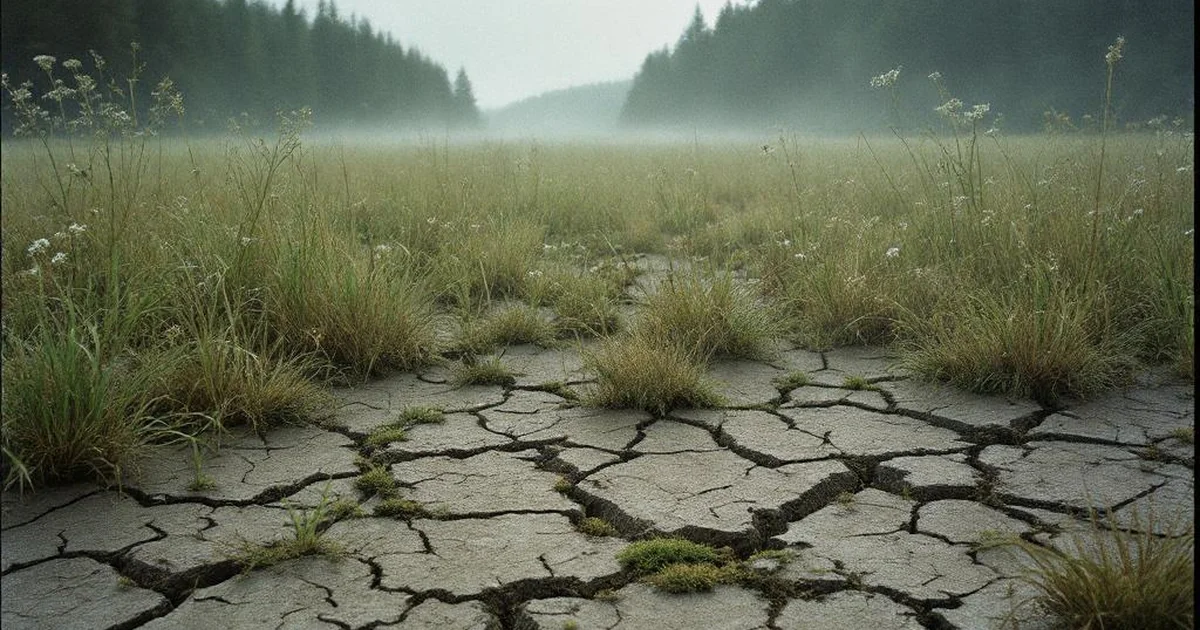
Across Europe, vast swaths of agricultural land are being abandoned — not because of any single policy, but as a complex consequence of economic shifts, rural depopulation, and changing global markets. For decades, this was viewed as a problem: a loss of productive capacity and cultural landscapes. But a growing body of research suggests a different framing. Abandoned farmland represents one of the largest opportunities for ecosystem rewilding in the modern era (10.1007/s10021-012-9558-7). When fields are left fallow, ecological succession begins almost immediately. Pioneer grasses give way to shrubs, then to young trees. Soil organic carbon accumulates. Native plant communities, long suppressed by plowing and herbicides, reassert themselves from remnant seed banks.
This opportunity challenges a persistent romanticism about traditional agriculture. The perception that pre-industrial farming was inherently benign to biodiversity is not supported by evidence. For centuries, European agriculture has involved deforestation, drainage of wetlands, and the suppression of keystone species like wolves and beavers (10.1007/978-3-319-12039-3). The landscapes we often imagine as timeless pastoral idylls — the chalk downs, the heathlands — were themselves products of intensive land use, maintained only through constant human intervention. Recognizing this history matters because it reframes rewilding not as a radical departure from tradition, but as a correction of long-standing ecological disruption.
Land management policies are slowly shifting in response. The European Union's Common Agricultural Policy, once singularly focused on production, now includes agri-environment schemes that reward farmers for maintaining biodiversity. Yet the most profound transformation may come from simply allowing nature to take its course on lands where farming is no longer viable. These abandoned spaces, properly managed, can become corridors connecting fragmented habitats, allowing species to move and adapt to climate change.
Mechanism Deep Dive: The Ecological and Social Architecture of Restoration
Restoration ecology has matured considerably since its early days of trial-and-error replanting. The field now rests on a solid conceptual foundation that demands interdisciplinary approaches and rigorous empirical research (10.1890/es15-00121.1). Modern restoration recognizes that ecosystems are not static assemblages of species, but dynamic networks of interactions. Facilitative interactions — where one species creates conditions that benefit another — are now understood to be as important as competition in shaping community assembly. Network dynamics, including food web structure and mutualistic partnerships, influence whether a restored ecosystem will be resilient or collapse. And trophic cascades — where the presence or absence of top predators ripples through the entire system — are increasingly incorporated into restoration design (10.1890/es15-00121.1).
Yet even the most ecologically sophisticated restoration plan must contend with a fundamental social reality: human-wildlife conflict (HWC). As rewilding projects bring larger animals and more dynamic ecosystems closer to human settlements, the potential for conflict escalates. Critically, the realities and perceptions of HWC vary dramatically across rural, urban, and peri-urban areas (10.1111/cobi.13513). A farmer whose livestock is killed by a wolf experiences a very different cost than a suburban resident who merely sees a coyote crossing their yard. Meanwhile, the benefits of wildlife — such as pollination, seed dispersal, and cultural enrichment — are distributed unevenly across these same landscapes. This spatial heterogeneity in costs and benefits complicates management decisions. A solution that works in a rural context may fail in a peri-urban one, and vice versa. Evidence-based planning must account for these gradients, tailoring strategies to the specific social and ecological conditions of each place.
Action-Encyclopedia Module: Cooling Cities Through Rewilding
Walk through a downtown core on a July afternoon, and you feel it immediately — the oppressive heat radiating from concrete, asphalt, and dark rooftops. This is the Urban Heat Island (UHI) effect, a phenomenon where cities become significantly warmer than their surrounding rural areas. The cause is straightforward: man-made materials absorb solar energy during the day and release it slowly at night, preventing the natural cooling that occurs in vegetated landscapes (10.1146/annurev-environ-102014-021155). The consequences are not merely uncomfortable. UHI increases air conditioning loads, driving up energy consumption and emissions. It deteriorates air quality by accelerating photochemical smog formation. It warms urban waterways, harming aquatic life. And during heat waves — themselves becoming more frequent and intense due to climate change — UHI can be deadly, particularly for vulnerable populations without access to cooling (10.1146/annurev-environ-102014-021155).
Rewilding offers a powerful suite of mitigation strategies. The most direct is increasing vegetated areas within cities — not just manicured parks, but diverse, layered plantings that mimic natural ecosystems. Street trees, green roofs, rain gardens, and restored wetlands all provide shade and evapotranspirative cooling. Modifying the thermal properties of surfaces is equally important. Cool roofs, which reflect more sunlight than standard materials, have been identified as a cost-effective option for reducing UHI (10.1146/annurev-environ-102014-021155). Permeable pavements and lighter-colored roads can similarly reduce heat absorption. The beauty of these interventions is that they align perfectly with rewilding goals: cooling the city while creating habitat for insects, birds, and small mammals. A green roof is not just a heat mitigation tool; it is a patch of urban prairie, a stepping stone for pollinators navigating the concrete matrix.
Action-Encyclopedia Module: Land Practices That Serve Multiple Goals
The tension between food production, climate action, and biodiversity conservation often feels intractable. But a comprehensive analysis of land management practices reveals a more hopeful picture. When evaluated across multiple dimensions — food security, climate change mitigation and adaptation, and land degradation — many practices deliver co-benefits without requiring dedicated land (10.1111/gcb.14878).
Characteristics of Land Management Practices for Integrated Challenges
| Practice Category | Key Impact | Land Competition Implications |
|---|
| Five options | Moderate climate change mitigation potential | No adverse impacts on other land challenges |
| Sixteen practices | Large climate change adaptation potential (>25 million people benefit) | No adverse side effects on other land challenges |
| Most practices | Co-deliver food security, climate change mitigation/adaptation, combat land degradation | Can be applied without competing for available land |
| Seven options | Co-deliver food security, climate change mitigation/adaptation, combat land degradation | Could result in competition for land |
| Four options | Co-deliver food security, climate change mitigation/adaptation, combat land degradation | Could greatly increase competition for land if applied at a large scale |
These findings underscore that many rewilding-aligned practices — such as agroforestry, cover cropping, and restoring degraded peatlands — can be integrated into existing landscapes. The challenge lies in scaling up the practices that avoid land competition while navigating the complexities of those that may require trade-offs.
This integrated approach must also account for the smallest, most vulnerable members of ecosystems: insects. Global environmental change — including land transformation, pesticide use, and climate disruption — is driving a staggering loss of insect diversity (10.1016/j.biocon.2020.108427). Because insects underpin pollination, nutrient cycling, and food webs, their decline threatens the entire restoration enterprise. Insect conservation cannot be an afterthought; it must be woven into the fabric of rewilding and climate action planning (10.1016/j.biocon.2020.108427).
Action-Encyclopedia Module: Planning for Coexistence and Green Spaces
For urban and peri-urban rewilding to succeed, decision-makers need more than ecological data — they need evidence-based frameworks for managing human-wildlife coexistence. This requires understanding not only animal behavior and population dynamics, but also human attitudes, perceptions, and tolerance thresholds (10.1111/cobi.13513). A well-designed management plan accounts for the spatial distribution of costs and benefits, engaging communities in transparent processes that build trust and shared ownership.
The spaces where this coexistence plays out are critical. Green and blue spaces — parks, gardens, wetlands, streams, and ponds — are not merely aesthetic amenities. They are fundamental to public health and wellbeing, providing opportunities for physical activity, stress reduction, social connection, and direct contact with nature (10.4324/9781849771900). Yet these spaces require responsible, sustainable adaptive management. Climate change is altering growing seasons, shifting species ranges, and increasing the frequency of extreme weather events. A park designed for today's climate may not function well in thirty years. Adaptive management — monitoring outcomes, learning from experience, and adjusting strategies — is essential (10.4324/9781849771900).
Recent global events have underscored this urgency. The Covid-19 pandemic demonstrated how vital accessible green spaces are for mental and physical health during times of crisis. The accelerating pace of climate change reminds us that our relationship with natural spaces is not a luxury, but a necessity. Planning for coexistence means designing cities where wildness is not pushed to the margins, but woven into the fabric of daily life.
Love In Action: Three Steps to Rewild Your Neighborhood
Support native plant initiatives. Advocate for your local parks department or community garden to prioritize native species over ornamental exotics. Native plants support vastly more insect diversity, which in turn supports birds and other wildlife. Even a single native oak can host hundreds of caterpillar species — the foundation of urban food webs.
Create habitat corridors. Work with neighbors to connect fragmented green spaces. Convert a strip of lawn along a fence line into a pollinator patch. Petition your city council to plant street trees that link existing parks. Corridors don't need to be wide; even a continuous line of shrubs can allow small mammals and insects to move safely through the urban matrix.
Join a citizen science project. Monitor local biodiversity through platforms like iNaturalist or participate in organized surveys of urban wildlife. Your observations contribute to the data that planners and ecologists need to make evidence-based decisions. Tracking changes over time — which species return as habitats improve — turns personal action into collective knowledge.
Conclusion: A Living City
Urban and peri-urban rewilding is not about returning to some imagined past. It is about building a future where cities breathe — where green roofs cool the air, where abandoned fields become forests, where children grow up knowing the names of the birds and bees that share their streets. The challenges are real: conflict, competition for land, the slow work of changing institutions and attitudes. But the science is clear. When we plan for wildness, we plan for resilience. We plan for health. We plan for a world where human and non-human life do not merely coexist, but flourish together.
The Urban-Peri-Urban Rewilding Paradox: Where Ecological Opportunity Meets Planning Challenge
Urban and peri-urban rewilding presents a fundamental ecological paradox: the fragmented landscapes on the edges of cities offer some of the fastest-growing habitat opportunities, yet their success depends on resolving contradictory planning pressures that most traditional conservation frameworks were never designed to navigate. Unlike rural rewilding efforts on consolidated land, urban rewilding occurs in spaces layered with competing land uses, regulatory frameworks, and stakeholder interests—each creating both barriers and unexpected openings for ecological recovery.
The mechanism is straightforward at the biological level: early-successional habitats created through abandonment or intentional rewilding in urban fringe zones experience rapid colonization by native species because nearby green corridors and existing urban vegetation create dispersal pathways (Kowarik & von der Lippe, 2007). A study of spontaneous vegetation in Berlin found that post-industrial sites developed plant diversity comparable to ancient woodlands within 20–30 years, largely because seed banks and nearby perennial vegetation accelerated natural recovery processes. Yet these same sites face pressure from development, cleanup mandates, and zoning restrictions that can eliminate habitat before ecological benefits fully materialize.
The planning challenges are equally tangible. Peri-urban land exists in legal limbo—neither fully protected rural land nor zoned urban development. Property owners often face ambiguous regulations about whether "managing" a rewilded site means maintaining it ecologically or preparing it for future development. Funding mechanisms, insurance liability, and community perception all shift unpredictably across jurisdictional boundaries. A brownfield site may have zero regulatory protection in one municipality but strict environmental review requirements across an invisible administrative line.
Yet these same constraints create genuine opportunities. The very complexity that frustrates planners also means rewilding efforts in urban-peri-urban zones can leverage multiple funding streams—environmental remediation budgets, stormwater management grants, climate resilience funds—in ways that consolidated rural projects cannot. Community engagement is more immediate and diverse. And the proximity to millions of people means ecological recovery here directly benefits human health and experience.
Understanding these specific, localized challenges and opportunities becomes essential as cities worldwide seek to integrate nature into expanding metropolitan regions.
Planning for Rewilding: Turning Urban Challenges into Ecological Opportunities
Urban rewilding efforts face a fundamental planning challenge: cities are designed for predictability, yet ecological restoration requires embracing dynamic, sometimes messy natural processes. The tension between municipal codes, property boundaries, and the needs of recovering wildlife populations shapes whether a vacant lot becomes a thriving habitat corridor or remains fragmented and isolated. Understanding how planning decisions either enable or constrain these efforts is essential to scaling rewilding from isolated projects to systemic ecological recovery.
The science supports what planners are discovering: fragmented green spaces reduce their ecological value exponentially. Research by Beninde et al. (2015) demonstrated that connectivity between habitat patches increases species colonization rates by up to 300% compared to isolated reserves of equal total area. This means that a coordinated planning approach—linking a community garden to a restored stream corridor to a green roof network—can generate far greater biodiversity gains than the sum of individual projects. Yet most municipal zoning codes were written without this connectivity principle in mind.
Current rewilding efforts reveal concrete opportunities hidden within planning constraints. Adaptive reuse of infrastructure—converting abandoned rail lines into wildlife corridors, redesigning stormwater systems as wetland nurseries, permitting native understory plants in parks designated for "maintenance"—shows that ecological restoration doesn't require wholesale landscape transformation. Cities like Sheffield and Singapore have embedded rewilding into their planning frameworks, creating legal pathways for spontaneous vegetation and insect habitat within urban zones.
The real planning challenge emerges at the peri-urban edge, where development pressure collides with recovering ecosystems. Sprawl threatens the very rewilding sites that begin to succeed, while restrictive agricultural zoning can prevent landowners from experimenting with native plantings. Bridging this gap requires planners to reframe rewilding not as a luxury amenity or ecological experiment, but as essential infrastructure for water filtration, pollination services, and urban cooling.
The opportunities multiply when planning moves from reactive land management to proactive habitat design. As cities revise their comprehensive plans and zoning codes in the coming decade, the decisions made today will determine whether urban rewilding becomes foundational to urban resilience or remains a scattered collection of well-intentioned projects.