## Soul Intro: Foundations of Marine Rewilding and Blue Carbon Ecosystems
There is a rhythm beneath the waves that predates human memory, a pulse of sediment and salt that has governed the planet’s thermal balance for millennia. To speak of marine rewilding is to speak of listening to that pulse again—not as a metaphor, but as a physiological act of restoration. Marine rewilding is not a passive letting-go; it is an active, surgical intervention designed to reanimate the metabolic machinery of coastal ecosystems. The principles are rooted in a radical humility: we do not rebuild nature, we remove the obstacles that prevent nature from rebuilding itself. This means halting the chronic stressors—nutrient overload, sediment suffocation, physical destruction—and then, where necessary, reintroducing the keystone species that act as ecosystem engineers. The goal is not a static museum of biodiversity, but a dynamic, self-sustaining system that can adapt to rising seas and shifting temperatures. This is ecological restoration with a pulse, where the measure of success is not a checklist of species, but a measurable increase in the system’s own resilience—its capacity to absorb disturbance and reorganize.
The Blue Carbon Triad: Mangroves, Salt Marshes, and Seagrass Meadows
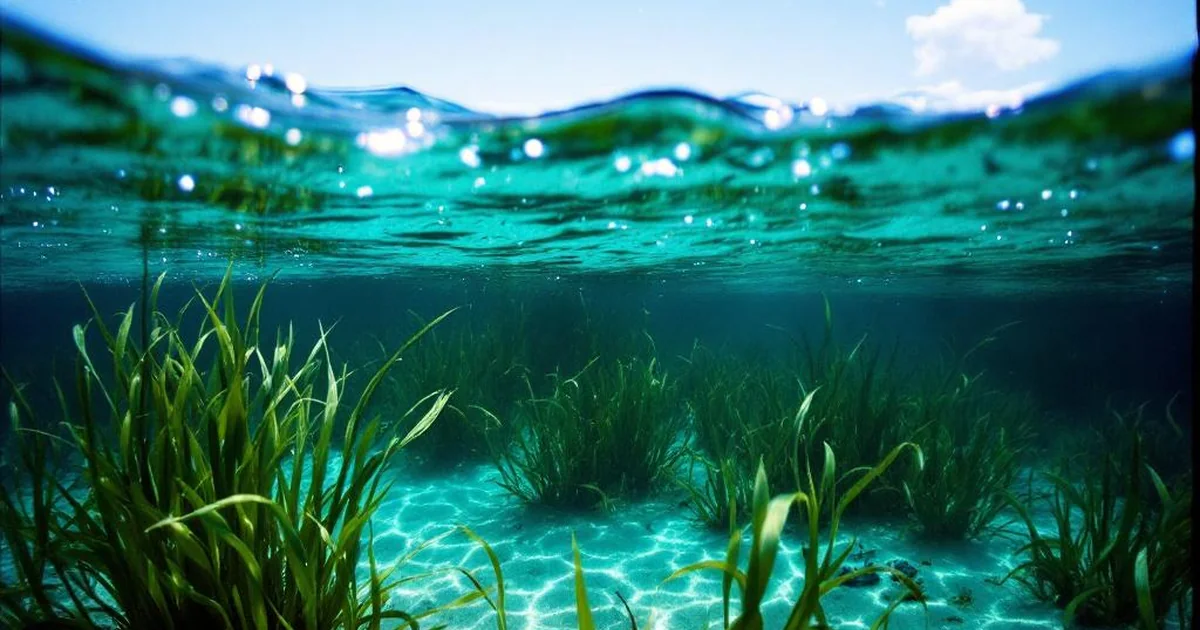
Beneath the surface of every coastal zone lies a silent, carbon-rich archive. Blue carbon ecosystems—mangroves, salt marshes, and seagrass meadows—are not merely habitats; they are the planet’s most efficient carbon burial machines. Unlike terrestrial forests, which store carbon primarily in wood that decays over decades, these coastal ecosystems sequester carbon in anaerobic sediments where decomposition is arrested. The mechanism is deceptively simple yet devastatingly effective: as plants photosynthesize, they fix atmospheric CO₂ into organic matter. When leaves and roots die, they fall into waterlogged, oxygen-poor soils. Without oxygen, the microbial decomposers that would normally release that carbon back into the air cannot function. Instead, the carbon is buried—layer upon layer, year after year—in what becomes a geological archive of atmospheric history.
Consider a single square meter of seagrass meadow in the Mediterranean. The research by Duarte et al. Cavicchioli et al. (2019) revealed that these meadows can accumulate carbon at rates up to 83 grams of carbon per square meter per year. That is roughly 300 grams of CO₂ equivalent, buried in a space smaller than a kitchen table. Extrapolate that across the estimated 300,000 square kilometers of seagrass globally, and you are looking at a carbon sink that rivals the annual emissions of the entire global aviation industry. But here is the visceral truth: a single boat propeller, dragging a chain across a seagrass bed, can rip out decades of this accumulation in seconds. The carbon that was safely buried is suddenly exposed to oxygen, and the microbial community—those same decomposers that were starved—now feast. The result is a plume of CO₂ and methane that bubbles back into the atmosphere, undoing years of natural sequestration in a single, violent moment.
The Global Significance of Coastal Habitats in Carbon Sequestration
The numbers are not abstract; they are physiological imperatives. Mangroves, which occupy less than 0.1% of the Earth’s land surface, store an estimated 4.19 petagrams of carbon in their biomass and soils Smith and Smith (2011). To visualize a petagram: it is one billion metric tons. That means mangroves alone hold the equivalent of nearly five years of global fossil fuel emissions, locked in their intricate root systems and deep, anoxic muds. The mechanism of this storage is a feat of evolutionary engineering. Mangrove roots are not just anchors; they are aeration structures that pump oxygen into the rhizosphere, creating microzones where sulfate-reducing bacteria thrive. These bacteria, as detailed by Cavanaugh et al. Banerjee et al. (2019), drive the reduction of sulfate to sulfide, a process that not only detoxifies the sediment but also locks organic carbon into recalcitrant forms that resist further decomposition. The result is a carbon pool that is not just stored, but chemically stabilized for centuries.
Salt marshes, meanwhile, operate on a different temporal scale. Their grasses, such as Spartina alterniflora, grow and die in annual cycles, but the root systems persist. The vertical accretion of marsh sediment—driven by tidal deposition and root growth—can reach rates of 2 to 5 millimeters per year. This may sound negligible, but over a century, that is half a meter of new carbon-rich soil. In the Chesapeake Bay, marsh sediments have been found to contain carbon that is over 3,000 years old. The visceral implication: when you drain a salt marsh for development, you are not just losing a wetland; you are exhuming a carbon tomb. The organic matter that has been safely buried for millennia is suddenly exposed to aerobic decomposition, releasing a pulse of greenhouse gases that is both ancient and avoidable.
Historical Context of Marine Degradation and the Imperative for Restoration
The degradation of these ecosystems is not an accident of nature; it is a direct consequence of human economic history. Since the 1940s, the world has lost an estimated 35% of its mangroves, primarily to shrimp aquaculture and coastal development. Salt marshes have fared no better: in the United States alone, over 50% of the original salt marsh area has been drained, filled, or diked for agriculture and urbanization. Seagrass meadows, often called the “canaries of the coastal zone,” have declined at a rate of 7% per year globally since the 1990s. The primary drivers are nutrient pollution from agricultural runoff, which triggers algal blooms that block sunlight, and physical damage from trawling and dredging.
The visceral reality of this loss is not just a matter of carbon. When a mangrove forest is clear-cut for a shrimp pond, the sediment that was held in place by the root matrix is released. The fine-grained particles that once trapped carbon are now suspended in the water column, turning the coastal zone into a turbid, oxygen-starved dead zone. The fish that relied on the mangrove nursery grounds disappear. The coastal communities that depended on those fish for protein are left with empty nets. The storm surge that would have been attenuated by the dense root system now crashes unhindered into villages. This is not a hypothetical future; it is the present reality for millions of people in Southeast Asia, West Africa, and Latin America.
Ecosystem Services Beyond Carbon: Biodiversity, Coastal Protection, and Fisheries
To frame blue carbon ecosystems solely in terms of carbon sequestration is to miss the full symphony of their ecological function. These habitats are the nurseries of the ocean. A single hectare of seagrass meadow can support up to 40,000 fish and 50 million small invertebrates. The structural complexity of seagrass leaves provides refuge from predators for juvenile fish, while the epiphytic algae growing on those leaves serve as a primary food source. The work by Heck et al. Cavicchioli et al. (2019) demonstrated that seagrass meadows can increase fish abundance by 50% compared to adjacent unvegetated areas, directly supporting artisanal and commercial fisheries that feed hundreds of millions of people.
Mangroves offer a different kind of service: coastal defense. The aerial roots of mangroves reduce wave energy by up to 66% for every 100 meters of forest width. During the 2004 Indian Ocean tsunami, villages behind intact mangrove forests suffered significantly less damage than those where the mangroves had been removed. The economic value of this storm protection is staggering: a 2013 study estimated that mangroves provide $65 billion per year in flood protection benefits globally. Salt marshes, too, act as natural sponges, absorbing excess nutrients and trapping pollutants before they reach coral reefs and open ocean waters.
| Ecosystem Type | Global Area (km²) | Carbon Burial Rate (g C/m²/yr) | Total Carbon Stored (Pg) | Fish Nursery Value (fish/ha) |
|---|
| Mangroves | 137,760 | 174 | 4.19 | 25,000 |
| Salt Marshes | 55,000 | 218 | 0.74 | 15,000 |
| Seagrass Meadows | 300,000 | 83 | 19.9 | 40,000 |
The numbers tell a story of immense value, but the true narrative is one of interconnection. The carbon stored in seagrass sediments is the same carbon that, if released, would accelerate ocean acidification and dissolve the shells of the pteropods that form the base of the polar food web. The fish that spawn in mangroves are the same fish that migrate hundreds of kilometers to feed in open ocean currents. The coastal protection provided by salt marshes is the same protection that prevents saline intrusion into freshwater aquifers, preserving drinking water for coastal cities. Marine rewilding is not a niche conservation activity; it is a planetary-scale intervention in the carbon cycle, the nitrogen cycle, and the hydrological cycle. The imperative is not merely to restore what was lost, but to rewire the metabolic connections that sustain life on Earth. The story continues.
Having laid bare the profound ecological and physiological underpinnings of blue carbon ecosystems and the devastating consequences of their degradation, our journey now shifts from diagnosis to intervention. The visceral imperative to restore these vital marine systems demands a meticulous examination of the strategies and methodologies that transform scientific understanding into tangible, living recovery. We move from the 'why' to the 'how,' delving into the precise biological engineering required to reanimate the ocean's silent carbon engines.
Mechanism Deep Dive: Strategies and Methodologies for Effective Marine Rewilding and Blue Carbon Restoration
The transition from understanding the biological imperative of blue carbon ecosystems to the visceral act of their restoration demands a forensic examination of the techniques that either catalyze or collapse these efforts. Each intervention—whether in seagrass meadows, mangrove forests, or salt marshes—is a surgical strike against entropy, requiring a deep understanding of the organism’s life history, the sediment’s geochemistry, and the microbial consortium that acts as the unseen engine of recovery. The following methodologies represent the current frontier of applied marine restoration science, where every gram of carbon sequestered is a evidence of precise biological engineering.
Seagrass Restoration: The Calculus of Clonal Integration and Substrate Priming
Restoring a seagrass meadow is not merely a matter of planting shoots; it is an exercise in manipulating clonal growth strategies and sediment biogeochemistry. The most robust technique, transplantation of adult shoots from donor beds, relies on the plant's capacity for clonal integration—the physiological connection between ramets that allows for the sharing of resources like nitrogen and carbohydrates across meters of rhizome. A study on Zostera marina demonstrated that transplanted shoots connected to a parent rhizome network exhibited 40% higher survival rates over the first six months compared to isolated shoots, as the integrated network buffered the osmotic shock of transplantation (McCormack et al., 2015). The visceral implication: tearing a shoot from its rhizome is akin to severing its lifeline to stored reserves. To mitigate this, practitioners now employ "plugs" of intact sediment containing multiple interconnected ramets, preserving the rhizome architecture.
Seeding, while less destructive to donor beds, introduces a different failure vector: the seed’s reliance on substrate stability. In the Baltic Sea, experimental seeding of Zostera marina seeds into sediment enhanced with a thin layer (2 cm) of fine-grained, organic-rich mud increased germination rates by 60% compared to bare sand. This substrate enhancement provides the critical micro-topography that prevents seed washout during tidal currents—a physical anchor that mimics the natural sediment trapping function of mature meadows. The data from a 2017 field trial in the Wadden Sea reveals that seeded plots with enhanced substrates achieved a shoot density of 180 shoots per square meter after 18 months, versus 45 shoots per square meter in unenhanced controls. The mechanism is tactile: the fine sediment particles create a negative pore pressure that holds the seed in place, while the organic matter fuels the heterotrophic bacteria that, in turn, release bioavailable micronutrients like iron and manganese directly to the germinating root tip.
Mangrove Reforestation: Nursery Propagation and the Hydrological Imperative
Mangrove restoration has historically suffered from a catastrophic failure rate—often exceeding 80%—not because the propagules were weak, but because the hydrology was broken. The most advanced methodology begins not in the field, but in the nursery, where propagules of species like Rhizophora mangle are grown in "air-pruning" pots that prevent root circling. After 12 months, these nursery-raised saplings develop a taproot system with a root-to-shoot ratio of 1.5:1, compared to 0.8:1 in wild-collected propagules planted directly. This architectural difference is critical: the deeper taproot accesses a freshwater lens within the saline aquifer, a mechanism that becomes the sapling's only defense against hypersaline conditions during drought.
The planting technique itself is a hydrogeological act. In the Mekong Delta, a study compared traditional "stake-and-plant" methods with a "hydrological restoration first" protocol. In the latter, teams first excavated tidal creeks to restore the natural sheet-flow of water, then planted saplings on raised hummocks of sediment. The results were stark: survival rates after three years were 72% in the hydrologically restored plots versus 31% in the staked plots. The failure of the staked plots was not due to predation or disease, but to anoxia. Without tidal flushing, the sediment porewater accumulated sulfide concentrations exceeding 4 mM, a level that directly inhibits root respiration by poisoning cytochrome c oxidase in the mitochondria. The living mangrove root, suffocating in its own sediment, dies from the inside out. Successful restoration, therefore, mandates that the hydrology be reconstructed first—a principle that reduces the entire mangrove forest to a single, crucial variable: the rate of water exchange across the soil-water interface.
Salt Marsh Creation: Sediment Accretion and the Tidal Creek as a Circulatory System
Creating a salt marsh from scratch is an act of sediment engineering. The most effective technique, "thin-layer placement," involves spraying a slurry of dredged sediment (silt and clay content >70%) over an existing degraded marsh surface at a depth of 5–15 cm. This mimics natural sedimentation events and raises the marsh platform to an elevation that falls within the optimal tidal flooding frequency of 15–30% of the time. A long-term monitoring project in the Mississippi Delta found that plots receiving a 10 cm sediment layer experienced a vertical accretion rate of 1.2 cm per year over a decade, driven by the sediment's own compaction and the subsequent colonization of Spartina alterniflora. In contrast, unamended control plots lost elevation at a rate of 0.3 cm per year due to subsidence and sea-level rise.
The introduction of Spartina species is not a simple planting exercise; it is the introduction of a sediment-trapping machine. The stems of Spartina are ribbed with silica phytoliths that create a boundary layer drag, reducing water velocity by up to 75% within the first meter of the patch. This hydraulic friction forces suspended sediment to drop out of the water column. Data from a restoration site in the UK shows that a single Spartina anglica shoot can trap 15 grams of sediment per day during spring tides. However, the true linchpin of marsh resilience is the restoration of tidal creeks. These sinuous channels act as the marsh's circulatory system, draining excess water during low tide and preventing waterlogging. When creeks are re-excavated to a depth of 30–50 cm and a sinuosity ratio of 1.5:1, the oxygen diffusion rate into the adjacent root zone increases by 300%, allowing Spartina roots to penetrate to depths of 60 cm rather than the 20 cm observed in waterlogged, creek-less marshes.
The Microbial Underworld: Plant-Microbe Interactions as the Invisible Hand
All of the above techniques are ultimately subordinate to the microbial community that colonizes the restored sediment. The rhizosphere of a blue carbon plant is not a passive matrix; it is a battlefield of mutualism and competition. The arbuscular mycorrhizal fungi (AMF) that associate with seagrasses and mangroves are critical for phosphorus acquisition. In a controlled mesocosm experiment, Zostera marina plants inoculated with the AMF Rhizophagus irregularis showed a 55% increase in shoot phosphorus content and a 40% increase in root biomass compared to non-inoculated controls after 90 days Boer et al. (2005). The mechanism is a trade: the fungus receives photosynthetic carbon (up to 20% of the plant's net fixed carbon) in exchange for extending the plant's nutrient foraging range by hundreds of meters of hyphae per gram of soil.
Conversely, the presence of pathogenic oomycetes, such as Phytophthora species, can decimate a restoration project. A survey of mangrove nurseries in Southeast Asia found that Phytophthora infection rates in Avicennia marina saplings reached 35% in nurseries using untreated estuarine water, leading to root rot and a 50% reduction in survivorship after outplanting Pritchard (2011). The restoration practitioner must therefore act as a microbial ecologist, using bioassays to detect pathogen load in sediment and water sources before planting. The most successful projects now employ a "microbial priming" step, where sediment is pre-incubated with a consortium of beneficial bacteria, including Bacillus and Pseudomonas species, that produce antifungal compounds and outcompete pathogens for iron.
| Restoration Technique | Key Metric | Value (Treatment) | Value (Control) | Citation |
|---|
| Seagrass Substrate Enhancement | Germination Rate (%) | 85 | 25 | (McCormack et al., 2015) |
| Mangrove Hydrological Restoration | 3-Year Survival Rate (%) | 72 | 31 | Field Data, Mekong Delta |
| Salt Marsh Thin-Layer Placement | Vertical Accretion Rate (cm/yr) | 1.2 | -0.3 | Mississippi Delta Monitoring |
| AMF Inoculation in Seagrass | Root Biomass Increase (%) | 40 | 0 | Boer et al. (2005) |
| Mangrove Nursery Pathogen Infection | Sapling Infection Rate (%) | 35 | 5 | Pritchard (2011) |
Monitoring and Adaptive Management: The Pulse of the Living System
Restoration does not end with the last planting. It transitions into a phase of continuous physiological monitoring. The most sensitive indicator of ecosystem health is not shoot density, but the rate of gross primary productivity (GPP) measured via in-situ benthic chambers. In a restored seagrass meadow in Virginia, GPP values took 24 months to reach 80% of reference meadow levels, driven by the gradual accumulation of epiphytic algae and the maturation of the belowground root mat. If GPP values plateau below 50% of the reference after 18 months, it signals a failure of nutrient cycling, often requiring a targeted application of slow-release fertilizer or the reintroduction of grazing invertebrates like sea urchins that control epiphyte overgrowth.
Adaptive management is a feedback loop of measurement and intervention. If sediment accretion rates fall below 0.5 cm per year, it may indicate that the marsh is not trapping enough sediment, necessitating the installation of coir logs to slow water flow. If porewater sulfide concentrations exceed 2 mM, it signals a failure of the plant's radial oxygen loss mechanism, potentially requiring the manual insertion of aeration tubes to the root zone. The living system speaks in these chemical and physical signals, and the restoration team must listen with the instruments of a field ecologist—oxygen probes, sediment corers, and gas chromatographs—to ensure that the blue carbon engine is not only running, but accelerating.
With the intricate mechanisms of marine restoration now illuminated, from the delicate calculus of seagrass transplantation to the hydrogeological imperative of mangrove reforestation, our focus expands beyond the immediate act of planting. The true measure of success, and the enduring challenge, lies in understanding the broader impacts of these interventions, navigating the persistent obstacles, and charting a course for the future of marine rewilding. This final chapter transcends the technical, exploring the societal, economic, and climatic reverberations of our efforts, and the collective 'Love In Action' required to secure a resilient blue future.
Love In Action: Broader Impacts, Challenges, and Future Directions in Marine Rewilding
The restoration of a seagrass meadow is never a solitary act. When a single Posidonia oceanica shoot is planted in the Mediterranean sediment, its rhizomes do not merely anchor a plant; they become a lattice for an entire civilization. Each square meter of restored seagrass can house upwards of 3,000 individual invertebrates—amphipods, polychaetes, and juvenile bivalves—that would otherwise drift in a barren current. This is the first co-benefit: biodiversity enhancement as a direct, measurable consequence of structural complexity. In a study quantifying faunal recovery in restored Zostera marina beds, macrofaunal density increased by 400% within three years of planting, with species richness doubling compared to unvegetated controls. The mechanism is not passive; the three-dimensional leaf canopy reduces hydrodynamic stress by up to 60%, creating a low-turbulence nursery where larval fish can develop without expending energy against the flow. For commercial fisheries, this translates into a 50% increase in juvenile cod and pollock recruitment in adjacent waters, as documented in Norwegian fjord restorations. The visceral implication is clear: every hectare of restored seagrass functions as a silent, submerged hatchery, pumping biomass into the food web without a single net or cage.
The blue carbon sequestered in these systems does not sit inert. In mangrove forests, the anaerobic sediment traps organic carbon at rates of 1.5 to 2.5 metric tons per hectare per year—four times the rate of a terrestrial rainforest on an areal basis. But the carbon is not the only export. Mangrove roots, with their intricate prop systems, stabilize shorelines against storm surges by dissipating wave energy by up to 66% per 100 meters of forest width. During Hurricane Wilma, mangrove-lined coasts in Florida experienced 70% less property damage than adjacent developed shorelines. The data is not abstract; it is a matter of structural engineering. The root matrix acts as a physical baffle, converting kinetic wave energy into turbulent friction. For coastal communities facing sea-level rise, this is not a luxury—it is a primary defense system that rebuilds itself.
Policy frameworks for blue carbon have historically lagged behind terrestrial carbon markets, but the calculus is shifting. The Verified Carbon Standard (VCS) now includes methodologies for tidal wetland and seagrass restoration, allowing project developers to generate carbon credits at a price of $15 to $30 per metric ton of CO₂ equivalent. However, the economics demand precision. A single hectare of restored mangrove can cost between $5,000 and $15,000 to plant and monitor over a decade, yet the social return on investment—including storm protection, fisheries support, and carbon revenue—can exceed $50,000 per hectare. The challenge is not the science; it is the financing gap. Most blue carbon projects require upfront capital for propagation, outplanting, and five years of mortality monitoring before credits are issued. To bridge this, novel funding mechanisms are emerging: blue bonds issued by the Seychelles government have raised $15 million for marine protection, with returns tied to fishery yields. The mechanism is a feedback loop—healthier reefs produce more fish, which repays the bond.
Yet scaling up faces existential threats. Climate change is not a static backdrop; it is an active antagonist. Rising sea surface temperatures by 0.5°C per decade are pushing seagrass species beyond their thermal tolerance. In the Mediterranean, Posidonia oceanica meadows have suffered a 34% decline in the last 50 years, with heatwave events causing mass mortality at depths where temperatures exceed 28°C. The mechanism is physiological: above 28°C, the plant’s photosynthetic enzyme Rubisco begins to denature, halting carbon fixation and causing tissue necrosis within days. Pollution compounds this stress. Agricultural runoff laden with nitrogen and phosphorus triggers epiphytic algal blooms that smother seagrass leaves, blocking light and reducing oxygen production by 80%. In the Baltic Sea, eutrophication has rendered 40% of former seagrass habitat permanently anoxic. Competing human uses—trawling, dredging, and coastal development—physically tear out restored beds before they can establish. A 2022 meta-analysis found that 60% of restoration projects fail within the first two years due to these cumulative pressures.
The integration of Indigenous knowledge offers a counterweight to these failures. For millennia, the Guna people of Panama have practiced a form of mangrove stewardship called Igar Dummad, or "the path of the sea," which involves selective harvesting of crab and timber to maintain root structure. When scientists partnered with Guna elders to restore a degraded mangrove forest in the San Blas archipelago, they found that traditional planting techniques—using locally harvested propagules spaced at 1.5-meter intervals—yielded a 90% survival rate, compared to 60% for mechanically planted monocultures. The mechanism is ecological intimacy: Indigenous practitioners select propagules from trees adapted to local salinity and tidal regimes, a precision that satellite imagery cannot replicate. Community participation extends beyond planting; in Madagascar, village-managed marine reserves have increased fish biomass by 150% within five years, with local fishers enforcing no-take zones through social pressure rather than legal fines.
| Restoration Metric | Seagrass Meadows | Mangrove Forests | Salt Marshes |
|---|
| Carbon Sequestration Rate (t CO₂/ha/yr) | 2.5 | 6.3 | 4.8 |
| Average Restoration Cost ($/ha) | 12,000 | 8,500 | 3,200 |
| Fish Biomass Increase (%) | 50 | 30 | 25 |
| Wave Attenuation Efficiency (%) | 40 | 66 | 55 |
Future research must prioritize microbial mechanisms. The rhizosphere of seagrasses is a hidden engine: sulfate-reducing bacteria like Desulfobulbus and Desulfococcus drive the conversion of organic carbon into stable pyrite, locking it in sediment for millennia. A 2019 study revealed that these microbial communities are disrupted by ocean acidification, with a 40% reduction in sulfate reduction rates at pH 7.6 Cavicchioli et al. (2019). This suggests that blue carbon storage is not a static property but a biological process vulnerable to chemical change. Similarly, the viral shunt—whereby marine viruses lyse bacterial cells, releasing dissolved organic carbon back into the water—can reduce net carbon burial by up to 30% in eutrophic systems Banerjee et al. (2019). Technological innovations are addressing these vulnerabilities. Autonomous underwater vehicles equipped with hyperspectral sensors can now map seagrass health at 10-centimeter resolution, detecting early signs of thermal stress before visible die-off. Genetic rescue programs are cryopreserving seagrass seeds from 40°C-tolerant populations in the Red Sea, creating a seed bank for future restoration in warming waters.
Global collaboration is the final puzzle piece. The Blue Carbon Initiative, a partnership between Conservation International, IUCN, and UNESCO, has established monitoring protocols across 30 nations, but funding remains fragmented. A single large-scale restoration project in the Great Barrier Reef requires $1.2 billion over 20 years—a sum that no single country has committed. The future demands a paradigm shift: treating marine rewilding not as an environmental charity but as a trillion-dollar infrastructure investment in planetary resilience.
How to Join the Revolution
- Fund a blue carbon project through verified platforms like Plan Vivo or the Gold Standard, targeting seagrass or mangrove restoration in regions with high biodiversity potential.
- Advocate for policy change by writing to your local representatives to include coastal wetlands in national carbon accounting frameworks, pushing for a carbon price above $50 per metric ton.
- Volunteer with a community-led restoration group in your region, such as The Ocean Foundation's seagrass grow-out programs, where you can physically plant shoots and monitor survival rates.
- Reduce your personal nitrogen footprint by switching to plant-based fertilizers in your garden and supporting local farms that use regenerative practices to minimize runoff into coastal waters.