Soul Intro: The Living Skin of the Earth Under Siege
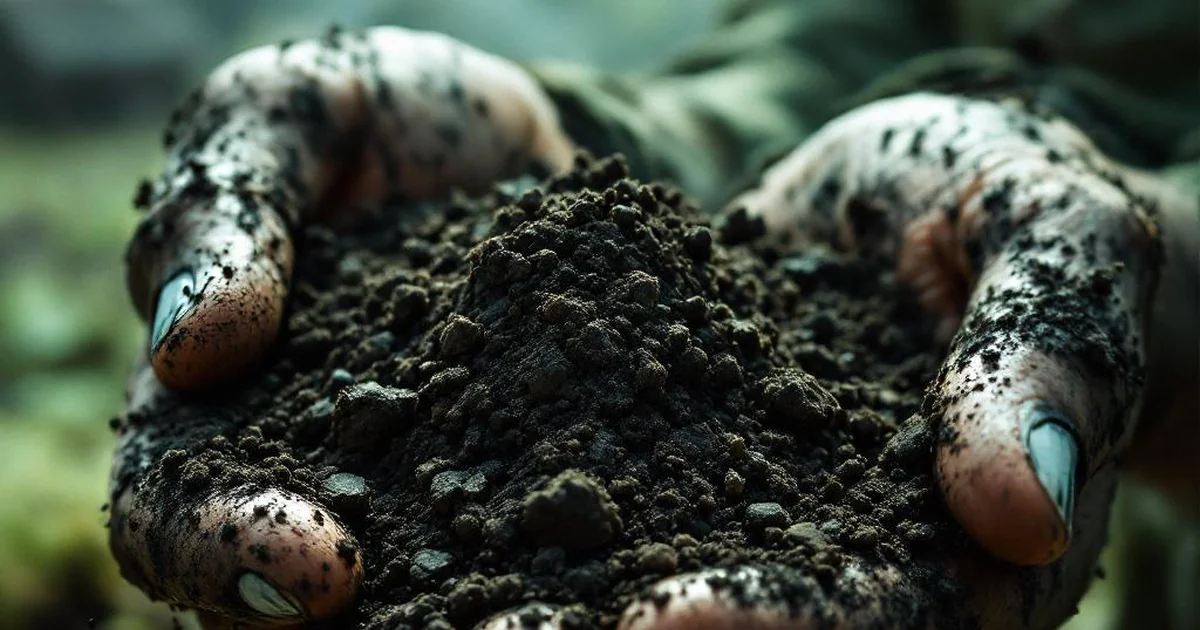
Beneath our feet lies a living universe—one teaspoon of healthy soil contains more microorganisms than there are people on Earth. This intricate web of life, from bacteria and fungi to earthworms and plant roots, forms the foundation of terrestrial ecosystems. Yet this vital skin of our planet is under assault. Human activities have fundamentally altered the geochemical cycles of heavy metals, releasing cadmium, lead, copper, and zinc into agricultural soils at alarming rates (10.3390/toxics9030042). These contaminants, along with persistent pesticides such as insecticides, herbicides, and fungicides, pose direct threats not only to plants and soil-dwelling organisms but to every creature that depends on healthy land for food and water (10.3390/toxics9030042). The consequences extend far beyond the farm gate. Heavy metals accumulate in crops, enter the food chain, and ultimately find their way into human tissues, where they can cause neurological damage, kidney dysfunction, and developmental disorders (10.3390/su7022189). For decades, the dominant response to contaminated soil was excavation and disposal—a costly, disruptive approach that merely moves the problem elsewhere. But a quieter revolution has been unfolding in laboratories and field trials around the world. Scientists are discovering that nature itself holds the key to healing poisoned ground. Among the most promising tools emerging from this research is biochar—a charcoal-like substance produced by heating organic material in the absence of oxygen. This ancient practice, refined by modern materials science, offers a way not just to contain contaminants but to restore the biological vitality of damaged soils.
Mechanism Deep Dive: The Chemical Assault on Agricultural Ground
The contamination of agricultural soils is not a simple problem with a single cause. Heavy metals enter ecosystems through multiple pathways: industrial emissions settle onto fields, mining waste leaches into groundwater, phosphate fertilizers carry cadmium as an impurity, and sewage sludge applied as fertilizer introduces a cocktail of metals including lead, copper, and zinc (10.3390/toxics9030042). Unlike organic pollutants, which can eventually break down, heavy metals persist indefinitely in soil environments. They bind to organic matter, clay particles, and mineral surfaces, but remain bioavailable—ready to be taken up by plant roots and incorporated into the living food web. Once inside plants, these metals disrupt photosynthesis, inhibit enzyme function, and stunt growth. The ecological cascade is devastating: reduced plant biomass means less food for herbivores, which in turn affects predators at every trophic level (10.3390/toxics9030042). For humans, the health implications are equally grave. Chronic exposure to cadmium damages kidneys and weakens bones; lead interferes with neurological development in children; copper and zinc, while essential in trace amounts, become toxic at elevated concentrations (10.3390/su7022189). But heavy metals tell only part of the story. Agricultural soils also accumulate Polycyclic Aromatic Hydrocarbons (PAHs)—a class of organic compounds generated by incomplete combustion of fossil fuels, wood, and agricultural waste (10.3389/fmicb.2020.562813). These molecules, some of which are known carcinogens, persist in soil and resist degradation. They adsorb to organic matter, where they can remain biologically active for years. Together, heavy metals and PAHs create a complex toxic burden that demands equally sophisticated remediation strategies.
Mechanism Deep Dive: Nature’s Cleanup Crew—The Principles of Bioremediation
Confronted with the scale of global soil contamination, scientists have turned to an elegant solution: harness the metabolic machinery of microorganisms and plants to transform, immobilize, or degrade pollutants. Bioremediation, as this approach is called, leverages the fact that bacteria, fungi, and plants have evolved sophisticated biochemical mechanisms for dealing with toxic compounds (10.1007/s11274-016-2137-x). These organisms can convert heavy metals from bioavailable forms into less toxic species through processes such as reduction, methylation, and precipitation (10.3390/su7022189). Microbes, for instance, can reduce hexavalent chromium to its trivalent form, which is far less mobile and toxic. They can methylate mercury, facilitating its volatilization from soil. And they can produce compounds that bind metals, rendering them unavailable for plant uptake (10.1155/2018/2568038). Bioremediation techniques fall into two broad categories. In situ approaches treat contaminated soil in place, minimizing disruption to the ecosystem. Ex situ methods, by contrast, involve excavating soil and treating it elsewhere—a process that is generally more expensive and logistically challenging (10.1007/s11274-016-2137-x). Within these categories, practitioners employ a range of strategies: biostimulation adds nutrients to encourage native microbial populations; bioaugmentation introduces specialized pollutant-degrading microorganisms; and phytoremediation uses plants to extract, stabilize, or degrade contaminants. A particularly promising avenue involves Plant Growth-Promoting Rhizobacteria (PGPR)—beneficial bacteria that colonize plant roots and enhance both plant growth and contaminant tolerance (10.3389/fpls.2018.01473). These microbes produce plant hormones, fix nitrogen, solubilize phosphorus, and produce siderophores that chelate metals. In return, plants provide the bacteria with carbon-rich root exudates, creating a mutually beneficial partnership that can accelerate soil restoration.
Action-Encyclopedia Module: Biochar—Ancient Technology, Modern Solution
Among the most exciting developments in soil remediation is the rediscovery and refinement of biochar. Produced by heating biomass—wood chips, crop residues, manure—in a low-oxygen environment through a process called pyrolysis, biochar is a stable, carbon-rich material with remarkable properties for contaminant immobilization (10.1016/j.envint.2019.105046). Its highly porous structure provides an enormous surface area—up to several hundred square meters per gram—ideal for adsorbing dissolved metals and organic pollutants. The surface of biochar is rich in functional groups such as carboxyl, hydroxyl, and phenolic groups, which can form stable complexes with metal ions. This process, known as surface complexation, effectively locks heavy metals onto the biochar particles, preventing them from being taken up by plants or leaching into groundwater (10.1016/j.envint.2019.105046). Biochar’s high pH also raises soil acidity, which can further reduce the solubility and mobility of many toxic metals. The table below places biochar in context with other common soil amendments used for immobilizing potentially toxic elements (PTEs):
| Amendment Type | Key Mechanism | Properties/Application Notes |
|---|
| Biochar | Adsorption, surface complexation | Promising surface properties, increased interest (10.1016/j.envint.2019.105046) |
| Manure/Compost | Organic matter addition, complexation | Widely used, improves soil structure (10.1016/j.envint.2019.105046) |
| Clay Minerals | Adsorption, ion exchange | Widely used, diverse mineral compositions (10.1016/j.envint.2019.105046) |
| Phosphate Compounds | Precipitation of metal phosphates | Widely used, reduces metal solubility (10.1016/j.envint.2019.105046) |
| Liming Materials | pH adjustment, precipitation | Widely used, alters metal speciation (10.1016/j.envint.2019.105046) |
What distinguishes biochar from these alternatives is its dual benefit: while immobilizing contaminants, it also sequesters carbon for centuries, improves soil water-holding capacity, and provides habitat for beneficial microorganisms.
Action-Encyclopedia Module: The Power of Integration—Combining Strategies for Maximum Effect
No single remediation approach works perfectly for every situation. Soil contamination is heterogeneous, and contaminants often occur in complex mixtures that resist simple treatment. The most effective strategies, therefore, integrate multiple complementary methods to address the full spectrum of pollutants and site conditions (10.1016/j.envint.2019.105046). For heavy metal immobilization, combining biochar with other amendments can produce synergistic effects. Biochar adsorbs metals through surface complexation, while phosphate compounds precipitate them as insoluble metal phosphates, and liming materials raise pH to further reduce solubility (10.1016/j.envint.2019.105046). This multi-pronged approach ensures that even if one mechanism is overwhelmed, others remain effective. For organic pollutants such as PAHs, integrated biological treatments show particular promise. Land farming—tilling contaminated soil to enhance microbial activity—can be combined with biostimulation, where nutrients are added to accelerate native microbial degradation of PAHs (10.3389/fmicb.2020.562813). Bioaugmentation introduces specialized bacterial strains that have evolved to metabolize these recalcitrant compounds. Phytoremediation with plants such as poplar trees or grasses can further enhance degradation in the root zone. And vermiremediation—using earthworms to process contaminated soil—can accelerate the breakdown of organic pollutants through both physical and biological mechanisms (10.3389/fmicb.2020.562813). The integration of biochar with biological strategies is particularly powerful. Biochar provides a stable habitat for microorganisms, protecting them from predation and desiccation while supplying essential nutrients. When combined with PGPR, biochar-amended soils support more robust plant growth, which in turn sustains larger microbial populations that degrade organic contaminants (10.3389/fpls.2018.01473). This creates a positive feedback loop: healthier plants support more microbes, which degrade more pollutants, which further improves plant health.
Love In Action: Three Ways to Support Soil Restoration
Support regenerative agriculture. Choose food grown using practices that minimize synthetic pesticide and fertilizer use. Look for certifications that indicate reduced chemical inputs, and support farmers transitioning to organic or regenerative methods. Every purchase sends a signal that healthy soil matters.
Learn about local contamination. Many communities have brownfields—abandoned industrial sites where soil contamination persists. Research your area’s history. Attend public meetings about land use decisions. Advocate for remediation approaches that prioritize biological solutions like bioremediation and biochar application over simple excavation and disposal.
Prevent future contamination. Dispose of household chemicals, batteries, electronics, and pharmaceuticals through proper channels—never down drains or in regular trash. These items contain heavy metals that accumulate in landfill leachate and eventually reach soil and water. Spread awareness among neighbors and community groups about responsible disposal options.
Conclusion: Healing the Ground Beneath Our Feet
The soil crisis is real, but it is not hopeless. Biochar and integrated bioremediation strategies offer scientifically grounded, ecologically sound pathways to restore contaminated land. These approaches do not simply transfer pollution elsewhere; they transform it, immobilize it, and ultimately heal the biological fabric of the soil. Healthy soil means healthy plants, healthy animals, and healthy people. As we face the intertwined challenges of environmental degradation and climate change, the tools to restore our planet are already emerging from laboratories and field trials. Science-driven restoration—combining ancient wisdom with modern understanding—offers a tangible path forward. The ground beneath our feet is resilient. Given the right support, it can recover. And in that recovery lies hope for every living being that depends on the thin, living skin of the Earth.