Soul Intro: The Living Skin of the Earth
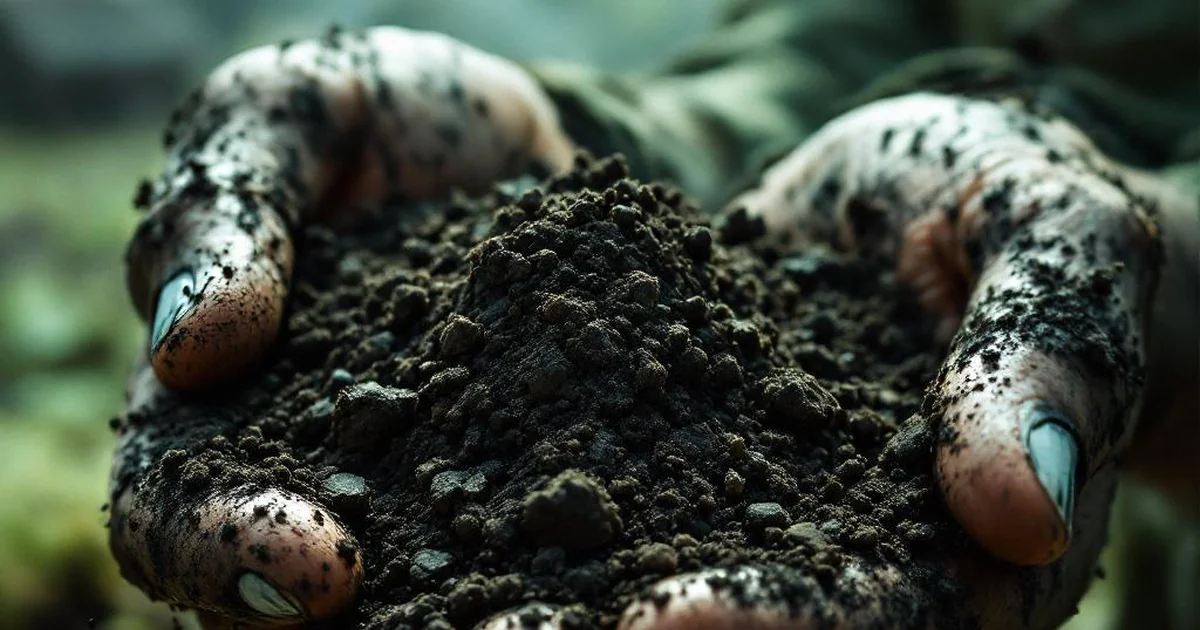
Step outside on a damp morning. Crouch down and press your palm to the soil. What you feel — cool, crumbly, alive — is not dirt. It is a living membrane, a biological frontier where billions of microorganisms orchestrate the fate of ecosystems. Beneath a single square foot of healthy earth, the microbial population rivals the number of humans who have ever lived. They breathe, they eat, they communicate, and they build the foundation upon which all terrestrial life depends.
This hidden world operates on a scale both infinitesimal and planetary. A single gram of soil can contain tens of thousands of microbial species, each performing specialized roles: decomposing organic matter, fixing nitrogen, cycling phosphorus, and forming intimate partnerships with plant roots. Among these partnerships, the relationship between plants and their microbial symbionts stands as one of evolution’s most elegant arrangements. The plant provides carbon-rich exudates — sugars and amino acids — directly to its microbial partners. In return, the microbes deliver nutrients, water, and protection against pathogens.
Yet this ancient alliance faces unprecedented stress. Industrial agriculture, chemical overuse, and climate change have disrupted the delicate balance of soil microbial communities. Tilled fields lose organic carbon at alarming rates. Synthetic fertilizers bypass the microbial middlemen, starving the very organisms that sustain long-term fertility. The result: soils that are less alive, less resilient, and less capable of supporting plant growth.
Understanding the microbial foundation of soil health is not merely an academic exercise. It is a prerequisite for regenerating degraded lands, stabilizing the global carbon cycle, and ensuring food security for a growing population. The science is clear: the health of the visible world depends on the invisible one beneath our feet.
Mechanism Deep Dive: The Microbial Architects of Planetary Resilience
Microorganisms are not merely passengers on Earth’s biosphere — they are its engineers. A comprehensive review in Nature Reviews Microbiology establishes that these tiny organisms support all higher trophic life forms on the planet, forming the base of every food web and driving the biogeochemical cycles that make Earth habitable (10.1038/s41579-019-0222-5). From the depths of the ocean to the highest mountain peaks, bacteria, fungi, archaea, and protists perform the essential work of decomposition, nutrient transformation, and energy flow.
Their role in climate change biology is particularly profound. Microorganisms are both producers and consumers of the three most important greenhouse gases: carbon dioxide, methane, and nitrous oxide. Soil microbes alone hold more carbon than the atmosphere and all terrestrial vegetation combined. When microbial communities are healthy and balanced, they sequester carbon efficiently, locking it away in stable organic forms that resist decomposition. When disturbed — by tillage, deforestation, or chemical inputs — these same communities can become net emitters, releasing stored carbon back into the atmosphere.
The review emphasizes that understanding microbial responses to climate change and human activities is essential for planetary resilience (10.1038/s41579-019-0222-5). This is not a niche concern. Microbial processes influence the global climate system on timescales ranging from minutes to millennia. A single burst of microbial activity after rain can release more carbon dioxide than weeks of industrial emissions from a small city. Conversely, the slow, steady accumulation of microbial necromass — the cellular remains of dead microbes — forms the stable organic matter that gives soil its structure and fertility.
Human activities are altering these microbial dynamics in ways we are only beginning to understand. Nitrogen fertilizers suppress the activity of methane-consuming bacteria. Tillage physically disrupts fungal networks that transport carbon deep into the soil. Climate warming accelerates microbial decomposition, creating a dangerous feedback loop. The path forward requires not just reducing these disruptions, but actively supporting the microbial communities that underpin planetary health.
Mechanism Deep Dive: Symbiotic Partnerships That Lock Carbon Underground
The relationship between plants and their microbial symbionts offers one of the most promising pathways for soil carbon sequestration. Research published in Frontiers in Plant Science demonstrates that enhancing plant microbial symbionts directly benefits plant health and productivity (10.3389/fpls.2020.610065). These symbionts — which include nitrogen-fixing bacteria, phosphate-solubilizing fungi, and growth-promoting rhizobacteria — form intimate associations with plant roots, exchanging nutrients for carbon.
The carbon sequestration mechanism is elegantly simple. Plants capture atmospheric carbon dioxide through photosynthesis and convert it into organic compounds. A substantial portion of this carbon is released into the soil through root exudation — the purposeful secretion of sugars, organic acids, and amino acids — or through the decomposition of root tissues. This carbon then becomes part of the total soil carbon pool, where microbial activity transforms it into stable organic matter.
The Frontiers in Plant Science review quantifies this process: sequestered carbon, whether through root exudation or root decomposition, directly contributes to total soil carbon (10.3389/fpls.2020.610065). This is not a trivial amount. Agricultural soils managed with enhanced microbial symbionts can accumulate carbon at rates that meaningfully offset greenhouse gas emissions. The key is that this carbon is not just stored temporarily — it becomes incorporated into the soil matrix, protected from rapid decomposition by physical and chemical interactions with mineral particles.
This increased soil carbon has a direct effect on global warming potential. By transferring atmospheric carbon into the soil, enhanced plant microbial symbionts reduce the concentration of carbon dioxide in the atmosphere. The effect is synergistic: healthier plants with robust microbial partnerships produce more root biomass and exudates, which feed more microbes, which in turn support more plant growth. This positive feedback loop can transform degraded agricultural soils into carbon sinks.
The implications for climate mitigation are significant. Unlike technological carbon capture, which requires energy-intensive infrastructure, microbial carbon sequestration is self-sustaining and scalable. It requires no external inputs once established — just the right microbial partners and the management practices that support them.
Table: Key Benefits of Soil-Enhancing Practices and Microbial Symbionts
| Practice/Agent | Primary Benefit | Mechanism/Impact |
|---|
| Plant Microbial Symbionts | Enhanced Plant Health & Productivity | Sequestered carbon through exudation or root decomposition into total soil carbon |
| Plant Microbial Symbionts | Reduced Global Warming Potential | Increased total soil carbon, reducing atmospheric carbon |
| Organic Farming Practices | Minimized Environmental & Ecological Impact | Reduced adverse effects on natural cycles, enhanced food quality, exclusion of chemical inputs |
Action-Encyclopedia Module: Organic Farming as Soil Regeneration
Organic farming represents one of the most influential practices for achieving sustainability in agriculture, and its benefits extend directly to soil microbial communities. A study in Farming System provides evidence that organic farming minimizes environmental and ecological impact by reducing adverse effects on natural cycles (10.1016/j.farsys.2023.100005). This is not simply about avoiding synthetic chemicals — it is about actively supporting the biological processes that maintain soil fertility.
The mechanisms are multiple and interconnected. Organic farming increases soil organic matter through the application of compost, green manures, and crop residues. This organic matter serves as food for soil microorganisms, supporting larger and more diverse microbial communities. Higher microbial diversity, in turn, enhances nutrient cycling, disease suppression, and soil structure formation. The result is a self-reinforcing cycle of soil health.
Importantly, organic farming excludes chemical fertilizers, pesticides, and growth hormones — inputs that directly harm beneficial soil organisms. Synthetic nitrogen fertilizers, for example, acidify soil and suppress the activity of mycorrhizal fungi. Pesticides can kill non-target soil organisms, disrupting food webs and reducing biodiversity. By eliminating these inputs, organic farming creates conditions where native microbial communities can thrive.
The research in Farming System also highlights that increased organic matter in agricultural practices supports soil recovery and enhances food quality (10.1016/j.farsys.2023.100005). Soils rich in organic matter have better water-holding capacity, reduced erosion, and greater resilience to drought and flooding. Crops grown in these soils often have higher concentrations of beneficial phytochemicals and lower levels of heavy metals.
For farmers transitioning to organic systems, the benefits are not immediate — soil microbial communities take time to recover from decades of chemical disruption. But the trajectory is clear: organic management consistently leads to higher soil organic carbon, greater microbial biomass, and more stable soil aggregates. These are the foundations of long-term agricultural sustainability.
Action-Encyclopedia Module: Cultivating Microbial Partnerships
Enhancing plant microbial symbionts is not a passive process — it requires deliberate selection and introduction of appropriate strains of microorganisms. The Frontiers in Plant Science research emphasizes that forming effective plant microbial symbionts depends on choosing the right microbial partners for specific crops and soil conditions (10.3389/fpls.2020.610065). A nitrogen-fixing bacterium that performs well in temperate soils may fail completely in tropical conditions. A mycorrhizal fungus adapted to acidic soils may not colonize roots in alkaline environments.
The practical process involves several steps. First, soil testing to understand the existing microbial community and identify any functional gaps. Second, selecting microbial strains that are compatible with the target crop and local soil conditions. Third, applying these microorganisms through seed coatings, soil drenches, or root dips at the appropriate time and concentration. Fourth, managing the soil environment — through reduced tillage, organic matter additions, and minimal chemical inputs — to support the establishment and persistence of introduced microbes.
The research also notes that the performance of enhanced plant microbial symbionts is affected by specific delivery and management practices (10.3389/fpls.2020.610065). Microbial inoculants are living products, and their viability depends on proper storage, handling, and application. Temperature extremes, desiccation, and UV radiation can kill microbial cells before they reach the soil. Even after application, competition with native microorganisms and predation by soil fauna can reduce the survival of introduced strains.
Successful implementation requires an integrated approach. Microbial inoculants work best when combined with other regenerative practices: cover cropping to provide continuous root exudates, reduced tillage to protect fungal networks, and organic amendments to feed the entire soil food web. The goal is not to replace native microbial communities but to supplement them with beneficial strains that fill specific functional roles.
Love In Action: Three Practices for Soil Regeneration
Build your own compost system. Kitchen scraps, yard waste, and fallen leaves are not garbage — they are the raw materials for soil regeneration. Composting transforms organic waste into humus, the stable organic matter that feeds soil microorganisms and improves soil structure. Start with a simple bin or pile, layering green materials (vegetable scraps, grass clippings) with brown materials (dried leaves, cardboard). Turn the pile regularly to provide oxygen. Within months, you will have produced a living amendment teeming with beneficial microbes.
Support local organic farms. Every purchase from an organic farm is a vote for soil health. Organic farmers build soil organic matter, protect microbial diversity, and sequester carbon through their management practices. Join a community-supported agriculture program, shop at farmers' markets, or request organic produce from your grocery store. Your food choices directly influence whether agricultural soils are being degraded or regenerated.
Reduce household chemical use. The pesticides, herbicides, and synthetic fertilizers used in home gardens and lawns harm soil microorganisms just as they do in industrial agriculture. Switch to organic gardening products, use mechanical weed control instead of herbicides, and accept some level of insect presence as part of a healthy ecosystem. Even small changes — like using vinegar-based weed killers instead of glyphosate — make a difference for the microbial communities living in your soil.
Conclusion: The Future Is Rooted in the Present
The evidence is clear: microbial life is the foundation upon which healthy ecosystems, productive agriculture, and a stable climate depend. Plant microbial symbionts enhance plant health, sequester carbon, and reduce global warming potential. Organic farming practices protect these vital partnerships while producing nutritious food. The path forward requires us to see soil not as an inert medium but as a living community deserving of care and respect.
Imagine a future where agricultural landscapes are carbon sinks rather than sources. Where soils are so alive with microbial activity that they resist erosion, hold water through droughts, and support crops without synthetic inputs. Where every farm, garden, and park contributes to planetary health by nurturing the invisible life beneath our feet.
This future is not a distant dream — it is a practical possibility grounded in the science of microbial ecology. The choices we make today, in our gardens, our farms, and our communities, will determine whether we regenerate the living skin of the Earth or continue its degradation. The microorganisms are ready. They have been doing this work for billions of years. The question is whether we will join them.

![IGCSE BIOLOGY REVISION [Syllabus 20] - Nutrient Cycles](/_next/image?url=https%3A%2F%2Fimg.youtube.com%2Fvi%2FMxj-MYS9jms%2Fmqdefault.jpg&w=3840&q=75)