Soul Intro: The Silence Before the Roar
Picture a hillside in the Scottish Highlands, fifty years ago. The heather is cropped short, the soil thin and eroding. No grouse startle from the undergrowth. No eagles circle overhead. The land is beautiful in a skeletal way, but it is quiet—the deep quiet of an ecosystem hollowed out. This is the Anthropocene's signature: not just a changing climate, but a profound silence where biodiversity once thrived. Humanity has become the dominant force shaping Earth's systems, driving climate change, accelerating species loss, and diminishing the resilience of the natural world (10.1007/s13280-021-01544-8). Yet in that same Highland landscape today, something is stirring. Pine martens are returning. Beavers are engineering wetlands. And conservationists are asking a radical question: what if the best way to heal a broken ecosystem is to step back and let nature do the work? This is the promise of rewilding—a conservation approach that aims to restore ecosystem structure and function until nature can sustain itself, autonomous and wild. Across Europe, land abandonment is creating unexpected opportunities for this vision (10.1007/978-3-319-12039-3). The silence is beginning to break.
Mechanism Deep Dive: Rewilding as a Spectrum of Possibility
Rewilding is not a single prescription but a continuum of ambition. At its core, it is a conservation tool designed to restore the structure, function, and natural processes of an ecosystem until it becomes self-sustaining—nature on its own terms (10.1111/cobi.13730). This means moving beyond the traditional conservation goal of preserving a static snapshot of biodiversity. Instead, rewilding embraces dynamism, allowing ecological processes like predation, herbivory, and nutrient cycling to shape the landscape without constant human management.
Crucially, rewilding exists on a spectrum defined by scale, connectivity, and the degree of human influence (10.1111/cobi.13730). On one end lies passive rewilding: simply removing human pressures—like stopping overgrazing or halting deforestation—and letting natural succession unfold. On the other end lies active rewilding, which may involve reintroducing keystone species that have been lost, such as wolves, bison, or beavers. The key variable is autonomy: the less intervention required over time, the more successful the rewilding effort. This framework acknowledges that different landscapes require different approaches. A small, fragmented nature reserve in the English countryside cannot be rewilded in the same way as a vast, interconnected landscape in the Carpathian Mountains. But the guiding principle remains the same: restore the key players and processes, then trust the system to find its own balance.
Trophic Cascades as the Engine of Accelerating Rewilding Initiatives
Trophic cascades—the ecological phenomenon where predators regulate prey populations, which then reshape vegetation and entire ecosystems—are the scientific engine that transforms rewilding from a slow restoration into an accelerated transformation. When keystone species like wolves, jaguars, or sea otters return to degraded landscapes, they don't simply occupy an empty niche; they trigger rapid, multi-layered changes that ripple through every level of an ecosystem within years rather than decades. This acceleration matters profoundly for rewilding initiatives constrained by funding, political will, and climate timelines.
The mechanism is direct and measurable. Wolves reintroduced to Yellowstone in 1995 initiated a trophic cascade that reversed nearly a century of overgrazing: elk populations plummeted from 19,000 to 4,000, allowing willows and aspens to recover within five years (Ripple & Beschta, 2012). That vegetation recovery then stabilized riverbanks, restored beaver habitat, and created microhabitats for songbirds—a domino effect of restoration that would have required active human intervention costing millions, if it were achievable at all. The keystone species became the unpaid ecological engineer.
For rewilding initiatives operating across continents, this acceleration is transformative. Instead of manually removing invasive species, planting native vegetation, and waiting for soil recovery, strategic reintroduction of apex predators and ecosystem engineers does much of the work through natural processes. Sea urchin populations explode when sea otters vanish; sea otters return, urchin numbers crash, and kelp forests—which had been barren—flourish again within months. The initiative shifts from "How do we fix this?" to "What keystone species will fix this faster?"
This acceleration also addresses a hidden rewilding challenge: public engagement. People see dramatic results—elk moving across greening hillsides, fish returning to rivers, forests thickening—and support crystallizes around tangible change. Initiatives with keystone species tend to have stronger stakeholder buy-in and funding continuity.
As you'll discover in the examples ahead, the species we choose to bring back aren't random. They're calculated bets on which animals will catalyze the fastest, most resilient transformation.
Mechanism Deep Dive: The Apex Predator's Silent Command
Among the most powerful tools in the rewilding toolkit are terrestrial apex predators—the wolves, bears, lynx, and big cats that sit at the top of the food web. These are keystone species, meaning their influence on the ecosystem is disproportionately large compared to their numbers. Their fundamental ecological role is to control the populations of their prey and of smaller predators (10.3390/d13020068). This is not merely about killing; it is about regulation.
Apex predators exert control in two distinct ways. First, through direct numerical suppression: by preying on herbivores like deer or elk, they keep those populations in check, preventing overgrazing that can denude forests and disrupt plant communities. Second, and perhaps more subtly, they exert control through behavioral changes—what ecologists call the "ecology of fear." When wolves are present, deer avoid open areas and spend less time foraging in one spot. This shifts where and how they graze, allowing vegetation to recover in previously overbrowsed areas (10.3390/d13020068). The same dynamic applies to mesopredators—medium-sized carnivores like foxes or raccoons. By suppressing these smaller hunters, apex predators release populations of birds, rodents, and other prey species from intense predation pressure. The presence of a single wolf pack can reshape the behavior of an entire landscape, creating a cascade of effects that no amount of human management could replicate.
Mechanism Deep Dive: The Ripple That Becomes a Wave
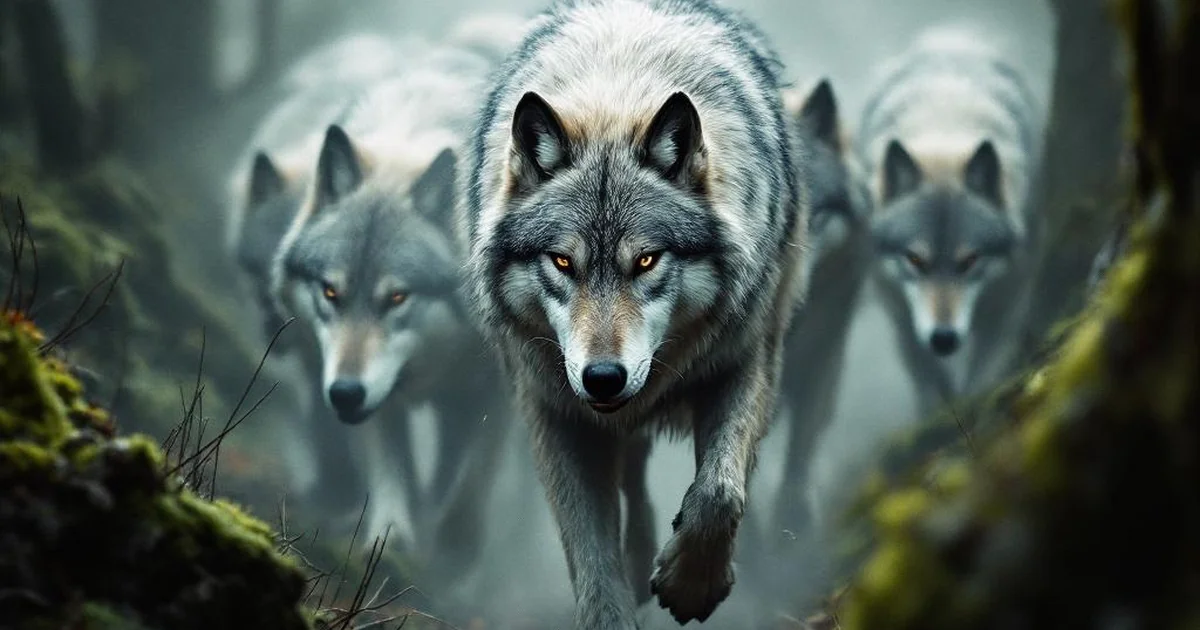
This cascade of effects is the heart of the trophic cascade concept. A trophic cascade occurs when changes at the top of a food web propagate downward, altering the abundance and behavior of species at every subsequent level (10.3390/d13020068). The classic example is the reintroduction of gray wolves to Yellowstone National Park in the 1990s. Wolves preyed on elk, reducing their numbers and, crucially, changing where they felt safe to graze. With elk no longer congregating in river valleys, willow and aspen saplings began to recover. These trees stabilized riverbanks, provided habitat for beavers and songbirds, and even changed the course of streams. The wolves, by simply being wolves, reshaped the geography of the park.
This interconnectedness is the central lesson of trophic ecology. No species exists in isolation. When an apex predator is removed, the effects ripple outward: prey populations explode, vegetation is overgrazed, soil erodes, and the entire ecosystem shifts toward a simpler, less resilient state. Conversely, when an apex predator returns, the system begins to reknit itself. The cascade does not always follow a neat, predictable path—ecosystems are messy and complex—but the pattern is unmistakable. The presence of a top predator restores a layer of ecological complexity that human management, for all its good intentions, cannot artificially construct (10.3390/d13020068). It is a reminder that nature, when given the chance, is a master engineer.
Action-Encyclopedia Module: The Human Footprint and the Path Back
Human disturbance is the primary force suppressing apex predator populations worldwide. It reduces their numbers directly through hunting, trapping, and habitat destruction, and indirectly by fragmenting their territories and shrinking their prey base. But the impact goes deeper than mere population counts. Human activity also triggers profound behavioral responses in these animals: they become more nocturnal, avoid certain areas, and alter their hunting patterns to steer clear of human presence. These behavioral changes, in turn, influence their ecological role (10.3390/d13020068). A wolf that is afraid to venture into an open valley cannot regulate the elk that overgraze it.
The data make this dynamic starkly clear:
| Condition/Factor | Impact on Apex Predators | Consequence for Ecosystem |
|---|
| Human Disturbance | Reduced population numbers, altered behavior | Influences their ecological role, potentially disrupting lower trophic levels |
| Natural Recolonization (Reduced Human Pressure) | Partial recovery of former ranges | Potential restoration of ecological role and trophic regulation |
When human pressure is reduced, the story changes. Some apex predator populations are now partially recovering their former ranges through natural recolonization, without active reintroduction (10.3390/d13020068). Wolves are moving back into Western Europe. Bears are expanding their territories in the Apennines. These are not reintroductions by conservationists; they are the animals themselves, sensing that the landscape has become safe enough to return. This natural recovery is a powerful testament to the resilience of life. It also presents a clear roadmap: reduce human disturbance, and the keystone species will often do the rest.
Action-Encyclopedia Module: Keystone Species as Rewilding Accelerators
The reintroduction or protection of keystone species, particularly apex predators, can dramatically accelerate rewilding initiatives. This is because these species act as ecological multipliers: their presence triggers a suite of cascading effects that restore ecosystem functions far more quickly and comprehensively than top-down human management ever could (10.3390/d13020068). When a rewilding project focuses on restoring habitat structure or planting trees, it is working from the bottom up. When it focuses on returning an apex predator, it is working from the top down—and the top-down approach often creates faster, more self-sustaining results.
The recovery of apex predator populations through natural recolonization is a particularly potent force for rewilding. As these animals re-establish themselves, they begin to regulate prey populations, reduce mesopredator numbers, and create the behavioral landscapes that allow vegetation to recover. This directly advances the rewilding goal of achieving self-sustaining, autonomous nature (10.1111/cobi.13730). The ecosystem no longer needs human managers to cull deer or fence off sensitive areas; the predators do that work for free. In this sense, keystone species are not just components of a rewilded landscape—they are the architects of it. Their return signals that the system is beginning to heal itself, moving toward the resilience and autonomy that define successful rewilding.
Love In Action: Three Ways to Champion the Wild
Support rewilding organizations. Donate to or volunteer with groups like Rewilding Europe, the Yellowstone to Yukon Conservation Initiative, or local land trusts that prioritize large-scale habitat connectivity and predator conservation. Your financial support translates directly into land acquisition, corridor protection, and community engagement.
Reduce your ecological footprint in predator habitats. Choose recreation responsibly. Stick to designated trails in areas where wolves, bears, or lynx are present. Keep dogs leashed. Avoid off-trail hiking during sensitive seasons like denning or calving. Every human incursion, no matter how small, adds to the cumulative pressure on these animals.
Advocate for coexistence policies. Write to your elected representatives in support of livestock compensation programs, predator-friendly farming practices, and wildlife corridors. The most effective predator conservation happens not in parks but in the working landscapes where humans and wildlife must share space. Your voice can help shift policy from persecution to coexistence.
Conclusion: The Wild Future We Choose
The story of keystone species and trophic cascades is ultimately a story of hope. It reveals that ecosystems are not fragile museum pieces but dynamic, resilient systems capable of remarkable recovery when given the chance. Apex predators, acting as keystone species, are the catalysts of this recovery, driving the cascading effects that restore complexity, stability, and autonomy to the natural world. When we reduce human pressure, these animals return. When they return, the land begins to heal itself. The vision of a thriving, self-sustaining planet is not a fantasy—it is a biological reality waiting to be unlocked. The question is not whether nature can recover, but whether we have the courage to step back and let it.