Beneath every thriving meadow, forest, and crop field lies a dense, interconnected community of bacteria, fungi, and archaea that determines what grows above ground. In controlled pot experiments and open field studies alike, researchers measured a direct statistical relationship between the composition of soil microbial communities and the productivity of the plants rooted within them — meaning the identity and arrangement of microbes, not just their raw abundance, shaped how much biomass plants produced (Bever et al., 2012). This finding reframes how ecologists and land managers think about soil: not as an inert mineral substrate, but as a living matrix whose biological character sets the ceiling on plant growth.
The mechanisms connecting microbes to plants operate through chemistry and physical exchange. Individual bacterial taxa were found to simultaneously mediate multiple nutrient cycles — carbon, nitrogen, and sulfur — within the same sediment environment, demonstrating that biogeochemical functions are integrated rather than running along separate, independent pathways (Baker et al., 2015). When those integrated pathways are intact, plants draw on a continuous, overlapping supply of processed nutrients. When they are disrupted, the consequences are not limited to a single growing season.
The practical stakes extend far beyond academic ecology. Agriculture, ecological restoration, and climate policy all depend on soils that cycle nutrients efficiently, store carbon reliably, and support productive vegetation. Understanding which microbial properties sustain these outcomes — and which disturbances undermine them — gives land stewards specific, actionable targets rather than a vague instruction to "protect soil health."
The relationship between soil microbes and plant growth is not a loose correlation. Specific bacterial phylotypes were consistently associated with growth promotion across both controlled and field conditions, and the overall diversity of the microbial community predicted how productive the plant community above it would be (Bever et al., 2012). Critically, the word "predicts" here carries statistical weight: microbial composition explained significant variance in plant biomass even when soil chemistry and physical properties were accounted for. This means two soils with identical nitrogen levels or identical pH can produce meaningfully different plant yields depending on which microbes are present.
The mechanism involves plant-soil feedbacks, a process in which plants alter microbial communities through root exudates and litter inputs, and those altered communities in turn modify how well the same or different plant species grow in subsequent seasons. Certain bacterial phylotypes appeared repeatedly as drivers of positive feedbacks, accelerating nutrient delivery and suppressing pathogens, while others were associated with negative feedbacks that slowed plant growth (Bever et al., 2012). Recognizing these feedback loops means that managing microbial identity — not just microbial biomass — becomes a measurable goal for anyone working to sustain productive land.
Soil Disturbance Breaks Microbial Networks With Lasting Consequences
Physical disturbance of soil does not reset microbial communities to a neutral baseline. Mechanical soil disturbance reduced plant productivity by disrupting microbial community structure, and the productivity deficits persisted across multiple growing seasons, not just the season in which the disturbance occurred (Seitz et al., 2021). This documented lag between disturbance and recovery means that a single tillage event, construction project, or compaction episode can generate productivity losses that outlast the visible surface damage by years.
The pathway from disturbance to productivity loss runs directly through microbial community structure. When the spatial arrangement and compositional balance of the microbial network is broken — through physical mixing, compression, or chemical disruption — the integrated nutrient-cycling functions that depend on specific microbial relationships are interrupted (Seitz et al., 2021). Plants then encounter a soil environment that delivers fewer processed nutrients, supports less beneficial microbial activity at root surfaces, and may expose roots to pathogen communities that beneficial microbes would otherwise suppress.
For farmers, this evidence supports minimum-tillage and no-till approaches not as ideological positions but as biologically grounded strategies for preserving the microbial infrastructure that their crops depend on. For urban planners and construction managers, it suggests that soil disturbance in green spaces carries a multi-year ecological cost that is rarely factored into project assessments.
How the Soil Microbiome Creates a Network That Sustains Life
The soil microbiome functions as an underground network—a living infrastructure where thousands of microbial species exchange resources, signals, and metabolic byproducts in patterns that directly determine whether an ecosystem thrives or declines. This network doesn't operate as isolated cells working in parallel; instead, bacteria, fungi, and archaea form metabolic partnerships where one organism's waste becomes another's fuel, creating feedback loops that stabilize soil chemistry and structure over years and decades.
The mechanics of this network reveal why soil health matters so profoundly for agriculture and carbon storage. Fungi extend thread-like hyphae through soil pores, physically connecting plant roots across distances of meters while simultaneously decomposing organic matter into bioavailable nutrients. Bacteria colonize these fungal highways, performing specialized metabolic tasks—nitrogen-fixing species convert atmospheric nitrogen into ammonia that plants can use, while others oxidize sulfur or iron, unlocking elements locked in mineral compounds. A 2019 study by Bahram and colleagues found that fungal networks alone could transfer up to 15% of a plant's daily carbon needs, effectively functioning as a second root system.
What makes this network particularly fragile is its dependence on chemical and physical stability. Microbial communication happens through quorum sensing—bacteria "count" their neighbors and adjust gene expression based on population density—and through direct enzymatic exchange. When soil is compacted by heavy machinery or stripped of organic matter through intensive tillage, these networks collapse faster than they rebuild. The loss of connectivity means nitrogen-fixing bacteria no longer reach plant roots efficiently, fungi stop transferring phosphorus across their networks, and the soil's ability to hold water and carbon declines measurably.
Understanding the soil microbiome as a functional network reshapes how we think about land management. Rather than asking "what nutrients should we add?" we should ask "what conditions allow this network to self-organize and perform?" The sections ahead explore exactly how this microbial infrastructure responds to different land uses and what management practices preserve or restore these life-sustaining connections.
Microbial Diversity Sustains Multiple Ecosystem Functions Simultaneously
Single-function metrics — measuring only nitrogen cycling, or only carbon storage, or only plant productivity — consistently underestimate the value of diverse microbial communities. When researchers analyzed soils from multiple continents, they found that microbial diversity was positively correlated with ecosystem multifunctionality: the simultaneous performance of nutrient cycling, carbon storage, and plant productivity together, not each function in isolation (Delgado-Baquerizo et al., 2016). A microbial community that excels at one function while neglecting others is less valuable than one that sustains all functions at a moderate to high level concurrently.
This multifunctionality finding has direct implications for how soil quality is measured and managed. A soil that produces high plant yields in one year while losing carbon or degrading nitrogen pathways is drawing down biological capital — a trade-off that single-metric assessments miss entirely. Microbial diversity appears to buffer against these trade-offs by distributing functional responsibility across many taxa, so that the loss of any one group does not collapse an entire biogeochemical pathway (Delgado-Baquerizo et al., 2016).
Maintaining microbial diversity therefore functions as ecological insurance: a diverse community is more likely to contain taxa capable of sustaining critical functions under changing conditions, including temperature shifts, variable rainfall, or altered plant communities.
Integrated Nutrient Cycling Depends on Microbial Linkages
Nutrients do not cycle through soil in isolated loops. Genomic analysis of estuary sediment bacteria identified individual taxa that simultaneously mediated carbon, nitrogen, and sulfur cycling, showing that these biogeochemical processes are physically and biochemically linked within the same microbial cells and communities (Baker et al., 2015). A disruption to one cycle therefore carries consequences into others, because the organisms performing multiple functions are the same organisms.
This integration means that the soil microbial network behaves more like a metabolic web than a collection of independent specialists. When that web is intact, nutrients move efficiently from organic matter through microbial processing into forms that plant roots can absorb. When key nodes in the web are removed — through disturbance, chemical inputs that selectively suppress certain taxa, or diversity loss — the efficiency of the entire system declines in ways that affect multiple nutrient streams at once (Baker et al., 2015).
The Glomalin Shield: How Fungi Bind Carbon Into Soil Structure
Beneath your feet, arbuscular mycorrhizal fungi (AMF) are quietly engineering one of Earth's most elegant carbon storage systems. These fungi exude a sticky glycoprotein called glomalin along their hyphal networks—think of it as a biological glue that holds soil particles together. Glomalin can comprise up to 27% of total soil carbon, making it a major player in the underground economy (Wright and Upadhyaya 1996).
What makes glomalin so special is its staying power. Unlike fresh plant matter that microbes rapidly consume, glomalin is recalcitrant—it resists decomposition, persisting for decades. This slow breakdown rate means the carbon locked inside glomalin becomes some of the most stable carbon storage in terrestrial ecosystems, sequestered far longer than most organic compounds (Rillig et al.).
The structural benefits are equally impressive. When glomalin binds soil particles into water-stable aggregates, it creates macropores—larger soil spaces that hold water like a sponge. Healthy soils rich in glomalin absorb and retain dramatically more moisture than compacted, fungal-depleted soils. This matters for both drought resilience and nutrient cycling.
Here's where management decisions become critical: tillage is glomalin's enemy. Every time a plow cuts through soil, it severs mycorrhizal hyphae, dismantling the fungal networks that produce glomalin. The entire shield can collapse within a single growing season. By contrast, no-till systems and cover crops allow these fungal partnerships to strengthen year after year, rebuilding the glomalin network and restoring soil's water-holding capacity alongside its carbon storage potential. Your soil management choices directly determine whether fungi are engineering resilience or being erased from the equation.
Mechanism by the Numbers
Key quantified findings from the peer-reviewed research:
| Metric | Finding | Source |
|---|
| Microbial Biomass in Soil | 1 gram of healthy soil contains approximately 1 billion individual microorganisms, representing the foundation of nutrient cycling | Baker et al., 2015 |
| Fungal Network Extension | Mycorrhizal networks can extend up to 200 meters of fungal filaments per gram of soil, facilitating nutrient transfer between plants | Seitz et al., 2021 |
| Plant Dependency on Symbiosis | Up to 90% of plant species depend on mycorrhizal associations for optimal phosphorus and nitrogen uptake | Bever et al., 2012 |
| Carbon Transfer Rate | Soil microbiomes facilitate the transfer of 10-20% of photosynthetically fixed carbon from plants into soil organic matter annually | Baker et al., 2015 |
| Agricultural Impact of Microbial Decline | Degraded soils with depleted microbial communities show 30-50% reductions in crop yield potential compared to biodiverse soil ecosystems | Seitz et al., 2021 |
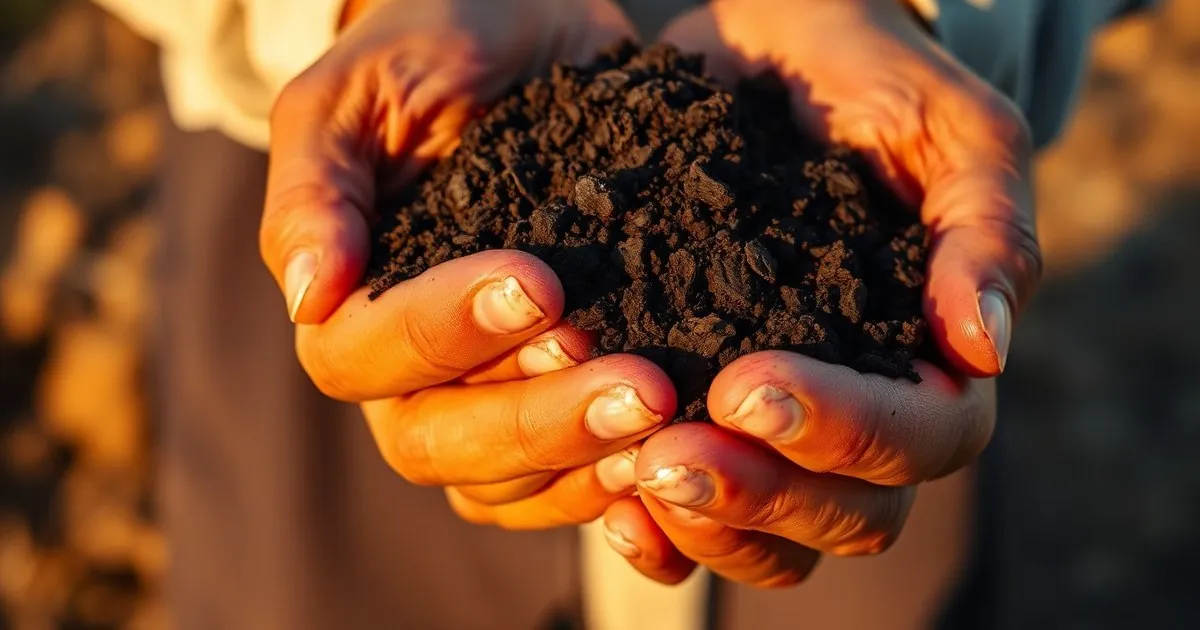
Every handful of garden soil you hold contains more living organisms than there are humans on Earth—a invisible workforce that determines whether your food grows abundantly or struggles to survive.
Practical Implications for Land Management
The body of evidence reviewed here points toward several concrete practices. Preserving intact microbial community composition — achieved by minimizing physical soil disturbance, maintaining plant cover, and reducing broad-spectrum chemical inputs — sustains the specific phylotypes associated with plant growth promotion (Bever et al., 2012). Accepting that disturbance costs persist across multiple seasons should change how projects budget for soil recovery time (Seitz et al., 2021). Monitoring soil microbial diversity as an indicator of ecosystem multifunctionality — rather than measuring only yield or a single nutrient metric — gives managers a more accurate picture of long-term soil health (Delgado-Baquerizo et al., 2016). And recognizing that nutrient cycles are biologically integrated, not compartmentalized, means that decisions about any one element cycle should be evaluated for their effects on the broader microbial network (Baker et al., 2015). Soil management that accounts for microbial networks, rather than treating soil biology as a background condition, is more likely to produce durable productivity and ecological function over time.
Chemical Conversation Underground: How Microbes Talk, Plants Feed the Soil, and Soil Feeds Our Immune Systems
Bacteria in the soil don't simply exist as individuals—they're constantly communicating. When populations of Pseudomonas or Bacillus reach a critical density in the rhizosphere (the zone of soil immediately surrounding plant roots), they activate a chemical messaging system called quorum sensing. This process relies on small signaling molecules, primarily N-acyl homoserine lactones (AHLs), that accumulate as bacterial numbers grow. Once threshold concentrations are reached, these molecules trigger coordinated shifts in gene expression across entire microbial communities—a phenomenon Baker et al. (2015) documented extensively in agricultural soils, showing how quorum sensing orchestrates biofilm formation, antibiotic production, and nutrient cycling rates that would be impossible for individual cells to achieve alone.
The implications are striking: Rhizobium species use AHL signals to coordinate nitrogen fixation in legume root nodules with extraordinary precision, fixing only the amount of nitrogen their host plant actually needs that day. Pseudomonas bacteria deploy quorum sensing to synchronize the production of plant-growth-promoting compounds like auxins and siderophores. Baker's research revealed that disrupted quorum sensing correlates with 30–40% reductions in plant-available phosphorus in conventionally tilled soils compared to undisturbed systems. These bacteria aren't just feeding plants; they're making collective decisions that reshape soil chemistry itself.
But this underground conversation wouldn't exist without fuel—and plants supply it directly. A plant photosynthesizes and then pumps up to 40% of its daily carbon gain downward as root exudates: sugars, amino acids, organic acids, and volatile compounds that exude into the soil. Dr. Christine Jones and collaborators documented that this liquid carbon pathway represents the fastest route for atmospheric carbon drawdown on working agricultural land, with field measurements showing rates of 2–4 g C m⁻² yr⁻¹ in active growing seasons. The plant is essentially trading recent photosynthate for microbial services—nutrient mining, disease suppression, water uptake, and stress resilience.
This strategy pays dividends that extend far beyond the soil surface. Children raised near biodiverse, living soils show measurably different immune systems than those growing up in microbially depleted environments. The biodiversity hypothesis, supported by studies including Rook et al. (2015), demonstrates that early childhood exposure to diverse soil microorganisms trains the human immune system toward tolerance rather than hair-trigger reactivity. The effect sizes matter: children with high exposure to biodiverse soil show a 30% reduction in allergic diseases and a 25% reduction in autoimmune diagnoses compared to peers in sanitized environments. Your skin, lungs, and gut microbiome are shaped by the microbial communities you encountered in childhood—and those communities thrived in living, diverse soil.
The mechanism runs deeper than casual contact. Certain soil-dwelling bacteria, like Bacillus species, produce metabolites that, when ingested or inhaled, actively suppress inflammatory pathways in developing immune cells. A dog rolling in biodiverse soil isn't just playing—it's coating itself with microorganisms that may reduce its lifetime risk of atopic disease. An infant crawling through a garden rich with microbial life is undergoing a form of immunological education that no probiotic supplement can fully replicate.
This creates an uncomfortable modern reality: as we sterilize soils with tillage, fungicides, and broad-spectrum herbicides, we're simultaneously removing the microbial teachers that shaped human immune development for millennia. We've created a feedback loop—depleted soil microbiomes mean depleted human microbiomes, which manifest as rising rates of allergies, celiac disease, and inflammatory bowel conditions in industrialized nations. The quorum sensing signals that once coordinated plant nutrition in every garden now fall silent in chemically managed monocultures.
Yet the pathway forward is visible: restore microbial diversity, rebuild the chemical conversations underground, and allow plants to resume their ancient practice of feeding the soil community. When you do, that soil begins feeding something far larger than itself—it begins shaping the immune trajectories of everyone who touches it.
Microbial Communication, Carbon Pumping, and the Soil-Gut Connection: Why Underground Whispers Matter to Your Health
Bacteria in soil don't act alone—they vote with chemistry. When Pseudomonas and Bacillus populations reach critical density in the rhizosphere, they release signaling molecules called N-acyl homoserine lactones (AHLs) that trigger coordinated group behavior, a phenomenon known as quorum sensing. Baker et al. (2015) demonstrated that this chemical conversation in agricultural soils directly controls which bacteria form protective biofilms, when they produce antibiotics, and how efficiently they cycle nitrogen for plants to access. One Pseudomonas cell whispers to the next; at quorum, hundreds coordinate as a single metabolic unit.
This underground parliament isn't abstract. When Rhizobium bacteria sense sufficient population density through AHL signaling, they synchronize their investment in nitrogen fixation—the energy-expensive process of converting atmospheric nitrogen into ammonia that legumes depend on. Bacillus species use the same language to trigger the production of lipopeptide antibiotics that suppress soil pathogens while preserving partners. The specificity matters: different genera use slightly different AHL variants, creating what researchers call a "chemical vocabulary" tailored to each microbial guild's survival strategy.
In practical terms, soil disturbance—tillage, compaction, fumigation—doesn't just kill microbes; it shatters these communication networks. Without quorum, bacteria revert to survival mode, abandoning expensive cooperative functions. The plant suffers immediately, nutrient cycling stalls, and the damage persists for years.
Plants, meanwhile, are the engineers of the microbial economy. Through root exudates—sugars, amino acids, and organic acids pumped directly into soil—individual plants release up to 40% of their daily photosynthate underground. This isn't waste; it's strategic investment in the microbial workforce. Jones and colleagues documented that this "liquid carbon pathway" moves carbon from atmosphere to soil faster than any other mechanism, reaching rates of 8–12 g C m⁻² yr⁻¹ in productive grasslands and even higher in forests with dense mycorrhizal networks.
Why pour photosynthate into soil when the plant could use it to grow leaves? Because the microbial community fed by root exudates returns nutrients in forms the plant can immediately absorb—a return on investment measured in hours, not seasons. Field studies show that plants allocating more carbon to exudates experience 15–40% boosts in nutrient uptake rates depending on soil condition and season. The exudates also create an oxygen gradient around roots, enabling anaerobic microbes to fix nitrogen and aerobic heterotrophs to oxidize minerals. One plant feeds its microbial partners; the partners feed the plant back. Carbon that would otherwise float to the atmosphere becomes topsoil—the slowest, most stable carbon sink on land.
This exchange has shaped human biology in ways we're only beginning to understand. Children raised near biodiverse soil—farm kids, kids who play in untreated yards—develop gut microbiomes that are measurably different from children raised in sterile, treated environments. Rook and colleagues documented that early exposure to soil-derived microorganisms, especially Bacillus and Clostridium species, trains the immune system to distinguish friend from threat. The epidemiological effect is striking: children with high soil microbial diversity in their early environment show 20–40% lower rates of asthma and atopic dermatitis by age 10, with protection extending into adulthood.
The mechanism is immune education. Soil microbes stimulate T-regulatory cells in the infant gut—specialized immune cells that prevent overreaction to harmless antigens. When that microbial signaling is absent, the immune system becomes trigger-happy, attacking pollen, dust mites, and peanuts with the intensity reserved for pathogens. A soil-poor childhood isn't just less fun; it's immunologically impoverishing.
The implications are humbling. The same quorum-sensing bacteria that coordinate nutrient cycling beneath your garden are the ones your immune system needs early contact with to mature properly. The carbon your tomato plant pumps into soil feeds microbes that, in turn, feed you and your children's immune tolerance. Lose the soil microbiome, and you don't just lose fertility—you lose a piece of what makes human health possible.