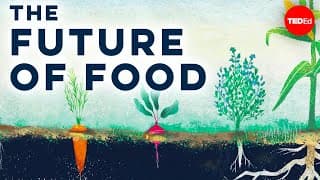
Soul Intro: The Quiet Revolution in Plain Sight
Imagine a patch of land that was once barren, its soil compacted and lifeless. Now, a decade later, the same spot hums with activity: a layered canopy of fruit trees shelters berry bushes and medicinal herbs, while chickens scratch beneath, aerating the earth. Rainwater, once allowed to run off and erode the topsoil, now seeps into swales and recharges the water table. This is not a pristine wilderness, but a designed ecosystem—a product of human intention working in concert with natural processes. This is permaculture in action.
Permaculture, a contraction of "permanent agriculture" and "permanent culture," is a holistic design science that seeks to create human settlements and agricultural systems that are as resilient, productive, and self-sustaining as natural ecosystems. It moves beyond simply growing food to encompass the entire web of relationships—ecological, social, and economic—that sustain a community. The central premise is deceptively simple yet profoundly radical: that by mimicking nature’s patterns, we can restore degraded landscapes while simultaneously building stronger, more equitable local economies and tighter-knit communities.
This is not a nostalgic retreat to some imagined pastoral past. It is a forward-looking, evidence-informed response to the converging crises of climate change, biodiversity loss, and social fragmentation. As we will see, the scientific literature increasingly underscores that our current food systems are failing on multiple fronts—environmentally, economically, and socially. Permaculture offers a framework for weaving these threads back together, demonstrating that ecological restoration and human well-being are not trade-offs but two sides of the same regenerative coin.
Mechanism Deep Dive: Why Our Food Systems Are Failing Us
To understand why permaculture matters, we must first confront the scale of the problem it addresses. Our modern agro-food systems are not merely inefficient; they are, by their very structure, unsustainable. Food systems are complex social-ecological systems, and the underlying processes that drive them—from global commodity chains to monoculture farming—are contributing to profound environmental, economic, and social unsustainability (10.1007/s00267-016-0664-8). This is not an accident of poor management but a feature of a system designed for maximum throughput and short-term profit, with little regard for long-term consequences.
The human cost of this broken system is staggering. Current agro-food systems have significantly impacted the environment and climate, including the degradation of soil and water resources, and have paradoxically contributed to increased hunger, food insecurity, and poor diets globally (10.3390/agriculture12101554). The numbers paint a grim picture:
| Metric | Value | Context |
|---|
| People affected by hunger | 828 million | Increased |
| Global population food insecure | 29.3% |
| Children under five years of age stunted | 22% |
Nearly a third of humanity cannot reliably access enough nutritious food, while the very systems producing that food are destroying the ecological foundations—fertile soil, clean water, stable climate—upon which future food production depends. This is a vicious cycle: environmental degradation worsens food insecurity, which in turn drives further unsustainable land use as people struggle to survive. The environmental impacts are not peripheral; they are central to the crisis. Soil erosion, water depletion, and greenhouse gas emissions from industrial agriculture are not externalities to be managed but direct consequences of a system that treats natural capital as an infinite resource to be consumed.
The Social and Economic Dimensions That Make Permaculture Systems Viable at Scale
The social and economic dimensions of permaculture are not secondary concerns—they are the primary mechanisms that determine whether ecological restoration actually persists in communities. When we examine why most conservation efforts fail within five years, the answer rarely lies in the ecology itself; it lies in whether local people can afford to maintain the system and whether they have social structures supporting long-term stewardship (Ostrom, 2009).
Permaculture systems generate economic viability through polyculture productivity that conventional monocultures cannot match. A well-designed permaculture plot produces multiple harvests across different seasons and market niches, reducing the boom-bust cycle that forces farmers back to extractive practices. Research on integrated agroforestry systems shows that diverse farms generate 30–50% higher net income per hectare than single-crop operations, while simultaneously rebuilding soil carbon and habitat (Nair et al., 2009). This isn't idealism—it's a direct economic incentive alignment.
The social dimension operates through what researchers call "social-ecological memory." Communities that practice permaculture together develop shared knowledge systems, labor-sharing networks, and collective decision-making about land management. These networks create resilience: when one household faces economic pressure or climate stress, the community's distributed resources and expertise provide buffers. Indigenous communities maintaining traditional polyculture systems demonstrate this vividly—their land tenure security and collective governance structures have preserved biodiversity at rates far exceeding protected areas managed from outside (Garnett et al., 2018).
However, the permaculture-community connection requires intentional design. Markets must reward ecological practices; land tenure must be secure enough for multi-year investment; and knowledge transfer systems must connect experienced practitioners with newcomers. Without these economic and social infrastructures, even ecologically sound systems collapse when the founding generation ages or economic pressure intensifies.
The articles ahead explore how communities are building these infrastructures—creating local markets, securing commons rights, and establishing mentorship systems that allow permaculture to shift from individual homestead practice into community-scale ecological restoration.
Mechanism Deep Dive: Untangling the Farming System Confusion
The path toward a solution is complicated by a surprising obstacle: we often struggle to even define what we mean by "sustainable farming." The academic landscape is littered with overlapping and often contradictory classifications of farming systems—organic, agroecological, regenerative, biodynamic, conservation agriculture, and so on. This proliferation of terms creates confusion for policymakers, farmers, and consumers alike, making it difficult to compare practices, assess outcomes, or scale up successful models.
A critical review of farming system classifications highlights this problem, noting that overlapping definitions, principles, and practices create significant confusion, and that what is urgently needed are analytical frameworks that integrate both the biotechnical functioning of a farm—its soil health, water management, biodiversity—and its socio-economic context (10.1007/s13593-017-0429-7). A farming system cannot be evaluated solely on its yield per hectare; it must also be assessed on its labor conditions, its contribution to local food access, its resilience to market shocks, and its impact on community cohesion.
This is precisely where permaculture offers a clarifying lens. Permaculture is not a prescriptive set of techniques but a design framework based on a core set of ethical principles—care for the earth, care for people, and fair share—and ecological principles derived from observing natural systems. It inherently addresses both the biotechnical and socio-economic dimensions that the literature calls for. A permaculture-designed farm is not just about polycultures and no-till soil management; it is also about creating local food networks, sharing surplus, and building community decision-making processes. By design, it refuses to separate the ecological from the social. This integrated approach is not a luxury but a necessity for developing truly sustainable agriculture models that can persist and thrive over the long term.
Action-Encyclopedia Module: The Resilience of Place-Based Communities
How does this translate into real-world action? The concept of place-based resilience provides a powerful framework. Resilience, in this context, is not simply the ability to bounce back from a crisis; it is the deeper capacity of a community to withstand and adapt to change over the long term, encompassing proactive mitigation and adaptation strategies for social, economic, and environmental challenges (10.1080/09654313.2015.1082980). It is about building a community that is robust, flexible, and capable of learning from its experiences.
A compelling example of this in action comes from the Transition Towns movement in the United Kingdom. These are grassroots, community-led initiatives that aim to build local resilience in the face of peak oil and climate change. Research on these towns demonstrates their capacity for learning, robustness, and innovation in developing community-led projects—from local food growing schemes and community-owned renewable energy to repair cafes and local currency systems (10.1080/09654313.2015.1082980). These are not top-down government programs but organic, citizen-driven efforts that reweave the social fabric while reducing ecological footprints.
The connection to permaculture principles is direct. Transition Towns explicitly draw on permaculture design as a guiding philosophy. Their focus on local self-sufficiency, closed-loop systems, and community cooperation mirrors permaculture’s ethics and design principles. They demonstrate that building resilience is not an abstract concept but a tangible, daily practice of planting community orchards, sharing skills in tool libraries, and creating neighborhood mutual aid networks. This is ecological restoration with a human face, where the restored "ecosystem" includes the local economy and social relationships.
Action-Encyclopedia Module: The Economics of Enough
A common objection to permaculture and community-based restoration is that they are economically unviable—a nice idea but not scalable. The evidence suggests the opposite is true, but only if we broaden our definition of "economic." The economic benefits of transitioning to sustainable food systems are substantial, particularly when we consider their role in improving long-term societal welfare (10.1007/s00267-016-0664-8). This requires moving beyond a narrow focus on GDP growth to include measures of well-being, ecosystem health, and social equity.
We must also account for the true costs of the current system. The economic costs of unsustainable agro-food systems are enormous, including their significant contribution to climate change, the degradation of natural resources, and the public health crises linked to poor diets and food insecurity (10.3390/agriculture12101554). These are not just environmental problems; they are economic liabilities that drain public budgets and undermine future productivity. When a farming system depletes its soil, that is a loss of natural capital. When it generates pollution, that is a cost borne by society.
Building truly sustainable systems requires systems approaches and integrated assessment tools that can model the intrinsic properties of food systems and ensure they maintain or enhance essential outcomes over time (10.1007/s00267-016-0664-8). Permaculture-inspired models offer a practical pathway. By diversifying production, reducing external inputs (like synthetic fertilizers and pesticides), and shortening supply chains, these models create localized, resilient economies that are less vulnerable to global price shocks and supply disruptions. They enhance local livelihoods by keeping more value within the community, creating skilled green jobs, and fostering a culture of entrepreneurship and innovation centered on ecological stewardship. The economics of permaculture is an economics of enough—enough food, enough work, enough connection—rather than an economics of endless, extractive growth.
Love In Action: Cultivating Your Own Patch of Resilience
The shift toward community-based ecological restoration does not require waiting for government policy or technological breakthroughs. It starts with tangible, daily choices. Here are three ways to begin:
Support your local food web. Join a community garden, subscribe to a CSA (Community Supported Agriculture) box, or shop at a farmers' market. These actions directly strengthen the local food economy and reduce the distance between producer and consumer. They also build social connections around a shared, life-affirming activity.
Learn and apply permaculture design principles in your own space. You do not need acres of land. A balcony with herbs, a front lawn converted to a vegetable patch, or a rain barrel to capture runoff are all acts of permaculture design. Focus on observing your site, catching and storing energy (rain, sunlight), and producing no waste. Small, visible successes inspire neighbors and build momentum.
Advocate for systemic change at the local level. Attend a town council meeting to support zoning changes that allow for urban agriculture or community composting. Speak up for policies that protect local farmland from development. Use your voice and your vote to support leaders who understand that food system resilience is a core component of community safety and well-being.
Conclusion: We Are the Ecosystem
The story of permaculture in community-based ecological restoration is a story of reconnection—reconnecting our food to the land, our economy to the community, and our daily lives to the rhythms of the living world. The challenges we face—climate change, food insecurity, social isolation—are not separate problems demanding separate solutions. They are symptoms of a deeper disconnection from the ecological and social systems that sustain us.
Permaculture offers a powerful framework for addressing these complex, interconnected challenges. It reminds us that ecological health, social vitality, and economic well-being are not competing priorities but mutually reinforcing dimensions of a single, regenerative whole. The science is clear: our current systems are failing. The path forward lies not in more sophisticated technology or more aggressive extraction, but in a humble, intelligent, and loving imitation of nature’s own designs. The future we are building is not a distant utopia; it is a garden, planted one community at a time, where people and the planet can truly thrive together.