Soul Intro: The Silent Language of Renewal
Imagine a landscape where the soil has turned to dust, where water runs off in muddy torrents rather than soaking in, where biodiversity has dwindled to a whisper. This is not a scene from a distant dystopia—it is the reality of millions of acres worldwide, degraded by decades of industrial agriculture and shortsighted land management. Yet in this quiet crisis, a different story is unfolding. On the edges of these wounded lands, farmers, ecologists, and communities are beginning to listen to a different rhythm—the patient, intelligent patterns of nature itself.
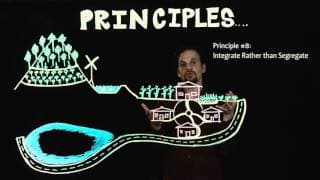
This is where permaculture enters, not as a technique to be applied, but as a way of seeing. Permaculture design principles offer a holistic approach to ecological restoration, treating land not as a machine to be optimized but as a living system capable of self-renewal. The premise is both simple and radical: working with nature's patterns rather than against them can heal degraded ecosystems, restore soil health, and rebuild the intricate web of relationships that sustains life. A degraded landscape, in this view, is not a hopeless case but a system that has lost its connections—connections that can be carefully rewoven. The principles of observation, stacking functions, and closing loops become tools for ecological repair, transforming barren fields into thriving habitats and unproductive soil into carbon sinks. This is not about imposing human will on the land but about learning the language of renewal that nature has always spoken.
Mechanism Deep Dive: Permaculture as an Agroecological Movement
Permaculture is far more than a gardening method—it is an agroecological movement characterized by a unique approach to system design. Research published in Agronomy for Sustainable Development frames permaculture as a promising alternative to industrial agriculture, one that deliberately avoids the negative social and ecological consequences that have come to define conventional farming (10.1007/s13593-013-0181-6). Unlike industrial systems that simplify landscapes into monocultures, permaculture designs mimic the diversity, resilience, and closed-loop nutrient cycling found in natural ecosystems. Every element—a tree, a pond, a chicken coop—is placed deliberately to serve multiple functions, creating synergies that reduce external inputs and build ecological complexity.
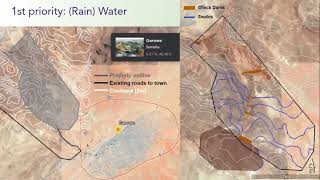
The mechanism at work here is systems thinking applied to land management. Where industrial agriculture treats soil as an inert medium for chemical inputs, permaculture sees soil as a living community. Where conventional farming fragments landscapes into separate zones for crops, livestock, and waste, permaculture integrates these elements into mutually beneficial relationships. A chicken tractor, for example, provides pest control, fertilization, and soil aeration in a single mobile unit. A swale—a ditch dug along a contour—captures rainwater, recharges groundwater, and creates microclimates for moisture-loving plants. These are not arbitrary techniques but expressions of core design principles: observe and interact, catch and store energy, obtain a yield.
Yet the transition to agroecological production is not simple. The same research emphasizes that this shift is a complex project requiring diverse contributions beyond scientific institutions (10.1007/s13593-013-0181-6). It demands the practical knowledge of farmers, the cultural wisdom of indigenous communities, and the creativity of designers and artists. Permaculture's strength lies in its adaptability—it is not a rigid prescription but a framework that can be tailored to any climate, culture, or scale. This diversity of input is essential because ecological restoration is never a one-size-fits-all endeavor; it requires listening to the specific needs of each place.
Mechanism Deep Dive: Regenerative Agriculture and the Living Soil
At the heart of permaculture's approach to restoration lies regenerative agriculture, a practice with a clear and urgent core intention: to improve soil health or restore highly degraded soil (10.3184/003685017x14876775256165). This is not merely about boosting crop yields in the short term. The mechanism is symbiotic—as soil health improves, so do the ecosystem services that sustain all life. Healthy soil stores water like a sponge, reducing both floods and droughts. It sequesters carbon from the atmosphere, pulling it back into the ground where it belongs. It hosts a teeming underground community of bacteria, fungi, and invertebrates that cycle nutrients and support plant health. The restoration of degraded soil is, in effect, the restoration of an entire living system.
Soil occupies a pivotal position in what scientists call the global nexus of soil-water-air-energy (10.3184/003685017x14876775256165). Its treatment has massive consequences for climate change. When soil is degraded through tillage, overgrazing, or chemical exposure, it releases stored carbon into the atmosphere as carbon dioxide. Globally, degraded soils have already released billions of tons of carbon that took millennia to accumulate. Conversely, when soil is managed regeneratively—through no-till farming, cover cropping, rotational grazing, and composting—it becomes a powerful carbon sink. The same research underscores that the treatment of soil can have either beneficial or detrimental consequences for the climate, depending entirely on whether we choose to preserve and regenerate it or continue to degrade it.
This is where permaculture design principles align directly with climate action. By prioritizing soil health, permaculture practitioners are not only restoring degraded land—they are actively drawing down atmospheric carbon. A single hectare of well-managed regenerative soil can sequester several tons of carbon per year, while simultaneously improving water retention, reducing erosion, and supporting greater biodiversity. The soil beneath our feet is not just dirt; it is the most accessible and powerful tool we have for ecological restoration and climate mitigation.
Action-Encyclopedia Module: Restoration and Regeneration in Practice
The concepts of "restoration" and "regeneration" are central to permaculture's mission, yet they carry distinct meanings that matter for how we design interventions. In the circular economy literature, "restoration" is a better-defined concept, referring to the process of returning a system to a healthy, functional state after degradation (10.1111/jiec.12987). Restoration implies a baseline—a reference point of what the ecosystem looked like before human disturbance. It is about healing wounds and reestablishing natural processes.
Regeneration, by contrast, is a more expansive and forward-looking concept. It goes beyond simply returning to a previous state; it involves building new capacity for health, resilience, and self-renewal. A restored wetland might function again as it once did; a regenerated landscape might evolve into something even more robust and adaptive than its original state, capable of withstanding new pressures like climate change. The precision of these terms matters because they guide the goals of permaculture design. When a permaculture designer maps a degraded property, they are not just asking, "What was here before?" They are asking, "What could this place become if we work with its inherent patterns?"
In practice, this means that permaculture restoration projects often begin with observation—reading the land's contours, water flows, and existing vegetation. They then apply design principles to catalyze regeneration: planting pioneer species to build soil, creating water-harvesting earthworks to slow runoff, and introducing keystone species that accelerate ecological succession. The goal is not to micromanage every outcome but to create the conditions under which nature can do the heavy lifting. Restoration provides the foundation; regeneration builds upon it, creating systems that are not just healed but thriving.
Action-Encyclopedia Module: Redesigning Food Systems for Planetary Health
The imperative to redesign our food systems has never been more urgent. Current agro-food systems contribute to significant environmental impacts, including degradation of soil and water resources, and they exacerbate food insecurity globally (10.3390/agriculture12101554). The scale of the crisis is staggering:
| Issue | Metric | Value |
|---|
| Hunger | People affected | 828 million |
| Food Insecurity | Global population affected | 29.3% |
| Child Stunting | Children under five affected | 22% |
Nearly one in three people on Earth experiences food insecurity. More than 800 million go hungry. One in five children under five suffers from stunting due to chronic malnutrition. These are not problems of insufficient production—the world already grows enough food to feed everyone. They are problems of distribution, access, and the ecological destruction that undermines long-term food security. Industrial agriculture's focus on maximizing short-term yields has degraded the very soil, water, and biodiversity upon which future harvests depend.
The redesign of food systems is therefore not optional—it is essential. Research calls for a transformation to achieve neutral or positive environmental impacts while ensuring healthy nutrition for all (10.3390/agriculture13051073). Permaculture principles offer a roadmap for this redesign. By diversifying crops, integrating livestock, closing nutrient loops through composting, and building soil organic matter, permaculture systems protect ecosystems and biodiversity rather than destroying them. A permaculture farm is not a factory for calories; it is a living ecosystem that produces food as a byproduct of its own health. This approach can be applied at every scale, from small urban gardens to large rural landscapes, and it prioritizes the protection of ecosystems and biodiversity (10.3390/agriculture13051073). The transition will not be easy, but the data make clear that continuing on the current path is untenable.
Love In Action: Practical Steps for Ecological Restoration
Support local regenerative farms. Seek out farmers who use permaculture principles—those who build soil, conserve water, and grow diverse crops. Buy directly from them at farmers' markets or through community-supported agriculture (CSA) programs. Your food dollars are votes for the kind of agriculture you want to see.
Implement small-scale permaculture in your own space, whether a backyard, balcony, or community garden. Start with simple actions: build a compost pile to close the nutrient loop, plant a rain garden to capture runoff, or install a small food forest with layers of edible perennials. Every square meter of regenerated soil contributes to carbon sequestration, water conservation, and wildlife habitat.
Advocate for policies that support sustainable land management. Contact local representatives to voice support for regenerative agriculture funding, soil health initiatives, and protections for wetlands and forests. Attend town hall meetings and community planning sessions to ensure that ecological restoration is prioritized in land-use decisions. Individual actions multiply when they are backed by supportive policies and community infrastructure.
Conclusion: The Pattern of Renewal
Permaculture design principles offer a coherent, evidence-based framework for ecological restoration—one that treats land regeneration as both a practical necessity and a profound act of kinship with the living world. By working with nature's patterns, we can heal degraded soil, restore biodiversity, and redesign food systems that nourish both people and planet. The path is not simple, but it is clear. It begins with observation, continues with thoughtful design, and culminates in the patient work of regeneration. Picture a landscape where water soaks into the ground instead of running off, where soil teems with life, where farms are not extractive operations but thriving ecosystems. This is not a distant dream. It is a pattern already emerging in thousands of projects worldwide—a pattern we can all help weave into reality.