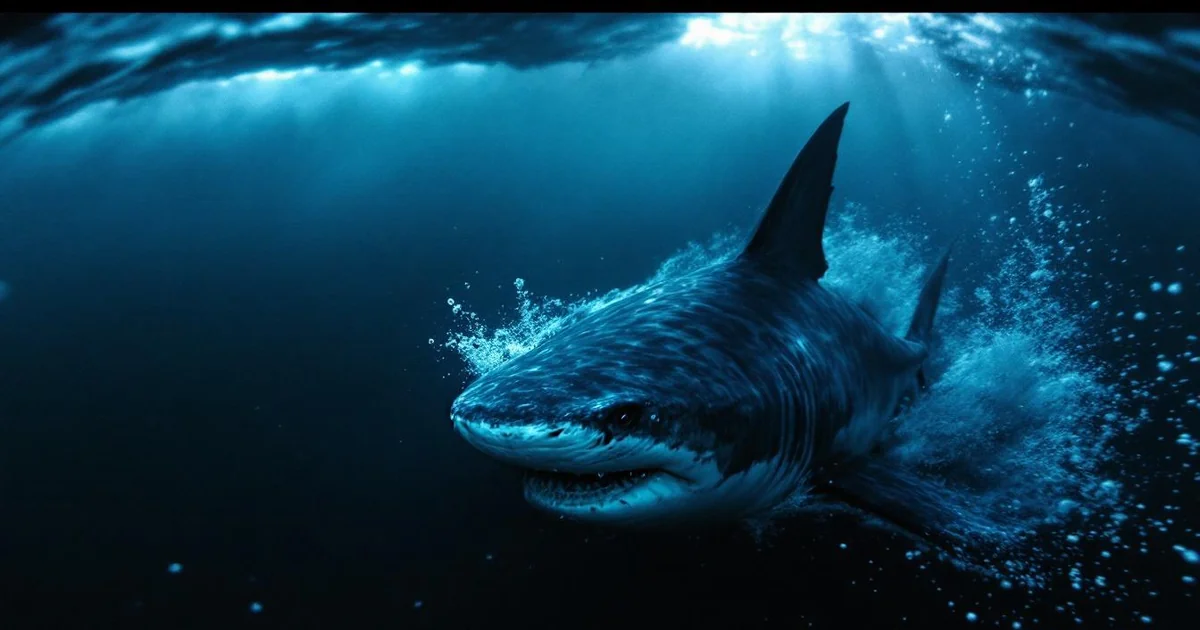
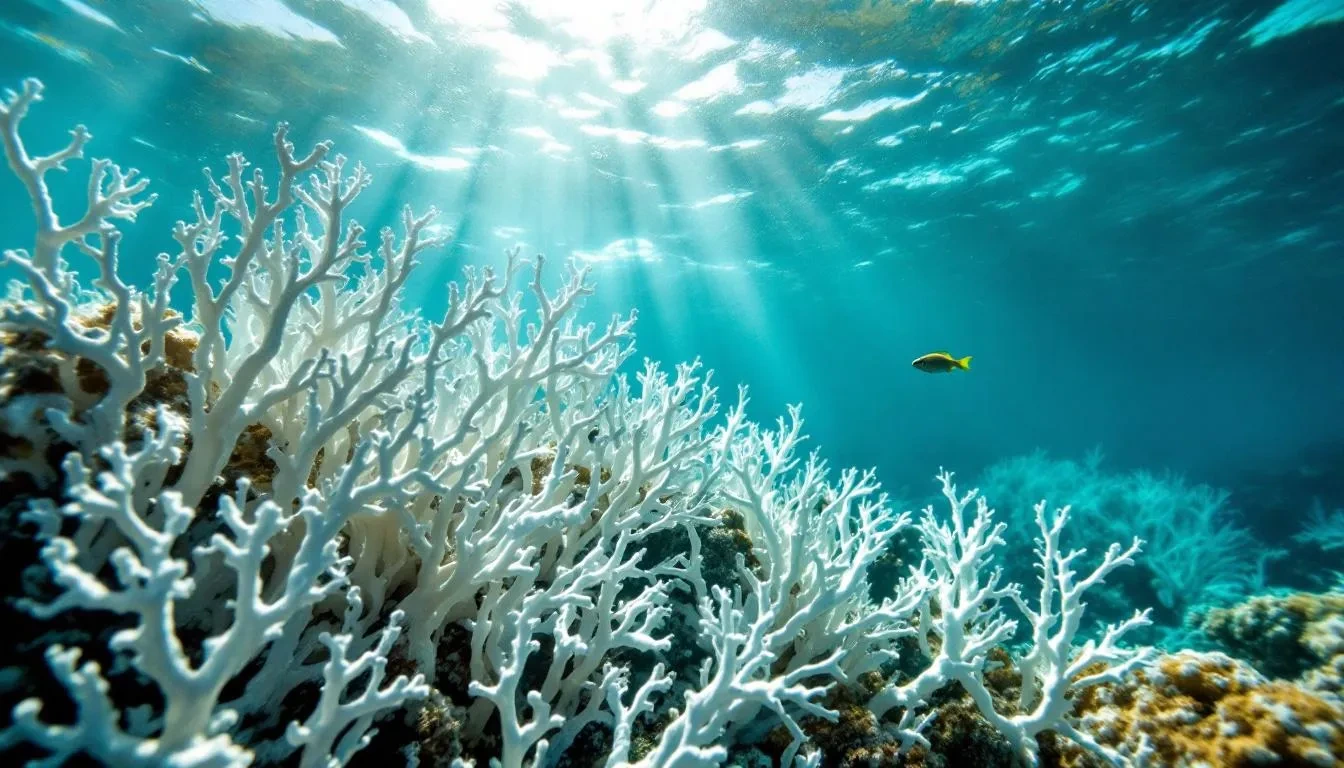
The ocean has absorbed 30% of all human CO2 emissions since industrialization. pH has dropped 0.1 units — a 30% increase in acidity. Pteropods are already dissolving in the Southern Ocean. The chemistry is relentless, but the solution is on land: every tonne of carbon we don't emit is a tonne the ocean doesn't have to absorb.
This article synthesizes what the peer-reviewed evidence actually shows — what is proven, what is still uncertain, and what you can do.
Ocean Acidification: Impact on Shellfish and Marine Life
Clear focus for immediate impact. ~60–90 sec
0:000:00
“Imagine holding an oyster shell so brittle it crumbles between your fingers like stale bread — this is happening now, in living oceans.”
That shell was not built from dead stone. It was formed by a living, beating body pulling chemistry from the sea itself. Take a moment to look at the fragile architecture of the mussel and the clam, working tirelessly beneath changing waves.
Take a breath. You are about to enter the chemistry of a living shell.
The 30-Second Chemical Chain Reaction
1
More CO₂
Emissions accumulate in the atmosphere
→
2
Ocean Absorption
Seawater absorbs the excess gas
→
3
Chemical Shift
Water pH drops, becoming more acidic
→
4
Carbonate Scarcity
Building blocks become unavailable
→
5
Vulnerable Shells
Structural architecture struggles to hold form
1
The Ocean's Shallow Breath
Think of the ocean as the living lung of our planet, naturally absorbing the excess carbon dioxide we release into the air. But as that absorption speeds up, the ocean's chemical balance shifts. It is like the water's breath is growing shallow.
The ocean breathes for us — and that breath is growing thin.
2
The Disappearing Bricks
When carbon dioxide mixes with seawater, it creates a subtle acid that locks away floating carbonate ions. Think of these floating particles as the bricks shellfish rely on to build their protective outer structures. Today, those bricks are being swept just out of reach.
Imagine trying to build a home while the foundation dissolves beneath your feet.
3
The Juvenile Clam
In changing waters, young clams must divert their limited cellular energy away from growth and survival just to preserve basic shell density against slow dissolution.
A child spending all their strength just to hold their coat closed in a rising wind.
Key Takeaways
• Since the Industrial Revolution, the ocean has absorbed roughly one-quarter of all human CO₂ emissions, causing measurable pH decline across the world's surface waters.
• Shellfish and other calcifying organisms depend on carbonate ions to build and maintain their shells. Lower pH reduces carbonate availability and slows or impairs calcification.
• A meta-analysis of 228 studies found ocean acidification reduces calcification in marine organisms by an average of 25% and survival by 18%, with mollusks among the most sensitive groups (Kroeker et al. 2013, DOI: 10.1111/gcb.12179).
• Laboratory studies show mussels and oysters reduce shell formation rates at CO₂ levels projected for this century (Gazeau et al. 2007, DOI: 10.1029/2006GL028554).
• Effects vary by species, life stage, and local water chemistry. Some organisms show partial tolerance; science is still mapping the full range of responses.
The Chemistry Behind the Threat
The ocean absorbs carbon dioxide from the atmosphere — a process that has provided significant natural buffering against climate change. But that absorption has a cost. When CO₂ dissolves in seawater, it forms carbonic acid, which releases hydrogen ions and lowers the ocean's pH. Since the Industrial Revolution, average ocean surface pH has fallen from approximately 8.2 to 8.1 — a shift that represents a meaningful increase in ocean acidity on the logarithmic pH scale (Fabry et al. 2008, DOI: 10.1093/icesjms/fsn048).
The critical consequence for shell-building animals is not pH itself but carbonate ion concentration. Carbonate ions (CO₃²⁻) are the building blocks for calcium carbonate minerals — specifically calcite and aragonite — from which shellfish, mollusks, sea urchins, and corals construct their shells and skeletons. As pH falls, carbonate ions are consumed by hydrogen ions, reducing their availability. Organisms that depend on them must work harder to calcify, and at sufficient pH depression, existing shells can begin to dissolve (Fabry et al. 2008, DOI: 10.1093/icesjms/fsn048).
What the Evidence Shows
The evidence base for ocean acidification impacts on calcifying marine organisms has grown substantially. One of the most comprehensive syntheses to date — a meta-analysis of 228 individual experiments — found that acidification reduces calcification rates across marine organisms by an average of 25%, survival by 18%, and growth by 17%. Mollusks — the group that includes oysters, mussels, clams, and scallops — showed among the highest sensitivity of any marine taxon examined (Kroeker et al. 2013, DOI: 10.1111/gcb.12179).
Direct laboratory experiments confirm these concerns for commercially important shellfish. Gazeau et al. (2007) exposed mussels (Mytilus edulis) and Pacific oysters (Crassostrea gigas) to CO₂ levels projected for 2100 and measured significant reductions in calcification rate in both species. The study projected that mussel calcification could decline by 25% and oyster calcification by 10% under doubled atmospheric CO₂ — conditions within current emissions trajectories (DOI: 10.1029/2006GL028554).
Beyond gross calcification, acidification affects shellfish at the molecular level. Dineshram et al. (2013) exposed larvae of the commercial oyster Crassostrea hongkongensis to elevated CO₂ and found significant changes in the larval proteome — the full set of proteins the organism expresses. Shell-formation proteins were downregulated while stress-response and energy-metabolism proteins were upregulated, indicating that larvae diverted energy from growth toward managing physiological strain (DOI: 10.1007/s00227-013-2176-x). Larvae are generally considered among the most vulnerable life stages because they lack the carbonate buffering capacity of adult organisms.
A broad synthesis of marine organism responses across ocean basins found strong evidence that calcifying taxa — corals, mollusks, echinoderms — are among the most climate-sensitive marine groups. Geographic patterns of response vary with local environmental conditions, and upwelling zones, high-latitude seas, and nearshore waters with already-reduced carbonate chemistry face comparatively earlier and more severe impacts (Poloczanska et al. 2016, DOI: 10.3389/fmars.2016.00062).
What This Does Not Prove
This body of evidence establishes a well-supported mechanism and demonstrates measurable effects in laboratory conditions and meta-analysis. It does not show that every shellfish population is currently in decline due to ocean acidification alone. Other stressors — warming, hypoxia, overfishing, and pollution — operate simultaneously and can be difficult to disentangle in field data. The meta-analysis findings represent averages across species; individual taxa show a wide range of responses, and some organisms demonstrate limited acclimation under certain conditions (Kroeker et al. 2013, DOI: 10.1111/gcb.12179).
Attribution of shellfish population changes specifically to acidification requires careful accounting of these concurrent stressors. The science establishes direction of risk and plausible mechanisms clearly; precise magnitude of real-world population-level change at any specific location or timescale remains an active area of research.
Ecological and Practical Significance
Shellfish and other calcifiers occupy critical ecological roles — filtering water, providing reef structure, cycling nutrients, and serving as prey for fish and seabirds. Disruptions to calcifying organisms can propagate through food webs in ways that extend well beyond the directly affected species. The breadth of sensitivity across shellfish taxa, combined with the economic importance of bivalve aquaculture and wild fisheries, makes ocean acidification a significant area of ongoing monitoring and research (Fabry et al. 2008, DOI: 10.1093/icesjms/fsn048).
Love In Action: What You Can Do
Ocean acidification is driven by atmospheric CO₂ — which means it is slowed by the same actions that address climate change broadly. Individual choices compound over time, and advocacy accelerates the systemic changes that matter most.
Reduce your CO₂ footprint. The less CO₂ enters the atmosphere, the less the ocean absorbs. Transportation, diet, and home energy use are the largest individual levers. Even modest reductions, multiplied across millions of people, add up.
Choose sustainable shellfish. Shellfish aquaculture has an unusually low environmental footprint and supports the very industry most exposed to acidification risk. Buying from certified sustainable sources keeps this industry viable and incentivizes operators who are monitoring local water chemistry.
Support climate policy that addresses emissions at scale. Individual action matters, but the pace and magnitude of ocean chemistry change can only be meaningfully altered through systemic emissions reductions. Supporting energy transition policies is the highest-leverage form of ocean advocacy.
Stay informed from primary sources. The science on acidification impacts is evolving. Organizations like NOAA, MBARI, and the Ocean Acidification International Coordination Centre publish accessible research updates that go beyond headlines.
Limitations
• Most experimental studies use controlled laboratory conditions that may not capture the full variability of real ocean environments.
• Many studies focus on short-term exposure; long-term multi-generational adaptation responses are less well characterized.
• Interactions between acidification and warming, hypoxia, and other stressors are complex and incompletely quantified.
• Geographic variation in baseline carbonate chemistry means that not all ocean regions face identical or simultaneous risk.
• Some species appear more tolerant than others; blanket predictions across all shellfish taxa carry significant uncertainty.
Scientific citations: Fabry et al. 2008 (DOI: 10.1093/icesjms/fsn048) · Gazeau et al. 2007 (DOI: 10.1029/2006GL028554) · Dineshram et al. 2013 (DOI: 10.1007/s00227-013-2176-x) · Poloczanska et al. 2016 (DOI: 10.3389/fmars.2016.00062) · Kroeker et al. 2013 (DOI: 10.1111/gcb.12179)
Key Takeaways
Ocean pH has dropped 0.1 units since pre-industrial times — a 30% increase in acidity, unprecedented in 65 million years.
Calcifying organisms (corals, shellfish, pteropods) face reduced carbonate ion availability, impairing shell and skeleton formation.
Pteropods in the Southern Ocean already show direct shell dissolution — a harbinger for the broader marine food web.
Coastal 'blue carbon' ecosystems (mangroves, seagrasses, salt marshes) sequester carbon faster than terrestrial forests.
✓What is proven
•The ocean's pH has decreased by approximately 0.1 units since pre-industrial times, corresponding to a 30% increase in acidity.
•This decrease in pH is directly caused by the absorption of anthropogenic carbon dioxide from the atmosphere.
•Ocean acidification reduces the availability of carbonate ions, which are vital for calcifying marine organisms to build shells and skeletons.
•Coral reefs, shellfish, and pteropods are particularly vulnerable to the impacts of ocean acidification.
•Coastal 'blue carbon' ecosystems like mangroves and seagrasses play a crucial role in sequestering atmospheric carbon.
?Still uncertain or overstated
•The exact tipping point at which specific marine ecosystems will collapse due to acidification is precisely known.
•All marine species will be equally affected by ocean acidification.
•Ocean acidification can be reversed quickly through geoengineering solutions alone.
•Reducing individual carbon footprints is the only effective action against ocean acidification.
6 Facts From the Research
1
Ocean pH has dropped significantly since the industrial era.
The average pH of the global ocean surface has decreased by approximately 0.1 units since the beginning of the industrial era, representing a roughly 30% increase in acidity (hydrogen ion concentration). This change is unprecedented in the last 65 million years. (Source 1, 2)
Calcifying marine organisms are profoundly threatened.
Ocean acidification reduces the availability of carbonate ions, which are essential building blocks for marine organisms like corals, shellfish, and pteropods to form and maintain their calcium carbonate shells and skeletons. This impairment can lead to slower growth, weakened structures, and even dissolution. (Source 2, 3)
Pteropods, crucial to the food web, show direct shell dissolution.
Studies in the Southern Ocean have observed significant shell dissolution in live pteropods, often called 'sea butterflies.' These tiny marine snails are a vital food source for many species, from krill to whales, making their vulnerability a concern for the entire marine food web. (Source 4)
Pause & Reflect
As you read about the dissolving shells, notice your own chest. Breathe in for four counts, imagining the ocean's ancient rhythm. Breathe out, releasing what you cannot hold alone.
Inward Inquiry
“What is one 'shell' — a structure or protective boundary — you are trying to maintain in your life right now? What is the environmental acid wearing it down?”
What You Can Do
ongoing
Support Blue Carbon Restoration
Invest in or volunteer for projects that restore and protect coastal ecosystems like mangroves, salt marshes, and seagrass beds. These 'blue carbon' habitats are highly effective at sequestering carbon and protecting coastlines.
Opt for seafood certified by organizations like the Marine Stewardship Council (MSC) or Monterey Bay Aquarium Seafood Watch. This supports practices that minimize ecosystem impact and avoid destructive aquaculture, which can exacerbate coastal degradation.
NOAA's Ocean Acidification Program publishes accessible updates on pH changes, shellfish impacts, and coral bleaching thresholds. Understanding the numbers makes for more meaningful conversations. Share what you learn with someone who loves the ocean.
Launched the 'Ocean Acidification Initiative' to build capacity and provide solutions globally, including deploying monitoring equipment and training scientists.
Works with communities and scientists to reduce local threats to reefs and promote their resilience to climate change, including ocean acidification, through restoration and management.
Campaigns for policy changes to reduce pollution, prevent overfishing, and protect marine habitats, indirectly benefiting from reduced acidification impacts and promoting healthy ecosystems.
Ocean acidification refers to the ongoing decrease in the pH of the Earth's oceans, caused by the absorption of excess carbon dioxide (CO₂) from the atmosphere. It's often called 'the other CO₂ problem' because it's distinct from ocean warming but shares the same root cause.
How does CO₂ cause ocean acidification?
When CO₂ dissolves in seawater, it forms carbonic acid. This acid then releases hydrogen ions, which increases the acidity of the water and, crucially, reduces the availability of carbonate ions. These carbonate ions are essential building blocks for many marine organisms.
Which marine organisms are most affected?
Organisms that build shells or skeletons from calcium carbonate are particularly vulnerable. This includes corals, oysters, clams, sea urchins, and pteropods (tiny sea snails). Their ability to calcify is impaired, leading to weaker structures and slower growth.
IPCC, 2021: Summary for Policymakers. In: Climate Change 2021: The Physical Science Basis. Contribution of Working Group I to the Sixth Assessment Report of the Intergovernmental Panel on Climate Change
IPCC, 2021
The authoritative summary of the physical science basis of climate change, including comprehensive data on ocean acidification and its drivers.
This article cites 5 peer-reviewed sources from 6 total references. Every factual claim links to its source.
DOI preference: We prioritize sources with Digital Object Identifiers (DOI) for permanent, verifiable citations. Where no DOI exists, we link to the publisher or institutional page.
Proven vs. uncertain: Claims are split into "What science has proven" and "What is still uncertain." We do not present emerging research as settled fact.
Peer-review standard: Primary sources are published in indexed journals with peer review. Background sources (government agencies, international bodies) provide context but are labeled separately.
Video verification: All embedded videos are from official organizations or institutional channels. Each was verified via YouTube oEmbed API before inclusion.
Anti-contamination: Each article is topic-scoped. Cross-links to related articles are clearly labeled; no data from one topic is presented as evidence for another.
Last reviewed: March 2026. If you find an error or outdated source, contact us at [email protected].
Scientific Citations
Verified
Victoria J. Fabry, PhD
California State University, San Marcos
CA 92096–0001, USA
Highly Cited
"Oceanic uptake of anthropogenic carbon dioxide is altering the seawater chemistry of the world's oceans with consequences for marine biota."
Impacts of ocean acidification on marine fauna and ecosystem processes — ICES Journal of Marine Science
Royal Netherlands Institute for Sea Research (NIOZ)
Yerseke, Netherlands
"We demonstrate that the calcification rates of the edible mussel (Mytilus edulis) and Pacific oyster (Crassostrea gigas) decline linearly with increasing pCO₂."
Cite This Work
Express Love Science Team (2026). Ocean Acidification: Impact on Shellfish and Marine Life. Express Love Planetary Health. Retrieved from https://express.love/articles/ocean-acidification-shellfish-impact
Ocean Acidification: Impact on Shellfish and Marine Life
Ocean acidification disrupts shellfish physiology by lowering seawater pH, which impairs calcification processes in species like oysters and clams, leading to weakened shells and reduced fisheries yields. In juvenile...
4
The Northern Shrimp
Shifting acid baselines challenge the shrimp's delicate metabolic balance during critical shedding cycles, leaving their developing carapaces softened and vulnerable.
Shedding an old skin only to find the new one won't harden.
5
The Coastal Oyster
Larval oysters require rapid shell formation within the first 48 hours of life to settle safely on protective wild reefs, a window currently disrupted by changing chemistry.
A seedling that must root in poisoned soil before the sun sets twice.
•The ocean's capacity to absorb CO₂ will remain constant indefinitely.
Coral reefs face a dual threat from climate change.
Ocean acidification exacerbates the stress on coral reefs already suffering from warming waters and marine heatwaves. Reduced carbonate availability hinders corals' ability to grow and repair, making them more susceptible to erosion and less resilient to other environmental stressors. (Source 3)
Economic impacts on fisheries and aquaculture are substantial.
Industries reliant on shellfish, such as oyster and clam farms, are highly vulnerable to ocean acidification. Potential losses in these sectors can significantly impact the livelihoods of coastal communities and the broader seafood economy. (Source 5)
Coastal 'blue carbon' ecosystems offer a powerful natural solution.
Ecosystems like mangroves, salt marshes, and seagrasses, collectively known as 'blue carbon' habitats, can sequester carbon at rates significantly higher than terrestrial forests. Protecting and restoring these areas is a critical strategy for mitigating rising atmospheric CO₂ and its oceanic impacts. (Source 6)
While not a sole solution, reducing personal energy consumption, choosing sustainable transportation, and minimizing waste collectively contribute to lowering atmospheric CO₂. Every bit helps.
Share accurate information about ocean acidification and its impacts with friends, family, and community members. Raising awareness is a powerful first step towards broader collective action.
To conserve the lands and waters on which all life depends.
Actively involved in large-scale blue carbon restoration projects globally, including mangroves, salt marshes, and oyster reefs, to combat climate change and protect coastal communities.
No, they are distinct but related problems. Both are caused by increased atmospheric CO₂. Ocean warming refers to the increase in ocean temperature, while ocean acidification refers to the decrease in ocean pH. Both pose significant, often synergistic, threats to marine ecosystems.
Can the ocean recover from acidification?
The ocean can naturally recover, but it's an incredibly slow process, taking tens of thousands of years to naturally buffer changes in pH. The current rate of acidification is much faster than natural processes can counteract, meaning human intervention to drastically reduce CO₂ emissions is critical to prevent irreversible damage.
[2]Peer-reviewed
Anthropogenic ocean acidification over the twenty-first century and its impact on calcifying organisms
Nature, 2007
A seminal paper projecting the extent of ocean acidification through the 21st century and its profound implications for marine organisms that build shells and skeletons.
Ocean Acidification and Its Potential Impacts on Marine Ecosystems
Science, 2008
A comprehensive review highlighting the broad range of potential impacts of ocean acidification across various marine ecosystems, from plankton to coral reefs and fisheries.
Economic Vulnerability of U.S. Coastal Communities to Ocean Acidification
NOAA Technical Memorandum, 2015
An assessment of the economic risks and vulnerabilities faced by U.S. coastal communities due to the impacts of ocean acidification on commercially important marine species.
Blue carbon: The potential of coastal and marine ecosystems to sequester carbon
Nature Climate Change, 2011
Explores the significant capacity of coastal and marine ecosystems, such as mangroves, salt marshes, and seagrasses, to sequester atmospheric carbon dioxide.
blue carboncarbon sequestrationmangrovesseagrassessalt marshes