Mycology of Grief: What Fungi Teach Us About Loss, Decomposition, and Return
Evidence-based science journalism. Every claim verified against peer-reviewed research.
griefmycologyfungimycorrhizal networksbereavement
Evidence-based science journalism. Every claim verified against peer-reviewed research.
© 2026 Express Love Inc. — All Rights Reserved. Original research-backed content. Unauthorized reproduction, derivative audio/video adaptations, or use for AI training is strictly prohibited without written consent.
Grief does not follow a straight line toward resolution. Research has documented that bereaved individuals rarely "get over" a loss — instead, they tend to grow around it, with the grief remaining constant in size while the rest of life expands to accommodate it (Tonkin, 1996). This distinction between eliminating pain and making room for it alongside ordinary living has shifted how psychologists, clinicians, and policymakers understand the trajectory of bereavement. Understanding what recovery actually looks like — not as the absence of pain but as the enlargement of life around it — has measurable consequences for how support systems are designed and how individuals are guided through loss.
The mechanisms behind this process are both psychological and social. Bereaved people do not simply wait for time to pass; they actively reconstruct meaning, re-engage with relationships, and in some cases find that their loss becomes a source of purpose rather than solely a source of suffering. Parents who donated their deceased child's organs, for example, have demonstrated measurable positive psychological adjustment alongside grief, suggesting that meaning-making and prosocial action can coexist with profound sorrow (Ashkenazi, 2016). These findings indicate that resilience in bereavement is not about suppressing emotion but about integrating the loss into an expanded sense of self and purpose.
Why this matters extends beyond the individual. Societies legislate grief — they decide which losses count, which mourners receive protected time, and whose emotional experience is recognized under law. The 2021 amendments to New Zealand's Holidays Act, which extended bereavement leave to cover miscarriage and stillbirth, represent a documented case of legal systems being asked to read, categorize, and respond to emotion in formal terms (Calder, 2022). When policy frameworks fail to match the actual psychological terrain of grief, bereaved individuals are left without structural support at precisely the moments they need it most. The science of grief recovery is therefore not only a clinical matter — it is a question of institutional design.
Listen to the Soul of this Article (Narrated)
Mycology of Grief: What Fungi Teach Us About Loss, Decomposition, and Return
The popular image of grief as a wound that heals — shrinking over time until it disappears — is not well supported by what bereaved people themselves report. Tonkin (1996) documented an alternative pattern through clinical work with bereaved individuals: the grief itself does not shrink, but the person's life grows around it. In practical terms, this means that someone who has lost a child, a partner, or a parent may continue to carry the full weight of that loss for years or decades while simultaneously building new relationships, pursuing goals, and experiencing joy. The two states are not mutually exclusive.
This model has direct implications for how clinicians assess progress in bereaved clients. Using "reduction of grief symptoms" as the primary measure of recovery may misread what is actually happening. A person who reports ongoing sadness but has returned to meaningful work, rebuilt social connections, and found moments of genuine pleasure is not failing to recover — they may be demonstrating exactly the pattern Tonkin (1996) described. Measuring life expansion alongside grief intensity gives a more accurate picture of where someone is in the process.
Not all grief trajectories lead to prolonged difficulty. Some bereaved individuals demonstrate positive psychological adjustment that coexists with their loss, and research has examined what distinguishes these trajectories. Ashkenazi (2016) studied parents who had agreed to donate their deceased child's organs and found that many of these parents showed measurable positive adjustment, including a sense of purpose and continuation connected to the donation decision. This was not a case of grief being absent or minimized — these parents had experienced one of the most severe losses a person can face. Rather, the act of donation appeared to support meaning-making, giving the death a forward-facing dimension that contributed to psychological resilience.
The ethical implications documented in this research are significant. If healthcare professionals and counselors understand that certain decisions — such as organ donation — can become anchors for positive meaning rather than additional sources of guilt or regret, this changes the nature of how those conversations should be handled. Supporting bereaved parents to make autonomous, informed choices, rather than shielding them from decision-making during acute grief, may in fact serve their long-term psychological adjustment (Ashkenazi, 2016). Grief support that presumes fragility can inadvertently deprive bereaved people of agency that would otherwise aid their recovery.
Mycology—the study of fungi—offers a biological framework for understanding grief that moves beyond the human psyche into the material world of decay and regeneration. Fungi do not destroy dead matter; they transform it, breaking down complex compounds into nutrients that feed new growth. This process of decomposition is not an ending but a metabolic conversation between what was and what will be—a model that reframes grief not as a problem to solve but as a necessary ecological function.
When a forest organism dies, fungal networks begin their work within hours. Mycelium, the thread-like filaments of fungi, colonize the dead wood and begin enzymatic breakdown, releasing nitrogen, phosphorus, and carbon back into the soil (Boddy & Watkinson, 1995). The death itself becomes the infrastructure for future life. A single fallen log can feed an ecosystem for decades, with fungi serving as the primary architects of that transformation. This is not sentimentality—it is thermodynamics and nutrient cycling made visible.
Grief operates similarly in human systems. The loss itself does not vanish; instead, it becomes integrated into the soil of our lives, feeding meaning-making, connection with others, and personal growth. Research on bereaved individuals shows that those who engage with their grief—rather than attempting to eliminate it—report greater psychological integration and life satisfaction over time (Neimeyer, 2000). The grief remains present, as constant as mycelium in forest soil, while the person expands around it.
The mycological view also challenges our cultural timeline for bereavement. Fungi have no deadline for decomposition; they work at the pace required by temperature, moisture, and the specific chemistry of what they're breaking down. Some fungi require years to fully process a single log. Yet we often expect humans to "move on" in months or a few years. This mismatch between biological process and social expectation creates additional suffering.
Understanding grief through mycology suggests that transformation is not rushed or linear—it is patient, ongoing, and generative. The nutrients released by our losses feed not only our own growth but become available to those around us, creating richer soil for future relationships and understanding. This is where the science of decomposition meets the art of living with loss.
Grief does not occur in isolation from social structure. The experience of loss is shaped by whether that loss is recognized — by family, community, employer, and legal system. Parkes (1994) documented through international conference findings that grief and bereavement responses vary across cultural contexts, and that effective support requires attention to the social frameworks within which mourning takes place. Losses that fall outside culturally sanctioned categories of "legitimate" grief — including pregnancy loss, the death of an estranged family member, or the loss of a relationship that was never publicly acknowledged — are often experienced without the social scaffolding that supports recovery.
This phenomenon has been described in clinical literature as disenfranchised grief: bereavement that is not publicly recognized or socially supported. The consequences are documented and practical. Without recognized grief, bereaved individuals may lack access to time off work, community ritual, and the permission to express their emotions openly. Parkes (1994) observed that conference discussions across multiple countries repeatedly returned to the theme of social recognition as a precondition for healthy mourning, not simply a cultural formality.
When legislation attempts to formalize grief, it encounters the full complexity of what research has documented: grief is variable, non-linear, and not always legible from the outside. Calder (2022) analyzed New Zealand's legal extension of bereavement leave to cover miscarriage and stillbirth, examining how the law was required to define and categorize emotional experience in order to make it actionable. The analysis found that this legislative process involved explicit choices about whose grief counted, at what gestational threshold, and under what conditions — decisions that carry both practical and symbolic weight for bereaved individuals.
The practical implications are direct. Bereaved parents whose losses fall just outside legislated boundaries may receive no formal support, regardless of the psychological severity of their grief. Calder (2022) documented that the New Zealand amendments represented a deliberate attempt to expand recognition, but also illustrated the inherent difficulty of drawing categorical lines around experiences that research consistently shows to be continuous and highly individual.
Taken together, these findings point toward a set of principles for anyone supporting bereaved individuals — whether as a clinician, employer, policymaker, or friend. Recovery should be measured by life expansion, not grief reduction (Tonkin, 1996). Bereaved people benefit from agency and meaning-making opportunities rather than protective removal from decision-making (Ashkenazi, 2016). Social recognition of loss is not peripheral to recovery — it is a structural component of it (Parkes, 1994). And when institutions formalize grief, they make consequential choices about whose suffering is seen and supported (Calder, 2022). Designing better support means taking all four of these dimensions seriously, not as abstract ideals but as practical guides to how time, attention, and resources should be allocated to those navigating loss.
A cancer survivor traces her family's three diagnoses to environmental toxins, uncovering how synthetic chemicals and radiation have driven childhood cancer rates from near-zero to a leading killer. Eco-grief becomes fuel: women-led movements prove collective action can reverse the damage.
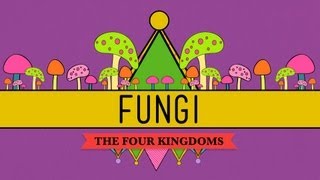
Watch on dedicated video page →Fungi decompose nearly every dead organism on Earth, recycling organic matter back into soil that makes all new life possible. Louis Pasteur's 1857 yeast experiments revealed that fermentation — the same process behind beer and bread — is fungi's ancient superpower: absorbing energy by breaking down complex molecules.
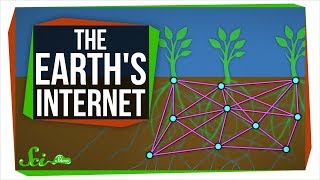
Watch on dedicated video page →Ecologist Suzanne Simard's radioactive carbon experiment proved trees share nutrients through underground fungal networks called mycorrhizae. These "Wood Wide Web" connections let plants warn each other of pests, feed shaded neighbors, and even pass carbon to the next generation.
Watch on dedicated video page →Lois Tonkin
Mary Potter Hospice
Growing around grief—another way of looking at grief and recovery — Bereavement Care
Tamar Ashkenazi, PhD
Israel Ministry of Health
Israel Ministry of Health
Organ and tissue donor parents’ positive psychological adjustment to grief and bereavement: practical and ethical implications — Bereavement Care
Gillian Calder, JD
University of Victoria
Legislating Emotion, Reading Grief: Bereavement Leave for Miscarriage and Stillbirth in New Zealand Law — SSRN Electronic Journal
Lynne Boddy, PhD
Wood decomposition, higher fungi, and their role in nutrient redistribution — Canadian Journal of Botany
Colin Murray Parkes, PhD
UK
Fourth International Conference on Grief and Bereavement in Contemporary Society — Bereavement Care
Adams CL
Emily Shoesmith
Jaak Panksepp
Leho Tedersoo
Monali Ghurde
Kevin D. Hyde
Kunming Institute of Botany
Kunming 650201, People's Republic of China
The amazing potential of fungi: 50 ways we can exploit fungi industrially — Fungal Diversity
Nugent WR
Winfried Menninghaus
Petar Jandrić
Jos M. Raaijmakers
Wageningen University & Research
Wageningen, the Netherlands
The rhizosphere: a playground and battlefield for soilborne pathogens and beneficial microorganisms — Plant and Soil
More from Ecology Restoration

Soul Intro: The Biological Bedrock of Carbon Sequestration: Understanding Natural Processes and Soil Dynamics

Biochar and Mycorrhizal Fungi: Synergistic Effects in Soil Regeneration and Plant Growth Soul Intro: The Living Skin of the Earth Step outside on a damp
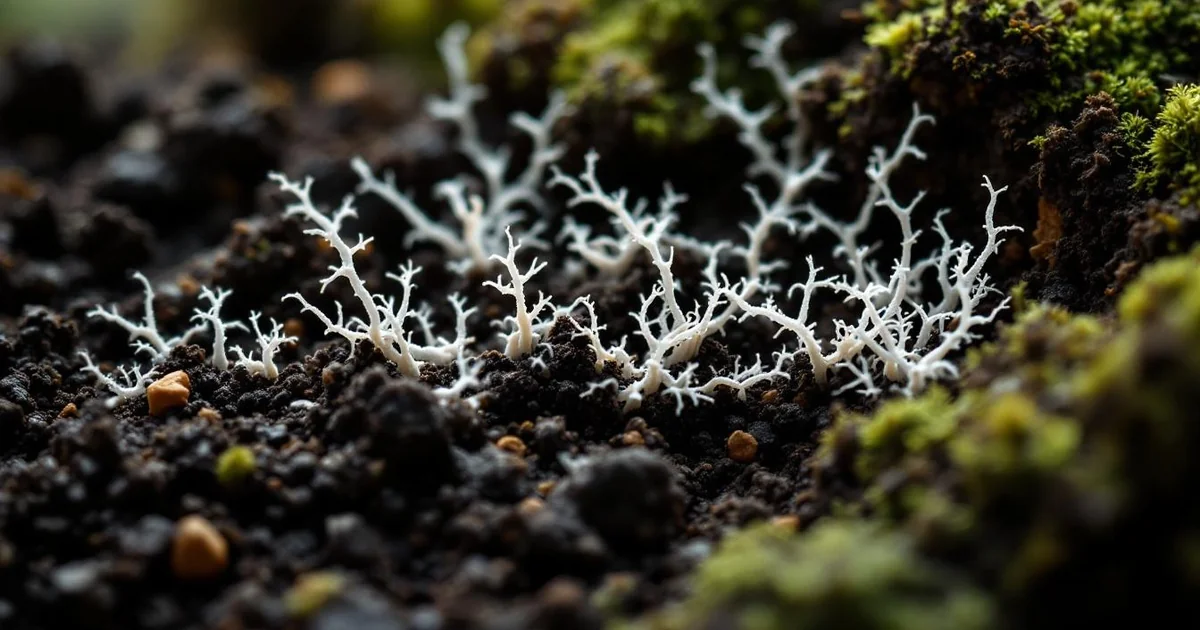
The Underground Network: How Mycorrhizal Fungi Are Secretly Restoring Our Planet Soul Intro: The Hidden World Beneath Our Feet Picture a barren field.
Share this article
Mycology of Grief: What Fungi Teach Us About Loss, Decomposition, and Return
In a healthy forest, nothing that dies is wasted. Mycorrhizal networks move carbon and nutrients from dying trees to young ones for decades. This flagship traces what fungal ecology, the neuroscience of grief, and ritual traditions all tell us: loss is not the end of a system, it is how the system works.
15 published papers · click to read
7,516
combined citations
Lois Tonkin
Mary Potter HospiceGrowing around grief—another way of looking at grief and recovery — Bereavement Care
40 citations
Tamar Ashkenazi, PhD
Israel Ministry of Health
Israel Ministry of HealthOrgan and tissue donor parents’ positive psychological adjustment to grief and bereavement: practical and ethical implications — Bereavement Care
8 citations
Gillian Calder, JD
University of Victoria
Legislating Emotion, Reading Grief: Bereavement Leave for Miscarriage and Stillbirth in New Zealand Law — SSRN Electronic Journal
2 citations
Lynne Boddy, PhD
Wood decomposition, higher fungi, and their role in nutrient redistribution — Canadian Journal of Botany
301 citations
Colin Murray Parkes, PhD
UKFourth International Conference on Grief and Bereavement in Contemporary Society — Bereavement Care
3 citations
Adams CL
Predictors of owner response to companion animal death in 177 clients from 14 practices in Ontario.
169 citations
Emily Shoesmith
The Influence of Human–Animal Interactions on Mental and Physical Health during the First COVID-19 Lockdown Phase in the U.K.: A Qualitative Exploration
108 citations
Jaak Panksepp
Cross-Species Affective Neuroscience Decoding of the Primal Affective Experiences of Humans and Related Animals
330 citations
Leho Tedersoo
Global diversity and geography of soil fungi
3,608 citations
Monali Ghurde
Extraction of Natural Dye from Ixora coccinea (Linn.) Flowers for Cotton Fabric Colouration
9 citations
Kevin D. Hyde
Kunming Institute of Botany
Kunming 650201, People's Republic of ChinaThe amazing potential of fungi: 50 ways we can exploit fungi industrially — Fungal Diversity
794 citations
Nugent WR
A Measurement Equivalence Study of the Family Bondedness Scale: Measurement Equivalence Between Cat and Dog Owners.
25 citations
Winfried Menninghaus
The Distancing-Embracing model of the enjoyment of negative emotions in art reception
385 citations
Petar Jandrić
Teaching in the Age of Covid-19—1 Year Later
54 citations
Jos M. Raaijmakers
Wageningen University & Research
Wageningen, the NetherlandsThe rhizosphere: a playground and battlefield for soilborne pathogens and beneficial microorganisms — Plant and Soil
1,680 citations
Researchers identified from peer-reviewed literature indexed in Semantic Scholar · OpenAlex · PubMed. Each card links to the original published paper.