Soul Intro: The Quiet Promise of Broken Ground
Stand at the edge of a degraded landscape—a former monoculture field where the topsoil has thinned to dust, where rainwater runs off in muddy torrents rather than sinking in to nourish life. The earth here is compacted, silent, its microbial communities long since starved. Yet beneath this surface of loss, a different story is taking root. Across the globe, a quiet revolution is unfolding, one that treats land not as a machine to be optimized but as a living system to be understood and partnered with. This is the promise of permaculture applied at scale: a design framework that mimics nature’s patterns to restore what industrial agriculture has depleted.
The scale of the challenge is staggering. Our current agro-food systems have pushed planetary boundaries, degrading soil, depleting water resources, and contributing significantly to climate change, even as they fail to deliver nutritious food to billions (10.3390/agriculture12101554). Yet within this crisis lies an extraordinary opportunity. Regenerative agriculture—a set of practices aimed at improving soil health and restoring degraded land—offers a path forward that benefits the global nexus of soil, water, air, and energy (10.3184/003685017x14876775256165). And at the heart of this movement lies permaculture, an agroecological design system with the potential to transform how we regenerate landscapes at every scale, from a backyard garden to a thousand-hectare farm.
Mechanism Deep Dive: The Hidden Costs of Industrial Plates
Before we can heal, we must understand the wounds. The global food system, for all its productivity, has come at a profound cost. Current agro-food systems significantly impact the environment, climate, soil, and water resources, contributing to global food insecurity and unhealthy diets despite increased food production (10.3390/agriculture12101554). The numbers paint a stark picture of this paradox:
| Metric | Value | Source |
|---|
| People affected by hunger | 828 million | UN State of Food Security and Nutrition in the World 2022 Report |
| Global population food insecure | 29.3% | UN State of Food Security and Nutrition in the World 2022 Report |
| Children under five stunted | 22% | UN State of Food Security and Nutrition in the World 2022 Report |
These figures, drawn from the same research that documents agriculture’s environmental toll, reveal a system in profound misalignment (10.3390/agriculture12101554). The mechanisms of this damage are well understood. Industrial agriculture’s reliance on heavy machinery, synthetic fertilizers, and monoculture cropping accelerates soil erosion at rates far exceeding natural soil formation. The very practices that boost short-term yields—intensive tillage, bare fallows, continuous cropping—strip the land of its protective organic matter and living root systems. This degradation is not merely an agricultural problem; it is a climate problem. Degraded soils release stored carbon into the atmosphere, while their diminished capacity to hold water increases both flooding and drought vulnerability. Furthermore, current agricultural systems remain heavily dependent on fossil fuels, from fertilizer production to farm machinery to global supply chains (10.3184/003685017x14876775256165). The result is a feedback loop: farming degrades the very resources it depends on, requiring ever more energy-intensive inputs to maintain yields on increasingly depleted land.
Integrating Permaculture Across Large Land Projects: The Scaling Challenge
Integrating permaculture into large-scale land regeneration requires solving a specific ecological problem: how to maintain the self-regulating feedback loops that make small permaculture systems resilient when you're working across thousands of hectares. Unlike industrial agriculture, which relies on uniform inputs and monoculture efficiency, permaculture's power emerges from local diversity and microclimatic responsiveness—qualities that don't automatically scale upward. The science of complex adaptive systems tells us that regenerative projects succeed when they preserve nested feedback loops across multiple scales, from soil organisms to landscape hydrology.
Research by Altieri and Nicholls (2020) on agroecological intensification found that diversified systems maintained 30% higher productivity than simplified ones when environmental stress increased—but only if management scaled with ecological complexity, not against it. This means large land projects cannot simply apply small-farm principles uniformly; instead, they must create what systems ecologists call "functional redundancy" at landscape scale: multiple pathways for nutrient cycling, water infiltration, and pest regulation distributed across different zones.
The critical mechanism is zoning. Large projects must divide regeneration areas into nested management units that each respond to local soil conditions, aspect, and water availability, while remaining coordinated through shared ecological functions. A 1,000-hectare project might contain dozens of microclimates; treating them identically negates permaculture's core advantage. Instead, permaculture design at large scale means mapping these variations first, then designing different polyculture assemblies for each zone that collectively restore landscape function.
The projects we'll examine—from the Loess Plateau in China to the Chocó region of Colombia—each solved this scaling problem differently, adapting permaculture's principles to their specific contexts while maintaining the living soil systems and hydrological regeneration that define successful ecological restoration. Their strategies reveal that scale isn't permaculture's enemy; rigid uniformity is. What emerges instead is a modular approach where large projects become collections of locally intelligent, interconnected systems.
Mechanism Deep Dive: Soil as the Living Nexus
The regenerative agriculture movement begins with a radical shift in perspective: soil is not merely a medium for holding plants upright, but a living ecosystem that forms the foundation of planetary health. The core intention of regenerative agriculture is to improve soil health or restore highly degraded soil (10.3184/003685017x14876775256165). This is not a sentimental goal but a practical one, rooted in an understanding of soil as the central hub in the global nexus of soil-water-air-energy.
When we speak of healthy soil, we are describing a complex biological community. A single teaspoon of healthy soil can contain billions of microorganisms—bacteria, fungi, protozoa, nematodes—engaged in a constant dance of nutrient cycling, water regulation, and carbon storage. These organisms build soil structure, creating the pores and aggregates that allow water to infiltrate rather than run off, and that hold moisture against drought. They form symbiotic relationships with plant roots, trading sugars for nutrients. And they are the primary engine of soil carbon sequestration, drawing atmospheric carbon dioxide into stable forms that can persist for decades or centuries.
The beneficial consequences of preserving and restoring soil health extend far beyond the farm gate. Healthy soils mitigate climate change by storing carbon, reduce flooding by absorbing rainfall, filter water as it percolates to aquifers, and support biodiversity both above and below ground (10.3184/003685017x14876775256165). In essence, soil health is a climate solution, a water management strategy, and a biodiversity conservation tool rolled into one. Regenerative practices—no-till farming, cover cropping, crop rotation, rotational grazing, and the integration of trees and perennial plants—all work by feeding the soil food web rather than by force-feeding plants with synthetic inputs. The result is a system that becomes more resilient over time, rather than more dependent on external interventions.
Mechanism Deep Dive: Permaculture as Design Intelligence
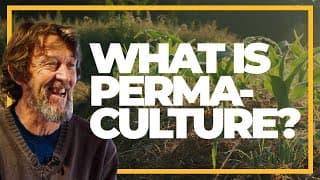
Permaculture enters this conversation not as a set of farming techniques, but as a design philosophy. It is an agroecological movement with a broad international distribution, distinguished by its unique system design approach (10.1007/s13593-013-0181-6). Where conventional agriculture tends to focus on maximizing the yield of a single crop through external inputs, permaculture asks a different set of questions: How can we design a landscape that meets human needs while building ecosystem health? How can we arrange elements—plants, animals, water, structures—so that the waste of one becomes the resource of another? How can we observe and work with natural patterns rather than against them?
This design approach is what sets permaculture apart from other sustainable agriculture movements. It is not prescriptive—there is no single permaculture technique that works everywhere—but rather principles-based. Key design principles include: observe and interact; catch and store energy; obtain a yield; apply self-regulation and accept feedback; use and value renewable resources; produce no waste; design from patterns to details; integrate rather than segregate; use small and slow solutions; use and value diversity; use edges and value the marginal; and creatively use and respond to change. These principles guide the design of systems that mimic the resilience, productivity, and closed-loop nutrient cycling of natural ecosystems.
By applying this design intelligence, permaculture has the potential to avoid the negative social and ecological consequences of input-intensive production (10.1007/s13593-013-0181-6). Instead of mining soil fertility and externalizing environmental costs, permaculture-designed systems build soil health, conserve water, enhance biodiversity, and produce food in ways that strengthen local economies and communities. It offers a framework for agroecological transition that is not limited to small-scale gardens but can be scaled up through thoughtful design.
Action-Encyclopedia Module: Nature as Infrastructure
As the climate crisis intensifies, a powerful recognition is emerging in policy circles: ecosystems themselves can protect us. Nature-based solutions (NbS) are increasingly recognized in climate change policy for their ability to protect communities and ecosystems from climate change impacts (10.1017/sus.2020.8). These are actions that work with nature—restoring mangroves to buffer coastlines, reforesting watersheds to regulate water flow, rebuilding soil organic matter to enhance water infiltration and carbon storage.
The science is clear. Healthy ecosystems are not merely pleasant amenities; they are critical infrastructure. A restored wetland can absorb floodwaters that would otherwise inundate communities. A diverse agroforestry system can maintain productivity through droughts that would wither monocultures. A landscape with healthy soil can store more carbon than the same area planted with trees alone. This is why NbS are key to meeting global goals for climate and biodiversity (10.1017/sus.2020.8). They offer the rare opportunity to address multiple crises simultaneously—climate mitigation, climate adaptation, biodiversity loss, food security, and water security—with a single investment.
The prominence of NbS in climate policy is growing, particularly in developing nations where the impacts of climate change are most acute and where communities often depend directly on ecosystem services for their livelihoods (10.1017/sus.2020.8). International frameworks like the Paris Agreement and the Convention on Biological Diversity increasingly reference NbS as essential strategies. This policy recognition creates an opening for permaculture’s design principles to inform large-scale regeneration projects, providing the on-the-ground methodology for implementing NbS in agricultural and degraded landscapes.
Action-Encyclopedia Module: Designing for Regeneration at Scale
Bridging the gap between permaculture’s principles and large-scale land regeneration requires intentional design. Permaculture’s system design approach can contribute to agroecological transition by providing a coherent framework for integrating multiple regenerative practices into a functional whole (10.1007/s13593-013-0181-6). Rather than applying individual techniques in isolation—a cover crop here, a compost application there—permaculture design considers the relationships between elements and how they can work synergistically.
At the scale of a large regeneration project, this design process begins with observation: mapping water flows, understanding soil types and microclimates, identifying existing biodiversity, and understanding the social and economic context. From this foundation, a design emerges that places elements strategically. Keyline design shapes the landscape to slow, spread, and sink water. Swales and ponds capture runoff and recharge groundwater. Contour planting and agroforestry systems stabilize slopes, build soil, and create microclimates. Integrated animal systems—carefully managed grazing, poultry in orchards—cycle nutrients and control pests without chemicals.
These permaculture principles align directly with the goals of regenerative agriculture to improve soil health and ecosystem function (10.3184/003685017x14876775256165). Both approaches prioritize building soil organic matter, increasing biodiversity, closing nutrient cycles, and reducing external inputs. The potential for permaculture to be integrated into large-scale land regeneration projects lies in this alignment. By providing a design methodology that can coordinate multiple regenerative practices across large landscapes, permaculture offers a pathway from small demonstration sites to landscape-scale transformation. The result is not a monoculture of any single technique but a diverse, resilient mosaic of productive ecosystems that build fertility over time.
Love In Action: Cultivating the Regenerative Future
The transformation of degraded landscapes begins with individual choices and collective action. Here are three concrete steps to support land regeneration:
Support regenerative farms and ranches. Seek out producers who build soil health through practices like cover cropping, rotational grazing, and agroforestry. Your food purchases are votes for a different agricultural system. When you buy from regenerative farms, you invest in carbon sequestration, water conservation, and biodiversity—all with a single transaction. Ask your local farmers about their soil health practices and let them know these practices matter to you.
Advocate for nature-based solutions in policy. Contact your elected representatives and voice support for policies that fund ecological restoration, protect wetlands and forests, and incentivize regenerative agriculture. Tell them you understand that healthy ecosystems are critical infrastructure for climate resilience. Support organizations working to integrate NbS into climate and biodiversity policy at local, national, and international levels.
Participate in local ecological restoration. Join a community group planting native trees along a degraded waterway. Volunteer with a land trust restoring prairie or wetland habitat. Start a compost project in your neighborhood or school. Every square meter of restored land is a small victory—a patch of living soil absorbing carbon, filtering water, and supporting life. These actions reconnect us to the living systems that sustain us, reminding us that our well-being is inseparable from the health of the land.
Conclusion: From Degradation to Abundance
The path from degraded landscapes to thriving ecosystems is not a fantasy—it is a design challenge. Permaculture offers a framework for meeting that challenge, providing principles and practices that can guide large-scale regeneration. The convergence of regenerative agriculture, nature-based solutions, and permaculture design creates an unprecedented opportunity to transform our relationship with the land. We can move from systems that mine fertility to systems that build it, from landscapes that erode to landscapes that grow, from agriculture that contributes to climate change to agriculture that helps solve it.
The 828 million people who go to bed hungry each night, the eroded soils, the depleted aquifers, the warming climate—these are not separate problems. They are symptoms of a broken relationship with the living world. Regeneration is the work of mending that relationship. It begins with understanding that healthy soil is the foundation of a healthy civilization, and that we have both the knowledge and the tools to rebuild it. The question is not whether we can regenerate the land, but whether we will choose to do so—at scale, with intention, and with love for the living systems that sustain us all.