Is Altruism Real or Just Selfishness in Disguise?
Robert Trivers proved mathematically in 1971 that altruistic behavior evolves whenever organisms interact repeatedly. Cooperation is not sentimental. It is the optimal strategy in a world where you meet the same players again.
But most interspecies cooperation is not charity. It is a biological market where both parties gain. Noë and Hammerstein (1995) established Biological Market Theory: services fluctuate based on supply and demand, just like human economics.
What Is Strong Reciprocity and Why Does It Matter?
Weak reciprocity (Tit-for-Tat) requires repeated interactions. But humans do something no other primate does: we cooperate with strangers we will never meet again.
Gintis (2000) called this strong reciprocity. Fehr and Gächter (2002) proved it experimentally: when altruistic punishment is allowed, cooperation stabilizes at 80%%. Without punishment, it collapses to 10%%. Costly punishment of free riders is the enforcement mechanism that makes large-scale human society possible.
How Ethology Reveals Cooperation as Observable Behavior, Not Just Theory
Ethology—the study of animal behavior in natural contexts—transforms cooperation from an abstract evolutionary concept into something we can actually watch, measure, and understand. When researchers observe animals in their native environments rather than laboratories, they document the precise behavioral sequences that make reciprocal altruism work: a vampire bat regurgitating blood to a hungry roostmate, a cleaner fish removing parasites from a larger fish's gills, wolves coordinating a hunt where the fastest member doesn't always get the kill. These aren't metaphors for cooperation. They're the evolved behavioral machinery that Trivers predicted mathematically.
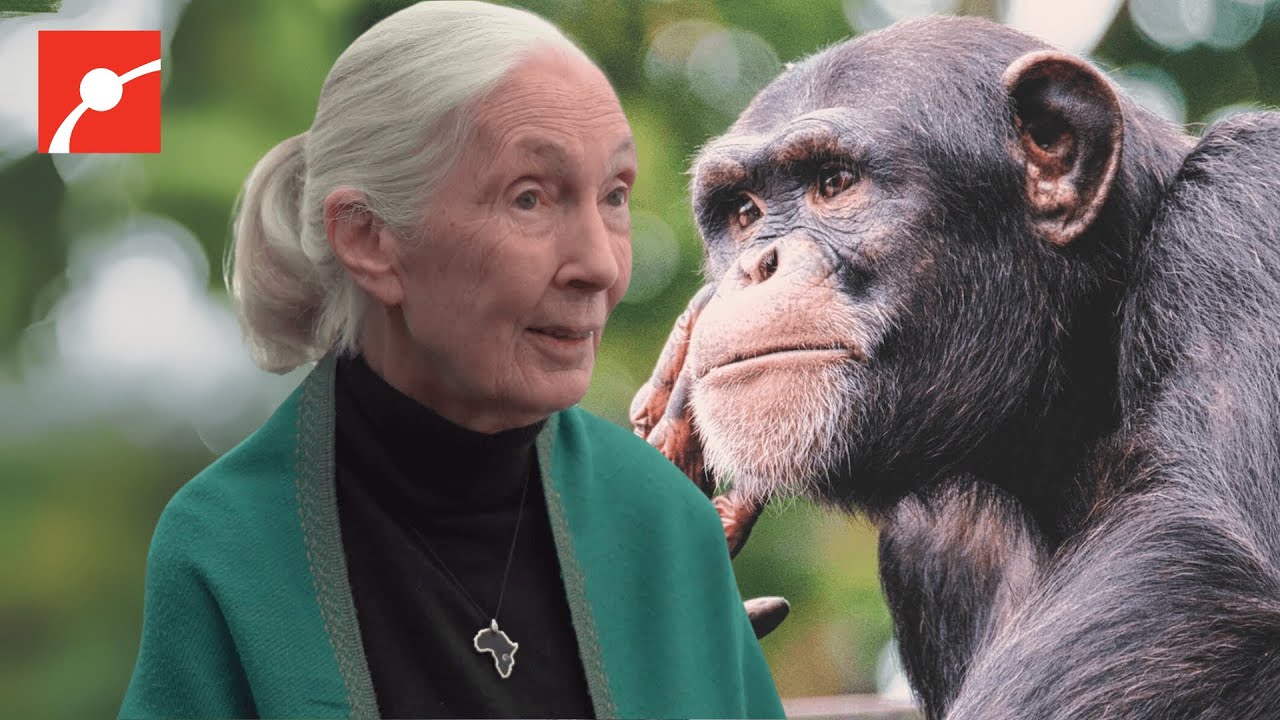
Ethologists have identified specific behavioral markers that signal whether an interaction will succeed. Frans de Waal's studies of chimpanzees show that animals literally "remember" who cheated them—they recognize individual partners and adjust future cooperation accordingly. This isn't forgiveness or moral judgment; it's the behavioral implementation of the repeated-game logic that makes cooperation stable. An animal that cooperates with cheaters dies out. An animal that discriminates survives.
The strength of ethology is its attention to context. A prairie vole raises pups with a partner; a golden hamster does not. The difference isn't intelligence or capacity for kindness—it's the ecological structure each species faces. Prairie voles inhabit sparse grasslands where finding another mate after abandonment is nearly impossible, making parental investment in existing offspring the optimal strategy. Ethology explains why cooperation emerges in specific species, not whether animals are "naturally good."
This behavioral lens matters for understanding your own life too. Humans evolved in small, repeating groups where reputation tracked behavior across decades. We still carry that ethological wiring—our brains light up when we cooperate, we feel genuine satisfaction in reciprocal exchanges, and we punish defectors even at personal cost. These aren't cultural inventions. They're behaviors shaped by the same evolutionary pressures that created cooperation in bats, cleaner fish, and wolves.
As we move deeper into how specific cooperative arrangements emerge across species lines, ethology gives us the vocabulary to ask precise questions: What behaviors signal trustworthiness? How do different species recognize and respond to each other's intentions?
How Does Hamilton's Rule Actually Work?
For an altruistic act to evolve: rb > c. Relatedness times benefit must exceed cost.
Belding's ground squirrels demonstrate this precisely. When a predator approaches, females (who live near sisters, r=0.5) give alarm calls that cost them a 5%% increased predation risk (c=0.05) but give nearby kin a 40%% survival boost (b=0.40). The calculation: rb = 0.5 x 0.40 = 0.20 > c = 0.05. Males, who disperse away from relatives (r approaches 0), rarely call. The math predicts the behavior perfectly.
How Do Different Species Hunt Together?
Groupers use specific head-shake signals to recruit moray eels for cooperative hunts. The eel flushes prey from crevices while the grouper catches them in open water. Both species eat more together than alone.
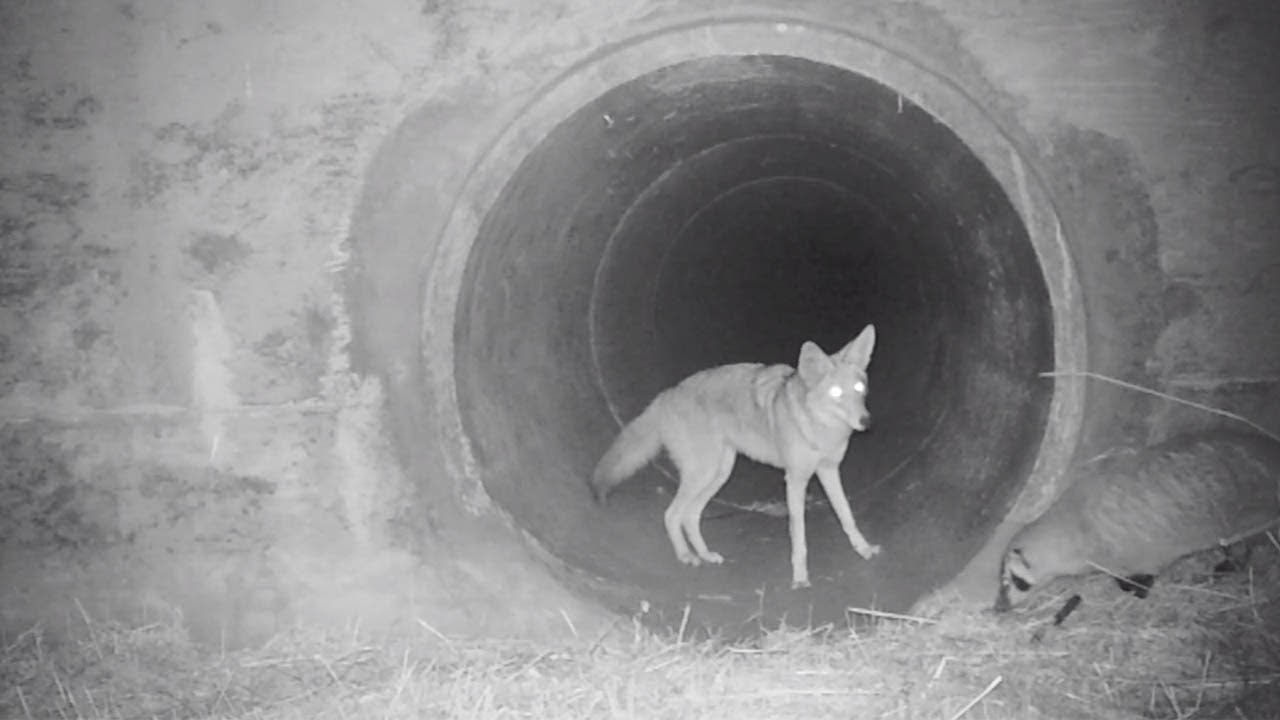
Coyotes and badgers form hunting partnerships. Coyotes chase prey above ground while badgers dig them out from burrows. Both species have higher capture rates when hunting together.
What Is a Biological Market?
Cleaner wrasses reveal the economics. When client fish have no alternatives (monopoly), cleaners cheat 15%% of the time. When many alternatives exist (competition), cheating drops to 2%%. When bystander fish are watching (reputation), cheating falls to 0.5%%.
Clients inspect a cleaner's reputation before approaching. Cleaners remember individual clients for 4+ months. This is supply-and-demand economics running on behavioral reputation, not language or contracts.
Are Cooperation Norms Universal?
No. Henrich et al. (2010) showed that Western, Educated, Industrialized, Rich, Democratic (WEIRD) populations are statistical outliers. In Ultimatum Games, Machiguenga people in Peru offer 26%% of the pot. Lamalera whalers in Indonesia offer 57%%. US college students offer 48%%.
Market integration predicts fairness. More market exposure correlates with higher offers. Cooperation norms are culturally shaped, not hardwired.
How Does Empathy Work in the Brain?
Mirror neurons (Rizzolatti and Craighero 2004) fire during both action execution and observation. When you watch someone eat, the same neurons fire as when you eat. This creates a shared manifold of experience, the neural basis of empathy.
Preston and de Waal (2002) mapped the empathy cascade: emotional contagion (mice mirror pain), sympathetic concern (primates distressed by others' distress), empathetic perspective-taking (great apes understand situations), and targeted helping (elephants physically support injured family members).
Is Group Selection Real?
Nowak et al. (2010) argued that inclusive fitness theory is mathematically insufficient. Abbot et al. (2011), signed by 137 evolutionary biologists including Trivers and Dawkins, responded that the framework has successfully predicted observations for 50+ years.
Current consensus: multilevel selection, where both individual and group-level processes operate simultaneously. The debate is real, ongoing, and scientifically productive.
Does Cooperation Have a Dark Side?
Yes. Oxytocin promotes bonding within groups but increases hostility toward outsiders. The same biology that makes us cooperate with family makes us suspicious of strangers. To build truly universal kindness, we must consciously extend our in-group beyond biological defaults. No other species has attempted this.
What Is the Oxytocin-Vasopressin Circuit?
Kindness is not magic. It is mediated by specific neuropeptides. Oxytocin promotes bonding, trust, and within-group cooperation. Vasopressin drives protective behavior and territorial defense. These are not 'feel-good' chemicals — they are neuromodulators that shift the brain's risk-reward calculation.
Oxytocin lowers the perceived 'cost' in Hamilton's rule (rb > c), making cooperation the default path of the nervous system. But it also increases hostility toward outsiders — the same molecule that bonds a mother to her infant makes her suspicious of strangers. This dual function is the neurochemical basis of tribalism.
How Does Indirect Reciprocity Scale Cooperation?
Nowak and Sigmund (1998) in Nature proved mathematically that cooperation among strangers evolves through reputation tracking. In their model, individuals are assigned an 'image score' that increases when they help others and decreases when they defect.
Wedekind and Milinski (2000) in Science confirmed this experimentally: humans donate more to partners who have been seen helping others. You do not need to meet someone personally to cooperate with them. You just need reliable information about their reputation. This is the mathematical foundation of all reputation-based systems — from Amazon reviews to scientific peer review.
What Is the Multilevel Selection Controversy?
Nowak et al. (2010) in Nature argued that inclusive fitness theory is mathematically insufficient to explain eusociality. Abbot et al. (2011) responded with a rebuttal signed by 137 evolutionary biologists, including Trivers and Dawkins — the most-signed response in the history of evolutionary biology.
The current consensus favors multilevel selection: both individual-level processes (kin selection, reciprocity) and group-level processes (differential group extinction, cultural group selection) operate simultaneously. The debate is scientifically productive, not resolved.
What Connects Cooperation to Every Other System?
The biological market theory of the mycorrhizal network mirrors the cleaner fish market — both use partner choice and reputation to enforce honest exchange. The 'strong reciprocity' that defines human cooperation depends on the holobiont — oxytocin production is modulated by gut bacteria.
Plant signaling operates tritrophic defense using the same economic logic: recruit a bodyguard (parasitic wasp) to solve a local problem (caterpillar). Cooperation is not uniquely animal. It is the baseline physics of every living system.
What Is Biological Market Theory?
Noe and Hammerstein (1995) established that interspecies cooperation operates as a commodity exchange. Grooming, food-sharing, and parasite removal are services whose price fluctuates based on supply and demand.
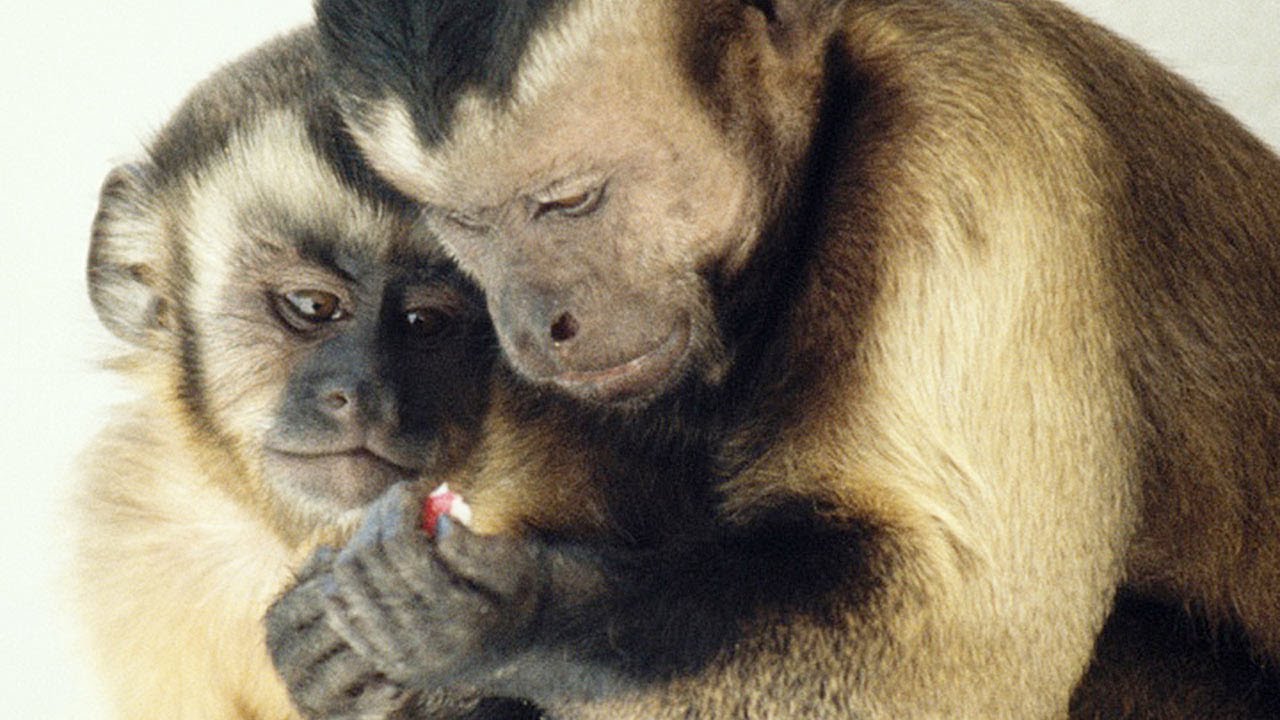
In primate troops, when groomers are scarce, the 'cost' of being groomed (measured in reciprocal food sharing) increases. In the marine cleaner fish system, clients inspect a cleaner's reputation before approaching. Cleaners remember individual clients for months. This is economics running on behavioral memory, not language or contracts.
What Is the Neuro-Endocrine Hardware of Trust?
Kindness is mediated by specific neuropeptides. Oxytocin promotes bonding and trust within groups. Vasopressin drives protective behavior and territorial defense. These are not feel-good chemicals — they are neuromodulators that shift the brain's risk-reward calculation.
Oxytocin lowers the perceived cost in Hamilton's rule, making cooperation the default neural pathway. But it simultaneously increases hostility toward outsiders. The same molecule that bonds a mother to her infant makes her suspicious of strangers. Understanding this dual function is essential — to build truly universal kindness, we must consciously override the tribalism that oxytocin encodes.
What Is the Cognitive Prerequisite for Cooperation?
Call and Tomasello (2008) identified joint attention as the foundational cognitive capacity for cooperation. Two individuals must simultaneously attend to the same external goal. Chimpanzees show joint attention in competitive contexts. Humans show it in cooperative contexts. This small shift enables shared intentionality and collaborative problem-solving.
Theory of mind — the capacity to attribute mental states to others — is the second prerequisite. Hare and Tomasello (2005) showed domestic dogs outperform chimpanzees on some social cognition tasks. Dogs lost aggression during domestication and became better at reading human communicative cues. Selection for tameness inadvertently selected for cooperative cognition.
How Does the Empathy Cascade Work Neurologically?
Preston and de Waal (2002) proposed the Perception-Action Model. Observing another's emotional state automatically activates the observer's corresponding neural representations. Mice show Level 1 emotional contagion. Rats free trapped companions even when given chocolate as an alternative (Level 2 sympathetic concern). Great apes console distressed individuals with targeted comfort (Level 3 perspective-taking). Elephants physically support injured family members (Level 4 targeted helping).
Rizzolatti and Craighero (2004) identified mirror neurons that fire during both action execution and observation. They provide a neural mechanism for empathy. Whether mirror dysfunction causes social deficits or merely correlates with them remains uncertain.
Why Does Eusociality Evolve in Some Species?
Ratnieks et al. (2011) identified 8-11 independent origins of eusociality. This is convergent evolution, not a single accident. Boomsma (2009) established that lifetime monogamy is the key precursor — when one male fertilizes one female for life, sisters share 75%% of their genes (r=0.75), making helping genetically equivalent to personal reproduction.
The superorganism transition occurs around 10^8 individuals. Honey bee colonies have temperature regulation, resource allocation, and division of labor comparable to multicellular organisms. The pollinator crisis threatens not just individual bees but these collective entities. Eusocial insects comprise 75%% of insect biomass despite representing only 2%% of species.