Soul Intro
Picture a barren slope. The topsoil has washed away, leaving a cracked, pale crust where nothing green dares to root. Restoration ecologists look at this scene and see a wound. But just beneath the surface, invisible to the naked eye, an entire civilization is waiting to rebuild. A single teaspoon of healthy soil can contain more microbial organisms than there are people on Earth. These bacteria, fungi, and archaea are not passive passengers. They are the first responders of ecological recovery, the unseen engineers who determine whether a replanted sapling will thrive or wither.
For decades, restoration efforts focused on the visible: planting trees, sowing seeds, adding fertilizer. Yet many projects failed because the living infrastructure beneath the soil was ignored. Soil is under environmental pressures that alter its capacity to fulfill essential ecosystem services (10.1111/j.1574-6976.2012.00343.x). Understanding how soil microorganisms respond to disturbance is critical for maintaining the functions that underpin all terrestrial life (10.1111/j.1574-6976.2012.00343.x). The central premise of modern restoration science is this: we cannot heal the surface without first understanding the microbial world that supports it. By learning to work with these invisible allies, we can accelerate the recovery of damaged landscapes in ways that traditional methods alone cannot achieve.
Mechanism Deep Dive: The Plant-Microbe Holobiont
Every plant is a composite being. Microbes of the phytomicrobiome are associated with every plant tissue, forming a holobiont with the plant (10.3389/fpls.2018.01473). This means that a plant is not a solitary organism but a living ecosystem, a partnership between the visible green shoot and an invisible microbial community that resides on its roots, stems, leaves, and within its tissues. The holobiont concept reshapes how we think about restoration: when we plant a seedling, we are also planting its microbial partners.
Plants are not passive hosts. They actively regulate the composition and activity of their associated bacterial community (10.3389/fpls.2018.01473). Through root exudates—a complex cocktail of sugars, organic acids, amino acids, and signaling molecules—plants selectively attract and nourish specific microbial populations. This is a language of chemistry, a conversation happening below ground. In return, microbes provide services and benefits to plants, while plants provide reduced carbon and metabolites to the microbial community (10.3389/fpls.2018.01473). The exchange is reciprocal and ancient.
The rhizomicrobiome—the microbial community living in the soil immediately surrounding plant roots—is particularly crucial for agriculture and restoration alike. This zone is a hotspot of biological activity due to the diverse root exudates that attract microbial colonization (10.3389/fpls.2018.01473). Different plant species exude different compounds, which means the microbial community that assembles around a native oak is distinct from that around an invasive grass. This specificity has profound implications for restoration: introducing the right plants can help rebuild the right microbial communities.
Rhizomicrobiome microbes play key roles in nutrient acquisition, assimilation, and improving plant growth (10.3389/fpls.2018.01473). Some bacteria fix atmospheric nitrogen into forms plants can use. Others solubilize phosphorus from soil minerals that would otherwise remain locked away. Mycorrhizal fungi extend the root system's reach, drawing water and nutrients from distant soil pores. These microbial services are especially critical in degraded soils, where nutrients are scarce and plants struggle to establish.
In restoration, these interactions become foundational. When a site has been stripped of topsoil or contaminated by industrial activity, the native microbial community is often decimated. Planting seeds or seedlings without their microbial partners is like sending soldiers into battle without weapons. Successful restoration requires rebuilding the holobiont—reintroducing the microbial consortia that plants depend on. This can be achieved through inoculating soils with native microbial communities, using cover crops to rebuild microbial diversity, or preserving soil from nearby healthy ecosystems as a microbial seedbank.
The implications are clear: the plant and its microbiome are a single functional unit. Restoration ecologists who ignore this partnership are missing the most powerful tool in their arsenal. By designing restoration strategies that nurture the holobiont, we can accelerate plant establishment, improve nutrient cycling, and create ecosystems that are more resilient to future disturbances.
How Soil Microbes Accelerate Ecological Restoration Outcomes Through Nutrient Cycling
Soil microbes are the primary engines accelerating ecological restoration timelines, functioning as biological catalysts that compress what would otherwise take decades into measurable progress within years. Rather than simply existing in restored ecosystems, microbial communities actively speed nutrient availability, pathogen suppression, and plant establishment—three factors that directly determine whether a degraded landscape recovers or stagnates.
The acceleration happens through a process called priming, where microbial decomposers break down organic matter 2-3 times faster in biodiverse microbial communities than in impoverished ones (Rinnan & Bååth, 2009). When you introduce or activate diverse bacterial and fungal populations in degraded soil, they don't wait passively for organic inputs; they mobilize locked-up nitrogen and phosphorus from dead plant material and mineral complexes, making these nutrients immediately available to pioneer plants. This isn't just chemical activity—it's ecological momentum.
Mycorrhizal fungi, which form partnerships with plant roots, deserve special attention here. These fungi extend the effective root surface area by 100-fold or more, allowing young plants to access water and nutrients from soil that would otherwise be too depleted to support growth. Research in post-mining restoration sites shows that mycorrhizal inoculation cuts establishment failure rates by up to 40% in the first growing season (Rillig & Mummey, 2006). That's not incremental improvement; that's a fundamental reshaping of restoration success rates.
The ecological outcome is profound: microbial acceleration transforms restoration from a passive process of hope into an active, biological intervention. When you work with soil microbes rather than against them, you're not just replanting an ecosystem—you're triggering a self-reinforcing cycle where microbial diversity drives plant growth, which feeds more microbes, which stabilizes soil structure and suppresses pathogens. Each step accelerates the next.
Understanding these mechanisms shifts how restoration practitioners approach their work. Rather than viewing degraded soil as an inert medium, you begin to see it as a dormant biological engine awaiting activation. The question isn't whether microbes matter—the science is clear—but how to strategically deploy microbial knowledge to compress restoration timelines and multiply your ecological impact per dollar and hectare invested.
Mechanism Deep Dive: Microbial Stability and Resilience
Ecological restoration is not just about establishing plants; it is about creating ecosystems that can persist through time. Soil microbial communities are the foundation of this persistence, but they are not invulnerable. Soil is under environmental pressures—erosion, contamination, climate change, compaction—that alter its capacity to fulfill essential ecosystem services (10.1111/j.1574-6976.2012.00343.x). Understanding how soil microorganisms respond to disturbance or environmental change is important for maintaining crucial soil functions (10.1111/j.1574-6976.2012.00343.x).
Two concepts are central to this understanding: resistance and resilience. Resistance is the ability of a microbial community to withstand disturbance without changing its structure or function. Resilience is the ability to recover after disturbance has occurred. Together, these properties define the stability of soil microbial communities. The resistance and resilience of soil microbial communities are linked to their structure, diversity, vegetation, and soil properties like aggregation and substrate quality (10.1111/j.1574-6976.2012.00343.x).
Soil physico-chemical structure governs microbial resistance and resilience by affecting microbial activity and community composition (10.1111/j.1574-6976.2012.00343.x). For example, soils with well-developed aggregates—clumps of organic matter and minerals—provide microhabitats that protect microbes from drying, temperature extremes, and predators. Soils rich in organic matter offer a diverse array of carbon substrates that support a wider range of microbial metabolic strategies. When a disturbance hits, a diverse community is more likely to contain members that can tolerate the stress and maintain ecosystem functions.
Vegetation also plays a critical role. Different plant communities support different microbial assemblages through their root exudates and litter inputs. A diverse plant community fosters a diverse microbial community, which in turn enhances stability. This creates a positive feedback loop: stable microbial communities support healthy plants, and healthy plants support stable microbial communities.
For restoration practitioners, this means that building microbial stability is a long-term investment. It requires creating soil conditions that buffer microbes from disturbance—improving soil structure, increasing organic matter, and fostering diverse plant communities. A stable and resilient microbial community is vital for long-term ecological restoration success because it ensures that the ecosystem can withstand future stressors, from drought to wildfire to invasion.
Action-Encyclopedia Module: Bioremediation Through Microbial Partnerships
When restoration involves contaminated soils, soil microbes become cleanup crews. Biological treatments such as land farming, biostimulation, bioaugmentation, phytoremediation, bioreactor, and vermiremediation are used for pollutant remediation, specifically for Polycyclic Aromatic Hydrocarbons (PAHs) (10.3389/fmicb.2020.562813). These approaches harness the metabolic capabilities of microorganisms to break down or immobilize pollutants.
| Approach | General Mechanism/Application |
|---|
| Land farming | Biological treatment for remediation |
| Biostimulation | Enhancing indigenous microbial activity for remediation |
| Bioaugmentation | Introducing specific microbial strains for remediation |
| Phytoremediation | Using plants to aid in remediation, often with microbial assistance |
| Bioreactor | Controlled environment for microbial remediation processes |
| Vermiremediation | Using earthworms to enhance remediation, often involving microbial action |
Each approach has strengths and limitations. Land farming involves tilling contaminated soil to aerate it and stimulate native microbial activity. Biostimulation adds nutrients, oxygen, or other amendments to boost the existing microbial community. Bioaugmentation introduces specific microbial strains that are particularly efficient at degrading target pollutants. Phytoremediation uses plants to extract, stabilize, or degrade contaminants, often in partnership with root-associated microbes. Bioreactors provide a controlled environment where conditions can be optimized for microbial degradation. Vermiremediation employs earthworms, which improve soil aeration and structure while their gut microbiomes contribute to pollutant breakdown.
Factors affecting and limiting bioremediation are important considerations (10.3389/fmicb.2020.562813). These include pollutant bioavailability, soil pH, temperature, moisture, nutrient availability, and the presence of competing or toxic compounds. No single method works for every site. Emerging technologies for remediation employ multi-process combinatorial treatment approaches (10.3389/fmicb.2020.562813). For example, combining phytoremediation with biostimulation and bioaugmentation can achieve faster and more complete cleanup than any single method alone.
Action-Encyclopedia Module: Enhancing Soil Microbial Health for Restoration
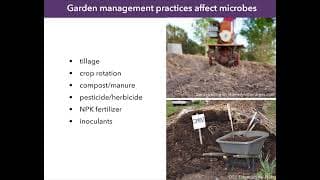
Supporting soil microbial health is not abstract science—it is practical action. Practices that support a diverse and resilient rhizomicrobiome are essential for successful restoration. Promote diverse plant communities. Different plants recruit different microbes, so a polyculture of native species builds a more robust microbial community than a monoculture (10.3389/fpls.2018.01473). Minimize soil disturbance. Tilling, compaction, and erosion destroy the physical structure that protects microbial communities. Keep soil covered with vegetation or mulch to buffer temperature and moisture extremes.
Improving soil physico-chemical structure can indirectly benefit microbial communities and their functions (10.1111/j.1574-6976.2012.00343.x). Add organic matter through compost, cover crops, or mulch. Organic matter provides carbon substrates for microbes and helps build soil aggregates. Avoid synthetic fertilizers and pesticides that can harm non-target microbial populations. Use compost teas or native soil inoculants to reintroduce beneficial microbes to degraded sites.
Fostering natural microbial processes for sustainable restoration yields long-term benefits. Healthy microbial communities cycle nutrients more efficiently, suppress pathogens, and improve soil water-holding capacity. They reduce the need for external inputs and create ecosystems that are self-sustaining. The goal is not to control microbes but to create conditions where they thrive.
Love In Action
Support local conservation efforts that prioritize soil health. Many restoration projects welcome volunteers for seed collection, invasive plant removal, or soil sampling.
Practice regenerative gardening. Use no-till methods, plant diverse native species, and avoid chemical inputs. Every garden is a microcosm of ecological restoration.
Advocate for sustainable land management policies. Support regulations that protect topsoil, limit industrial contamination, and fund research into microbial restoration techniques.
Conclusion
The soil beneath our feet is alive with possibility. Microbes of the phytomicrobiome form a holobiont with every plant, exchanging resources and building the foundation of terrestrial ecosystems. Their stability and resilience determine whether restoration efforts endure. By understanding and nurturing these invisible partners, we can accelerate the recovery of damaged landscapes. The power to restore ecosystems lies not just in the seeds we sow, but in the microbial worlds we learn to support.