Soul Intro: Where the Land Breathes Saltwater
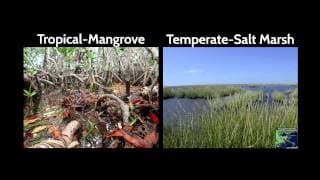
Stand at the edge of a healthy coastal wetland at dawn. The air thickens with the scent of mud and brine. Mangrove roots, like ancient fingers, grip the tidal silt, while oysters cluster in reefs that break the incoming waves. A heron stalks the shallows; crabs scuttle beneath the canopy. This is no passive landscape. It is a living machine—one that filters pollutants, buffers storms, and sequesters carbon at rates exceeding tropical rainforests. Yet this machinery is breaking down.
Coastal wetlands—mangrove forests, salt marshes, and seagrass meadows—are among the most productive ecosystems on Earth. They sit at the dynamic intersection of land and sea, absorbing the ocean's energy while nourishing countless species. Their value is not merely aesthetic or ecological; it is economic and existential. Mangrove forests alone provide at least US $1.6 billion annually in ecosystem services, supporting fisheries, timber, and coastal protection (10.1371/journal.pone.0010095). But these systems are vanishing. Globally, mangrove areas are declining rapidly due to clearing for coastal development, aquaculture, timber, and fuel production (10.1371/journal.pone.0010095). Native oyster reefs, which once formed the backbone of estuarine ecosystems, have suffered even more catastrophic losses: over 85% of them are gone globally, with more than 90% lost in many bays and ecoregions (10.1525/bio.2011.61.2.5). The degradation is not a slow erosion—it is a collapse.
The central premise is stark: coastal wetlands are vital, they are under severe assault, and restoration is not optional. It is an urgent necessity. As climate change accelerates sea-level rise and alters salinity regimes, the window for effective action narrows. Understanding the mechanisms of degradation and the principles of restoration is no longer an academic exercise. It is a survival strategy for both coastal communities and the wildlife that depends on these habitats.
Mechanism Deep Dive: The Forces Driving Coastal Wetland Decline
The threats converging on coastal wetlands are multiple, compounding, and accelerating. At the broadest scale, climate change fundamentally alters the physical conditions these ecosystems evolved to tolerate. The Intergovernmental Panel on Climate Change’s Sixth Assessment Report provides comprehensive, policy-relevant evidence that human-caused climate change is intensifying sea-level rise, increasing storm intensity, and shifting precipitation patterns (10.59327/ipcc/ar6-9789291691647, 10.59327/ipcc/ar6-9789291691647.001). For coastal wetlands, sea-level rise is perhaps the most insidious threat. Mangroves and salt marshes can accrete sediment vertically to keep pace with moderate sea-level rise, but when the rate of rise exceeds their capacity to build elevation, they drown. Salinity intrusion further stresses these plants, pushing them beyond their physiological tolerances and converting healthy wetlands into barren mudflats.
Direct human destruction compounds these climate-driven pressures. Mangrove forests are being cleared at alarming rates for shrimp aquaculture, rice paddies, urban expansion, and timber extraction. The same study that valued mangroves at US $1.6 billion annually documented that global mangrove area is declining rapidly due to these activities (10.1371/journal.pone.0010095). The loss is not random—it concentrates in the tropics and subtropics where biodiversity and human dependence on coastal resources are highest. When mangroves are removed, the coastline loses its first line of defense against storms and erosion, and the rich nursery habitat for fish and crustaceans disappears.
The destruction of native oyster reefs tells an even more harrowing story. Centuries of resource extraction—overharvesting for food and lime production—combined with habitat degradation from dredging, pollution, and sedimentation have driven these ecosystems to the brink. The data are devastating:
| Category of Loss | Estimated Percentage Lost | Source DOI |
|---|
| Overall Global Oyster Reefs | 85% | 10.1525/bio.2011.61.2.5 |
| Oyster Reefs in Bays | >90% (in 70% of bays) | 10.1525/bio.2011.61.2.5 |
| Oyster Reefs in Ecoregions | >90% (in 63% of ecoregions) | 10.1525/bio.2011.61.2.5 |
| Oyster Reefs Functionally Extinct (in many bays) | >99% | 10.1525/bio.2011.61.2.5 |
Functional extinction—over 99% loss—is not a distant possibility. It is the current reality in many bays. The loss of oyster reefs is exacerbated by centuries of resource extraction and coastal degradation (10.1525/bio.2011.61.2.5). These reefs once filtered entire estuaries, stabilized shorelines, and provided complex three-dimensional habitat for fish and invertebrates. Their collapse has cascading effects: water quality declines, shorelines erode faster, and fisheries collapse. The mechanisms of degradation are deeply interconnected. Climate change adds stress to systems already weakened by direct human exploitation, creating a synergy that accelerates ecosystem collapse far faster than either threat alone.
Addressing Sea-Level Rise: How Wetlands Respond to Changing Water Levels
Sea-level rise fundamentally alters the hydrology that wetlands depend on, making adaptation strategies essential for ecosystem survival. As global ocean levels climb roughly 3.3 millimeters per year due to thermal expansion and ice melt, coastal wetlands face a critical threshold: they must either migrate inland, build elevation through sediment accumulation, or succumb to permanent inundation. Understanding this mechanism is central to any restoration effort, because a wetland restored without accounting for future water levels is a wetland restored on borrowed time.
The vertical accretion rate—how quickly a wetland builds soil through organic matter and sediment deposition—often determines whether it can keep pace with rising seas. Research by Kirwan and Megonigal (2013) found that many salt marshes can naturally increase their elevation by 2–8 millimeters annually through root growth and sediment trapping, but this adaptation plateaus when sea-level rise exceeds about 10 millimeters per year. At that tipping point, the marsh drowns faster than it can build itself up, triggering a transition from productive vegetation to open water.
This is where active restoration enters the picture. By strategically placing sediment, reestablishing native vegetation, and reconnecting wetlands to their natural sediment sources, we can artificially boost the conditions that enable natural accretion. Mangrove and salt marsh restoration projects that incorporate sediment supplementation have shown elevation gains of 15–30 centimeters over five years—enough of a head start to buy ecosystems time as seas continue rising.
The challenge extends beyond elevation alone. Increased salinity from saltwater intrusion compounds the stress on freshwater and brackish wetlands, especially in areas where groundwater is already compromised. Plants adapted to moderate salinity can experience osmotic stress when sea levels push saltwater further inland and deeper into aquifers, fundamentally shifting which species can survive in restored areas.
Successful restoration therefore demands a dual approach: engineering wetlands to rise with the sea while selecting plant communities that tolerate the salinity regimes projected for coming decades. These aren't opposing strategies—they're complementary pieces of a single adaptive solution that positions coastal wetlands to persist through the transformations ahead.
Mechanism Deep Dive: What We Stand to Lose—Ecosystem Services and Resilience
To understand what is at stake, consider the full breadth of services that healthy coastal wetlands provide. Mangrove forests are not simply collections of salt-tolerant trees; they are economic engines and biodiversity hotspots. The global value of mangrove ecosystem services is estimated at least US $1.6 billion annually, a figure that encompasses storm protection, carbon sequestration, fisheries support, and timber production (10.1371/journal.pone.0010095). Mangrove species are uniquely adapted to tropical and subtropical coasts, where they thrive in intertidal zones that would kill most terrestrial plants. Their complex root systems trap sediment, stabilize shorelines, and create nursery habitat for commercially important fish and shrimp. These ecosystems support coastal livelihoods directly—millions of people depend on mangrove-associated fisheries for protein and income (10.1371/journal.pone.0010095).
Beyond mangroves, healthy coastal wetlands as a whole provide a suite of ecosystem services that are increasingly critical in a changing climate. They act as natural buffers against storm surges and wave energy, reducing the damage to inland communities. They sequester carbon at rates far exceeding terrestrial forests—so-called "blue carbon" that can be stored in sediments for millennia. They filter pollutants from runoff, improving water quality for both wildlife and human uses. And they provide habitat for migratory birds, fish, and countless invertebrates.
The role of these ecosystems in building resilience cannot be overstated. Ecological restoration advances the science, practice, and policy to sustain biodiversity, improve resilience in a changing climate, and re-establish healthy relationships between nature and culture (10.1111/rec.13035). When coastal wetlands are healthy, they are more capable of adjusting to environmental changes—accreting sediment to keep pace with sea-level rise, migrating inland as shorelines shift, and recovering from storm damage. Degraded wetlands lose this adaptive capacity. A mangrove forest fragmented by clearing cannot buffer a community from a storm surge. An oyster reef reduced to functional extinction cannot filter an estuary or stabilize a shoreline. The loss of ecosystem services is not linear; at a certain threshold, the system flips from a provider of services to a source of hazard.
Restoring these ecosystems is not merely about returning to a past state. It is about rebuilding the ecological infrastructure that will allow coastal regions to withstand the pressures of the coming decades. The services provided by healthy wetlands are not luxuries—they are necessities for coastal communities facing rising seas, stronger storms, and declining fisheries.
Action-Encyclopedia Module: The Scientific Principles of Ecological Restoration
Effective restoration is not a matter of planting trees or dumping oyster shells and hoping for the best. It requires a rigorous scientific framework that integrates ecology, policy, and community engagement. The foundational principle is that ecosystem management requires explicit goals, policies, monitoring, and an understanding of ecological interactions to sustain ecosystem composition, structure, and function (10.2307/2269460). Without clear objectives, restoration efforts become unfocused and unaccountable. Without monitoring, there is no way to know if those objectives are being met. Without understanding the interactions between species, hydrology, and geomorphology, restoration can fail in ways that are both costly and ecologically damaging.
The international standards for ecological restoration, articulated by the Society for Ecological Restoration, provide a blueprint for this work. These standards emphasize that restoration should aim to sustain biodiversity, improve resilience in a changing climate, and re-establish healthy relationships between nature and culture (10.1111/rec.13035). This is a significant departure from earlier approaches that prioritized short-term economic gain over long-term ecological health. The contrast is instructive: past management often treated coastal wetlands as wastelands to be drained, filled, or converted. Current science recognizes them as critical infrastructure. The shift in perspective is not merely philosophical; it has practical implications for how restoration is planned, funded, and evaluated.
The principles call for restoration to be locally appropriate, ecologically sound, and socially inclusive. They recognize that ecosystems are dynamic and that restoration is a process, not a one-time event. They emphasize the importance of addressing the root causes of degradation—whether that is altered hydrology, pollution, or overharvesting—rather than simply treating symptoms. And they insist on adaptive management: learning from both successes and failures and adjusting strategies accordingly. These principles are not abstract ideals; they are practical guides that have been tested and refined through decades of restoration projects worldwide.
Action-Encyclopedia Module: Restoring Mangroves and Oyster Reefs
Translating principles into practice requires specific knowledge about the ecosystems being restored. For mangroves, restoration depends on species-specific information. The global assessment that valued mangroves at US $1.6 billion annually also compiled detailed data on the distribution, population status, and threats facing individual mangrove species (10.1371/journal.pone.0010095). This matters because different mangrove species have different tolerances for salinity, inundation, and temperature. Restoring a mangrove forest without understanding which species belong where can result in low survival rates and wasted resources. Effective restoration requires selecting the right species for the right elevation, matching them to the local hydrology and salinity regime, and ensuring that propagules or seedlings have access to suitable substrate.
For oyster reefs, the challenges are different but equally specific. Research on the global decline of native oyster reefs has generated clear recommendations for their conservation, restoration, and management (10.1525/bio.2011.61.2.5). These include protecting remnant reefs from further harvest and disturbance, restoring reef habitat by adding appropriate substrate, and managing water quality to support oyster survival and reproduction. Restoration strategies must also account for the challenges posed by sea-level rise and increased salinity. As sea levels rise, intertidal zones shift. Oyster reefs that are not allowed to migrate vertically or horizontally will drown. Restoration projects must therefore consider future conditions, not just current ones, and design reefs with enough vertical relief to survive projected sea-level rise.
Both mangrove and oyster reef restoration face the same fundamental challenge: they must operate at a scale that matches the magnitude of the problem. Small, isolated restoration projects are vulnerable to the same forces that caused degradation in the first place. A restored mangrove stand surrounded by cleared land will still be exposed to waves and erosion. A restored oyster reef in a bay with poor water quality will struggle to survive. Scaling up restoration requires not just technical expertise but also policy support, funding, and community engagement. It requires recognizing that coastal wetlands are not separate from the human communities that depend on them—they are part of the same system.
Love In Action: Three Ways to Support Coastal Wetland Restoration
Support organizations that restore coastal wetlands. Nonprofits and research institutions around the world are actively working to plant mangroves, rebuild oyster reefs, and restore salt marshes. Look for groups that use science-based methods, monitor their outcomes, and engage local communities. Your financial contribution—whether monthly or one-time—funds the labor, materials, and monitoring that make restoration successful.
Reduce your contribution to coastal degradation. Choose seafood from sustainable sources, particularly farmed shrimp and fish that do not come from cleared mangrove areas. Avoid single-use plastics that end up in coastal waters and smother oyster beds and seagrass meadows. Support policies that limit coastal development, protect wetlands, and reduce nutrient pollution from agriculture and urban runoff. Every purchase and every vote is a choice about the future of these ecosystems.
Engage locally and advocate. If you live near a coast, volunteer for local restoration events—planting mangroves, building oyster reefs, or cleaning up debris. If you live inland, your voice still matters. Advocate for climate policies that reduce greenhouse gas emissions and slow sea-level rise. Support funding for coastal restoration at local, state, and national levels. Write to your representatives and tell them that coastal wetlands are worth protecting. The love we hold for these places must translate into action that sustains them.
Conclusion: The Tide Can Turn
Coastal wetlands are not lost causes. The science is clear: restoration works when it is guided by explicit goals, informed by ecological understanding, and sustained by community commitment. Mangrove forests can regrow. Oyster reefs can rebuild. Salt marshes can expand. The patterns of degradation are not irreversible—they are challenges that can be met with knowledge, resources, and will.
The urgency is real. Climate change is not waiting, and the window for effective action is narrowing. But every hectare of mangrove restored, every oyster reef rebuilt, every salt marsh allowed to migrate inland is a victory. It is a step toward a future where coastal ecosystems are not just surviving but thriving—filtering water, buffering storms, supporting fisheries, and storing carbon. That future is not guaranteed. It must be built, one restoration project at a time. The tide can turn, but only if we choose to turn it.