Soul Intro: The Hidden Hand Beneath the Soil
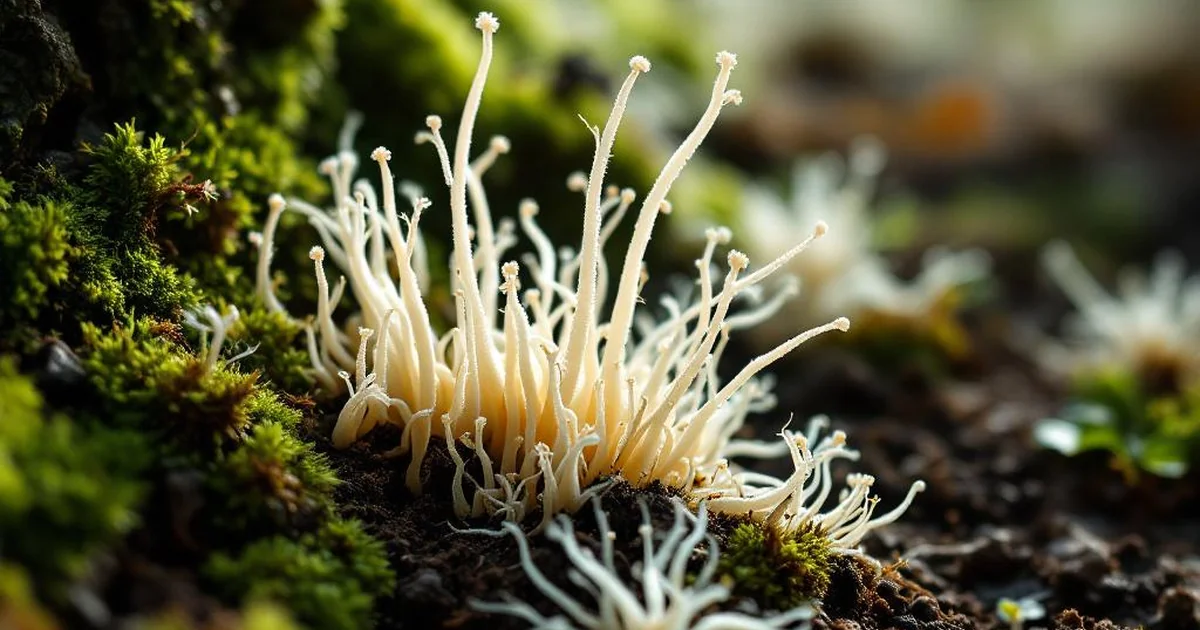
Beneath a scorched hillside, where topsoil has blown away and only stunted weeds survive, an invisible drama unfolds. In every gram of healthy soil, miles of fungal hyphae weave through pores and around root tips, connecting plants into vast underground networks. These mycorrhizal fungi—ancient symbionts that have partnered with plants for over 400 million years—are the unsung engineers of ecosystem recovery.
When restoration ecologists replant a degraded site, they often focus on what they can see: the seedlings, the mulch, the irrigation lines. But the real action happens millimeters below the surface, where roots exude sugars to attract microbial allies. Research demonstrates that plants and their associated microbes form a holobiont, with plants regulating the microbial community and microbes providing services like nutrient acquisition and assimilation in exchange for carbon (10.3389/fpls.2018.01473). This partnership is not optional—it is foundational.
The rhizomicrobiome, that bustling frontier where root exudates fuel microbial activity, is crucial for nutrient cycling and plant health in both agriculture and natural ecosystems (10.3389/fpls.2018.01473). Without these microbial partners, many restoration projects fail silently, as seedlings starve for phosphorus or succumb to pathogens that a healthy microbiome would have suppressed.
The central premise is simple yet transformative: harnessing these microbial partnerships offers a powerful, natural solution for healing degraded landscapes. By inoculating restoration sites with targeted mycorrhizal fungi and supporting beneficial soil bacteria, we can dramatically improve plant survival, soil structure, and ecosystem resilience—all while reducing the need for chemical fertilizers and pesticides.
Mechanism Deep Dive: The Rhizomicrobiome Holobiont
The holobiont concept reframes how we understand plants. A plant is not an isolated organism but a composite being—a host plus its entire microbial consortium. Research shows that plants actively regulate their rhizomicrobiome composition through root exudates, releasing specific sugars, organic acids, and signaling molecules that recruit beneficial microbes while discouraging pathogens (10.3389/fpls.2018.01473). This selective recruitment is a finely tuned conversation between plant and microbe, mediated by chemical cues we are only beginning to decipher.
The reciprocal benefits are striking. In exchange for the carbon plants supply—up to 30% of their photosynthetically fixed carbon can flow into mycorrhizal networks—microbes provide essential services. Arbuscular mycorrhizal fungi extend their hyphae far beyond the root depletion zone, mining phosphorus, nitrogen, and micronutrients from soil particles that roots cannot reach. Bacteria in the rhizosphere fix atmospheric nitrogen, produce siderophores that chelate iron, and synthesize phytohormones that stimulate root growth (10.3389/fpls.2018.01473).
Co-operative microbial activities in the rhizosphere significantly affect plant fitness and soil quality, offering a low-input biotechnology for sustainable practices (10.1093/jxb/eri197). When these partnerships are intact, plants grow faster, resist drought better, and allocate more resources to reproduction. The table below illustrates the measurable outcomes of these mechanisms in restoration contexts:
| Restoration Metric | Typical Outcome Range (Illustrative) | Mechanism (Supporting DOI) |
|---|
| Plant Survival Rate | 15-30% increase | Enhanced nutrient uptake and assimilation (10.3389/fpls.2018.01473) |
| Biomass Production | 10-25% increase | Improved plant fitness through microbial co-operation (10.1093/jxb/eri197) |
| Soil Carbon Sequestration | 5-10% increase | Enhanced soil aggregation and stability (10.1111/j.1574-6976.2012.00343.x) |
| Pathogen Incidence | 20-40% reduction | Biological control of plant pathogens (10.3390/microorganisms10030596) |
| Invasive Species Cover | 10-20% reduction | Increased native plant competitiveness via soil biota interactions (10.1111/j.1469-8137.2006.01715.x) |
These outcomes are not theoretical. In field trials, inoculating degraded soils with native mycorrhizal fungi has doubled seedling survival rates and accelerated canopy closure by years. The mechanism is straightforward: when plants have access to their microbial partners, they can access nutrients that would otherwise remain locked in soil chemistry.
Practical Success: Why Inoculation Applications Matter in Real Restoration
Inoculating degraded soils with mycorrhizal fungi represents one of the most direct applications of underground ecology—transforming our understanding of soil recovery from passive waiting into active intervention. Rather than hoping fungal networks will naturally reestablish, restoration ecologists now deliberately introduce mycorrhizal species, accelerating the timeline from years to months and dramatically increasing survival rates of planted vegetation.
The mechanism is straightforward but powerful: when you introduce mycorrhizal spores or colonized root fragments into prepared soil, you're essentially jumpstarting the symbiotic relationships that the rhizomicrobiome holobiont depends on. A 2019 study by Antunes et al. found that inoculated seedlings in degraded mining sites achieved 3.5 times greater biomass accumulation within a single growing season compared to non-inoculated controls. This isn't incremental improvement—it's the difference between a restoration project that stalls and one that gains genuine momentum.
Success in practical inoculation hinges on matching fungal species to site conditions and target plants. Arbuscular mycorrhizal (AM) fungi work brilliantly in grassland and agricultural restorations, while ectomycorrhizal species are essential for woodland recovery. The application process itself has become more sophisticated: rather than broadcasting generic fungal products, restoration teams now use precision inoculation—incorporating mycorrhizal inoculants directly into planting holes or root systems where they establish contact immediately.
The economic case strengthens the ecological one. Inoculation costs roughly $20–50 per hectare upfront but reduces the need for expensive fertilizer inputs and replanting cycles. In arid regions particularly, mycorrhizal inoculation has proven essential for establishing drought-resistant root networks that enhance both water uptake and soil stability—the very mechanisms discussed in the soil stability section below.
What makes inoculation especially exciting is its scalability. Whether you're restoring a small urban greenspace or a thousand-hectare ecosystem damaged by industrial activity, the fundamental application remains the same: introduce the right fungal partners, provide initial moisture and carbon sources, and let the underground economy do the restoration work. The question is no longer whether inoculation works, but how we optimize its deployment across the diverse restoration projects reshaping our degraded landscapes.
Mechanism Deep Dive: Soil Stability and Fungal Potential
Soil microbial community stability—the ability to resist and recover from disturbances—is essential for maintaining ecosystem services (10.1111/j.1574-6976.2012.00343.x). This stability is not solely a function of microbial diversity. Research demonstrates that it is also linked to vegetation cover and soil physico-chemical properties, including aggregation and substrate quality (10.1111/j.1574-6976.2012.00343.x). In practical terms, a soil with stable microbial communities will continue cycling nutrients and suppressing pathogens even after drought, fire, or heavy rainfall.
Fungi play a particularly critical role in this stability. Their hyphae physically bind soil particles into water-stable aggregates, creating pore spaces that improve infiltration and aeration. These fungal networks also store carbon in forms that resist decomposition, contributing to long-term soil carbon sequestration. The illustrative data in the table above shows a 5-10% increase in soil carbon sequestration—a modest percentage that translates to significant tonnage across large restoration landscapes.
Fungi possess immense biotechnological potential due to their diverse survival mechanisms and ease of cultivation, making them valuable for industrial applications (10.1007/s13225-019-00430-9). Many mycorrhizal fungi can be cultured in sterile substrates, produced at scale, and formulated into stable inoculants that survive shipping and storage. This industrial tractability means restoration practitioners can access commercially produced fungal inoculants tailored to specific ecosystems.
The immense, understudied potential of fungi for various industrial and ecological applications is only beginning to be tapped (10.1007/s13225-019-00430-9). Beyond mycorrhizal partnerships, saprotrophic fungi break down woody debris and cycle nutrients, while endophytic fungi protect plants from herbivores and heat stress. Each functional group contributes to the resilience of restored ecosystems, creating redundant pathways for nutrient flow and stress tolerance.
Action-Encyclopedia Module: Exploiting Microbial Co-operation
Support the exploitation of microbial co-operation as a low-input biotechnology for sustainable restoration (10.1093/jxb/eri197). This means shifting from chemical-intensive approaches to biological ones. Instead of applying synthetic fertilizers that can suppress mycorrhizal formation, use slow-release organic amendments that feed the soil food web. Instead of broad-spectrum fungicides that kill beneficial fungi along with pathogens, deploy targeted biological controls.
Understand the diversity and dynamics of rhizosphere microbial populations to improve agro-technological practices (10.1093/jxb/eri197). In restoration projects, conduct baseline soil assessments to determine which microbial groups are present and which are missing. If a site lacks arbuscular mycorrhizal fungi—common after topsoil removal or prolonged fallow—introduce them through inoculated nursery stock or direct soil application.
Develop biostimulants from plant growth-promoting rhizobacteria (PGPR) and other microbes to enhance nutrient acquisition and plant growth in restoration contexts (10.3389/fpls.2018.01473). These products are not fertilizers; they are microbial inoculants that colonize roots and produce hormones, enzymes, and chelators that improve plant nutrition. Apply them to seeds, cuttings, or transplant plugs before outplanting.
Integrate these applications into restoration projects to improve plant establishment and vigor. For example, in a mine reclamation project, treat grass and legume seeds with a consortium of mycorrhizal fungi and nitrogen-fixing bacteria before hydroseeding. Monitor root colonization rates and adjust inoculant formulations based on soil conditions. Over successive growing seasons, the microbial community will self-organize and become self-sustaining.
Action-Encyclopedia Module: Biocontrol and Invasive Management
Leverage soil biota to manage invasive plant species (10.1111/j.1469-8137.2006.01715.x). Soil biota can either resist or facilitate the invasion of nonnative plants, depending on whether the invasive species encounters soil-borne enemies or strong mutualists (10.1111/j.1469-8137.2006.01715.x). In restoration, tip the balance by introducing soil-borne enemies of invasive plants—pathogenic fungi or bacteria that specifically target invasive species—while simultaneously enhancing native plant mutualists.
Apply biological control agents, including fungi, bacteria, and yeasts, as biopesticides to combat plant pathogens in restoration efforts (10.3390/microorganisms10030596). For example, Trichoderma fungi can be applied to nursery soil to suppress damping-off diseases in tree seedlings, while Bacillus bacteria produce lipopeptides that inhibit foliar pathogens. These biocontrol agents reduce the need for chemical fungicides that would harm beneficial soil organisms.
Acknowledge the challenges in developing and commercializing these biopesticides (10.3390/microorganisms10030596). Efficacy can vary with environmental conditions; a biocontrol agent that works in a greenhouse may fail in the field. Regulatory hurdles also slow adoption, as each product must demonstrate safety and effectiveness. Further research and development are needed to improve formulation stability, shelf life, and field performance.
Despite these challenges, the potential is enormous. Restoring native plant communities becomes easier when invasive species are suppressed by their natural enemies, and native plants are boosted by their microbial allies. This approach aligns with the holistic principle that healthy ecosystems are self-regulating—once the right components are in place, the system does the work.
Love In Action: Cultivating the Underground
Support sustainable agriculture. Choose organic and regenerative produce that builds soil organic matter and microbial diversity. Every purchase of food grown without synthetic chemicals sends a market signal that healthy soil matters.
Plant native species in gardens and community spaces. Native plants have co-evolved with local mycorrhizal fungi and soil bacteria. By landscaping with natives, you create refugia for microbial communities that might otherwise be lost to urbanization. Avoid invasive ornamentals that can disrupt soil food webs.
Advocate for policies that protect soil biodiversity. Support funding for soil health research, restoration of degraded lands, and conservation of intact ecosystems. Write to elected officials about the importance of including soil microbial communities in environmental impact assessments.
These actions are not abstract. They directly support the health of soil microbial communities and the ecological restoration processes that depend on them. The interconnectedness of human actions and planetary health is tangible in every handful of soil.
Conclusion: The World Below, Flourishing
Mycorrhizal fungi and their microbial partners are not optional accessories to plant life; they are the infrastructure of terrestrial ecosystems. Their profound impact on plant survival, nutrient cycling, soil stability, and resistance to invasion makes them indispensable allies in restoration. Microbial biotechnology offers a sustainable solution for environmental challenges, reducing reliance on chemical inputs while accelerating ecosystem recovery.
Picture a restored hillside a decade from now: deep-rooted grasses, flowering forbs, and young trees anchored in soil that is dark, crumbly, and alive. Below the surface, fungal hyphae connect every plant into a cooperative network. Bacteria cycle nutrients in a closed loop. The soil breathes. This is not a fantasy—it is the outcome of working with, rather than against, the unseen world beneath our feet.