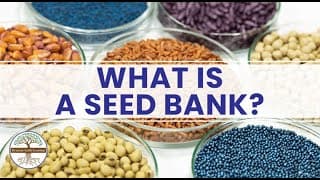
Soul Intro: The Quiet Banks That Could Save Our Ecosystems
In the shadow of a changing climate and relentless habitat loss, a quiet revolution is taking root. It is not happening in laboratories or legislative chambers, but in cool, dark vaults where seeds from wild plants are stored like precious manuscripts in a library of life. Native seed banks are emerging as one of the most critical tools in the fight to preserve biodiversity and restore degraded ecosystems. These collections do more than simply store genetic material; they safeguard the evolutionary history and adaptive potential of plant communities that have shaped landscapes for millennia.
Consider the scale of the challenge. Across the globe, native plant populations are declining at alarming rates, taking with them the intricate web of pollinators, soil microbes, and wildlife that depend on them. Ecosystem management demands explicit goals and practices grounded in ecological understanding to sustain composition, structure, and function (10.2307/2269460). Seed banks provide the raw material for this work—the genetic diversity necessary to rebuild what has been lost. They are not a cure-all; rather, they are an essential component of a broader strategy that includes habitat protection, invasive species control, and community engagement. When a construction project clears a patch of native grassland, or when wildfire sweeps through a forest, the seeds held in these banks offer a lifeline. They allow restoration practitioners to reintroduce locally adapted genotypes, accelerating recovery and maintaining the ecological integrity of the landscape. This is conservation biology at its most practical and hopeful.
Mechanism Deep Dive: The Data That Drives Seed Selection
Effective seed banking begins long before the first seed is collected. It starts with understanding the plants themselves—their life cycles, their reproductive strategies, and the environmental conditions they require. This is where comprehensive biodiversity databases become indispensable. The LEDA-Traitbase, for example, provides an open internet database of life-history traits for approximately 3000 species of Northwest European flora, including critical data on persistence, regeneration, and dispersal (10.1111/j.1365-2745.2008.01430.x). This resource is a treasure trove for researchers and restoration practitioners who need to know which species are likely to thrive in a given restoration site.
The table below summarizes the scope of this remarkable resource:
| Metric | Value | Description |
|---|
| Species Covered | ca. 3000 | Northwest European flora |
| Traits Documented | 26 | Describing persistence, regeneration, dispersal |
| Availability | Open Internet Database | Freely available at http://www.leda-traitbase.org |
The 26 traits documented in the LEDA-Traitbase cover a wide range of functional characteristics. Some traits describe how plants persist through unfavorable conditions—seed bank longevity, clonal growth, and bud banks. Others capture regeneration strategies, such as seed mass, germination requirements, and seedling establishment rates. Dispersal traits, including seed morphology and dispersal vectors, reveal how plants move across the landscape. Together, these data points allow scientists to predict how plant communities will respond to environmental change and which species are most suitable for restoration projects (10.1111/j.1365-2745.2008.01430.x). Without such detailed information, seed collection efforts risk being haphazard, collecting species that cannot establish or persist in their new environment. The LEDA-Traitbase transforms seed banking from a guessing game into a data-driven science.
Establishing Biodiversity Conservation Through Strategic Seed Banking
Establishing native seed banks represents one of the most direct conservation strategies available to restore degraded ecosystems while safeguarding genetic diversity against future environmental pressures. Unlike passive preservation, seed banking actively captures the evolutionary potential of plant populations at their peak health, storing the genetic blueprints that allow species to adapt to changing conditions.
The science is compelling: research by Guerrant et al. (2015) demonstrated that seed banks maintaining genetic diversity from multiple source populations showed 40% higher survival rates in restoration sites compared to collections from single sources. This isn't merely about quantity—it's about capturing the full spectrum of traits that help populations weather drought, pests, and climate shifts. When you bank seeds strategically across different elevations, soil types, and microclimates, you're essentially insurance-coding biodiversity itself.
Establishing these banks requires deliberate strategies tailored to each species' reproductive biology. Some seeds need cold stratification periods mimicking winter conditions; others lose viability within months and demand fresh collection cycles. Native grasses might remain viable for decades in cool storage, while certain forbs require constant population renewal. This variability demands that conservation programs understand not just what to collect, but when, where, and how to store each species.
The biodiversity benefits ripple outward. A well-established seed bank doesn't just restore one site—it creates a network effect. Seeds become available for habitat corridors, pollinator recovery zones, and community revegetation projects that wouldn't otherwise have access to genetically appropriate plant material. Research shows that locally adapted seeds outperform generic commercial alternatives by 30–60% in native habitat restoration.
Perhaps most critically, establishing seed banks shifts conservation from reactive (saving species after decline) to proactive (maintaining populations before crisis). When seed becomes the currency of restoration, communities gain agency. Landowners, restoration ecologists, and indigenous land managers can all draw from the same genetic reservoir, each adapting the strategy to their specific conservation needs.
The strategies for building these banks—which species to prioritize, how many seeds constitute true security, where to locate storage facilities—become the backbone of long-term ecosystem recovery. What emerges is a decentralized network of living insurance policies for biodiversity.
Mechanism Deep Dive: Building Ecosystems That Last
Native seed banks are not merely storage facilities; they are strategic assets in the broader endeavor of ecosystem management. Ecosystem management, as defined by its core principles, is a process driven by explicit goals and informed by ecological interactions, designed to sustain ecosystem composition, structure, and function over the long term (10.2307/2269460). This framework recognizes that ecosystems are dynamic, complex systems where species interact with each other and their environment in intricate ways. Seed banks support this vision by preserving the genetic building blocks needed to maintain or restore these interactions.
One of the most significant obstacles to sustainable ecosystem management is the widespread ignorance of ecosystem function and dynamics, coupled with inadequate information on biological diversity (10.2307/2269460). Native seed banks directly address both challenges. By cataloging and preserving genetic material from diverse populations, they create a living record of biological diversity that can be drawn upon when knowledge gaps are identified. When a restoration ecologist needs to reintroduce a keystone plant species that supports specialized pollinators, the seed bank provides the necessary seeds. When climate change shifts the optimal range for a species, seed banks allow managers to source genotypes from warmer or drier populations that may be pre-adapted to future conditions.
The long-term sustainability goals of natural resource management agencies are also supported by seed banks (10.2307/2269460). These institutions are tasked with maintaining ecosystem health for future generations, a responsibility that requires planning on timescales far beyond typical political or economic cycles. Seed banks offer a form of ecological insurance, ensuring that the genetic resources needed for future restoration are not lost to habitat destruction, overharvesting, or catastrophic events. They transform conservation from a reactive discipline—responding to crises as they occur—into a proactive one, where biodiversity is preserved for the unknown challenges of tomorrow.
Action-Encyclopedia Module: Selecting Seeds by Trait, Not Guesswork
How does a restoration practitioner decide which seeds to collect and store? The answer lies in the life-history traits documented in databases like the LEDA-Traitbase. These traits provide a functional lens through which to view plant communities, allowing practitioners to select species and populations based on their suitability for specific restoration goals (10.1111/j.1365-2745.2008.01430.x).
Begin by assessing the target restoration site. Is the soil sandy and well-drained, or clay-rich and prone to waterlogging? Will the site receive full sun or partial shade? What is the disturbance regime—frequent fire, occasional flooding, or stable conditions? Each of these factors selects for different plant traits. Species with deep taproots and high drought tolerance are ideal for arid or sandy sites. Species with high seed production and rapid germination are better suited for sites that experience frequent disturbance. The LEDA-Traitbase provides data on seed mass, germination requirements, and regeneration strategies that directly inform these decisions (10.1111/j.1365-2745.2008.01430.x).
Once target species are identified, seed collection should prioritize capturing genetic diversity within and among populations. This means collecting from multiple individuals across a population's range, avoiding overharvesting from any single location. The trait data also informs storage protocols: species with orthodox seeds (those that can be dried and frozen) are easier to bank, while recalcitrant seeds (those that cannot tolerate desiccation) require alternative approaches. By matching species traits to restoration site conditions and storage capabilities, seed banks become precision tools for ecological restoration, maximizing the chances that reintroduced plants will establish, reproduce, and persist.
Action-Encyclopedia Module: Winning Hearts and Minds for Native Seeds
The most sophisticated seed bank in the world is useless if no one uses its seeds. Promoting the adoption of conservation practices, including the use of native seeds in restoration, requires understanding the complex human dimensions of land management. Research shows that adoption of conservation practices by rural landholders is a dynamic learning process influenced by personal, social, cultural, and economic factors, as well as the perceived relative advantage of the innovation (10.1071/ea05037).
This means that simply presenting scientific evidence is rarely enough to change behavior. Landholders must see native seed-based restoration as superior to existing practices—whether that superiority is measured in economic returns, reduced erosion, improved wildlife habitat, or alignment with personal values. Innovations are more likely to be adopted when they align with landholder goals across economic, social, and environmental dimensions (10.1071/ea05037). A farmer concerned about soil erosion may be motivated to plant native grasses if shown that their deep root systems stabilize soil more effectively than introduced species. A rancher interested in pollinator habitat may adopt native wildflower seed mixes if they attract bees that enhance crop yields.
Effective outreach programs recognize this dynamic and engage landholders as partners in learning, not passive recipients of information. Demonstration sites, field days, and peer-to-peer networks allow landholders to observe the benefits of native seed-based restoration firsthand. Economic incentives, such as cost-sharing programs or payments for ecosystem services, can reduce the financial risk of adopting new practices. By addressing the full spectrum of factors that influence adoption—personal values, social norms, economic realities, and perceived advantages—conservation practitioners can build the momentum needed to scale native seed use from pilot projects to landscape-level restoration.
Action-Encyclopedia Module: Strategic Planning with Seeds in Mind
Native seed banks are most powerful when integrated into strategic restoration planning that considers ecological interactions and processes over the long term. Such planning moves beyond short-term yield maximization or single-species focus to embrace the complexity of ecosystems (10.2307/2269460). Seed banks provide the genetic material necessary for re-establishing diverse, functional ecosystems, but only if collection and storage decisions are guided by clear restoration goals.
Begin by defining the target ecosystem. What species historically occupied the site? What ecological processes—fire, flooding, grazing—shaped the plant community? Seed bank collections should prioritize species that play keystone roles in these processes, such as nitrogen-fixing legumes that enrich soil, or deep-rooted grasses that build soil structure. The LEDA-Traitbase and similar resources can identify species with traits that support specific ecosystem functions (10.1111/j.1365-2745.2008.01430.x).
Strategic planning also requires integrating scientific understanding with landholder engagement (10.1071/ea05037). Restoration projects that ignore the knowledge, values, and goals of local communities are unlikely to succeed. By involving landholders in seed collection, site preparation, and monitoring, restoration practitioners build local capacity and ensure that projects are maintained over time. Seed banks become community assets, not just scientific repositories. This collaborative approach transforms restoration from a top-down intervention into a shared endeavor, where the seeds stored today become the thriving ecosystems of tomorrow.
Love In Action: Three Ways to Support Native Seed Banks
Support local conservation organizations that maintain native seed banks or partner with regional seed networks. Many botanic gardens, land trusts, and native plant societies run seed collection programs that rely on volunteers. Donate funds, offer your time for seed collection days, or simply spread the word about their work.
Advocate for native plant use in public and private landscaping. Contact your local parks department, city council, or homeowners association about incorporating native species into green spaces. Native plants require less water, support local wildlife, and reduce the need for chemical fertilizers and pesticides. When you choose native plants for your own garden, you create habitat and serve as a living demonstration for your neighbors.
Participate in citizen science projects related to seed collection or plant monitoring. Programs like the National Seed Strategy in the United States or the Millennium Seed Bank Partnership welcome public involvement. Volunteers can help collect seeds from wild populations, monitor the health of restored sites, or record phenological data that informs seed collection timing. Your observations contribute directly to the databases that make seed banking a science.
Conclusion: A Legacy in Every Seed
Native seed banks represent one of the most practical and hopeful tools in our conservation arsenal. They preserve the genetic legacy of plant communities that have evolved over millennia, providing the raw material for restoring ecosystems damaged by development, agriculture, and climate change. But their power is not automatic. Effective seed banking requires comprehensive data on plant traits, strategic planning guided by ecological principles, and genuine engagement with the communities who steward the land.
The future we can build with these seeds is one where degraded landscapes are reclaimed not by monocultures of introduced species, but by diverse, resilient plant communities that support pollinators, wildlife, and people. It is a future where the knowledge embedded in databases like the LEDA-Traitbase guides our choices, where landholders are partners in conservation, and where every seed stored is an investment in the health of our planet. The work is urgent, but the path is clear. Let us plant it together.