Soul Intro: The Cathedral of Edibles
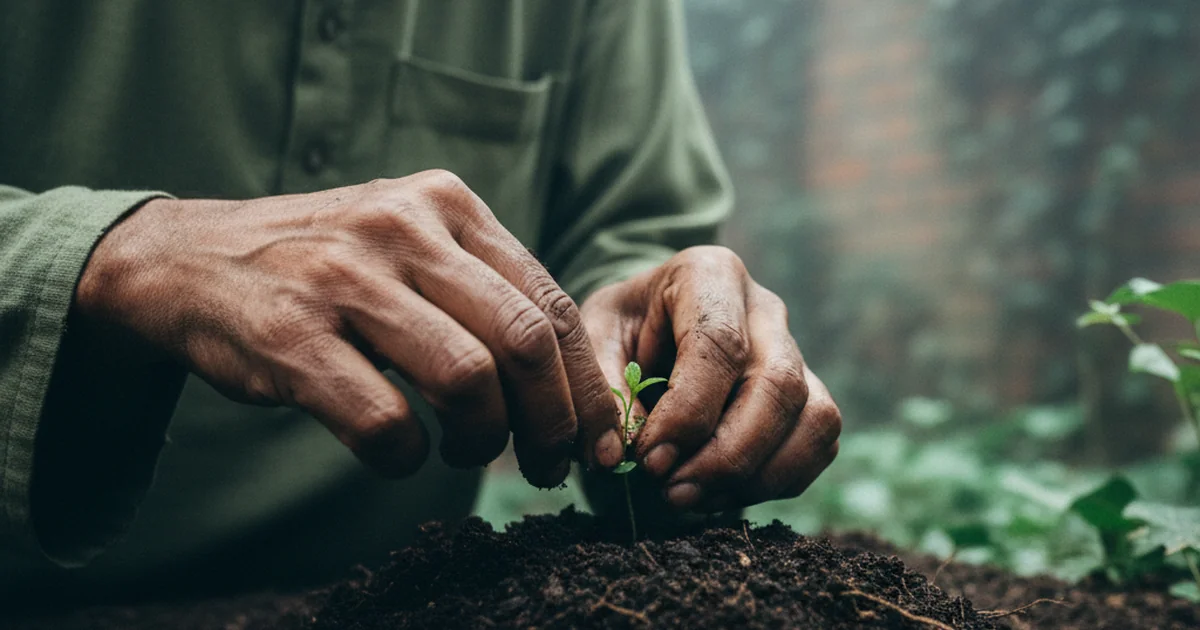
Step beneath the canopy of a mature food forest, and the world hushes. Dappled light filters through a layered ceiling of nut trees and nitrogen-fixing pioneers. Your feet sink into duff—decades of leaves, twigs, and fungal threads that smell of damp earth and sweet rot. A pawpaw fruit, heavy with custard-like flesh, dangles at eye level. Beneath it, shade-tolerant currants and wild ginger carpet the ground. This is not a wild forest, but a designed one—a polyculture built by human intention to mimic the structure and function of natural ecosystems.
The central premise of a resilient food forest is deceptively simple: select species that cooperate, stack functions, and build soil while yielding food. Yet achieving that resilience demands a deep understanding of ecological relationships. Species selection is not a shopping list but a choreography of complementary roles—nitrogen fixers paired with heavy feeders, deep taproots with fibrous surface roots, early-succession pioneers with late-stage canopy trees. These guilds, as permaculture designers call them, create feedback loops that stabilize the system over time.
Enhanced ecosystem services follow from this design logic. A well-structured food forest sequesters carbon in woody biomass and soil organic matter, regulates water flow through increased infiltration, supports pollinator and predator insect populations, and produces diverse yields without synthetic inputs. The challenge lies in translating ecological principles into repeatable, site-specific designs—a task that sits at the intersection of traditional knowledge, agroecological science, and adaptive management.
Mechanism Deep Dive: The Permaculture Blueprint for System Design
Permaculture emerged in the 1970s as a response to the ecological blind spots of industrial agriculture. Its founders, Bill Mollison and David Holmgren, synthesized principles from ecology, landscape design, and indigenous land stewardship into a framework for permanent agriculture—later expanded to permanent culture. At its core, permaculture is an agroecological movement characterized by a unique approach to system design and broad international distribution (10.1007/s13593-013-0181-6). Unlike conventional farming, which often treats fields as uniform production units, permaculture designs landscapes as integrated systems where each element performs multiple functions and each function is supported by multiple elements.
The agroecological potential of permaculture is significant, yet the movement remains relatively isolated from scientific research (10.1007/s13593-013-0181-6). This isolation limits its contribution to the broader agroecological transition that researchers and practitioners increasingly advocate for. Agroecology itself offers a promising alternative to industrial agriculture, mitigating the negative social and ecological impacts of input-intensive production (10.1007/s13593-013-0181-6). But without rigorous scientific validation, permaculture's claims about yield, carbon sequestration, and biodiversity remain difficult to scale or replicate.
The table below summarizes key aspects and challenges of permaculture within the agroecological framework:
| Aspect | Description | Implication/Challenge |
|---|
| Approach | Unique system design for agroecological production | Offers potential to avoid negative social and ecological consequences of industrial agriculture |
| Status | Broad international distribution and high public profile | Remains relatively isolated from scientific research |
| Limitation | Isolation from scientific research | Limits permaculture's potential contribution to agroecological transition |
This isolation is not inevitable. The design principles permaculture champions—diversity, synergy, closed-loop nutrient cycling, and edge effects—align closely with ecological theory. What is missing is a systematic bridge: controlled experiments that test guild combinations, long-term monitoring of soil carbon dynamics under food forest management, and publication of results in peer-reviewed channels. Building that bridge would transform permaculture from a passionate but fringe movement into a rigorous, evidence-based design science.
Designing Species Selection: The Science Behind Choosing Resilient Guild Members
Species selection is the foundational decision that determines whether your food forest survives drought, pest pressure, and shifting climate conditions—or collapses under stress. Rather than planting whatever grows well individually, resilient food forests depend on choosing species that perform specific ecological functions within interconnected guilds, where each plant buffers the vulnerabilities of others.
The mechanism is straightforward: polycultures with functionally diverse species show 40–60% greater yield stability across variable growing seasons compared to monocultures, according to research by Tilman and colleagues (2006). This happens because different plants access resources at different depths and times—deep-rooted nitrogen fixers pull nutrients from layers shallow-rooted fruiting trees cannot reach, while shade-tolerant understory plants suppress weeds that would otherwise compete with your primary crops. When one species faces stress, redundancy built into the guild keeps the system producing.
Selecting for resilience means identifying species that share three critical attributes: complementary resource use, pest and disease resistance through chemical diversity, and phenological spacing that staggers harvests across seasons. A walnut-based guild, for example, might pair the canopy tree with nitrogen-fixing comfrey below and allelopathy-tolerant hazelnuts nearby—each species solves a different problem while the guild as a whole maintains productivity through disruption.
Climate adaptation enters here too. Native and well-adapted species show 25–35% lower mortality during extreme weather events than introduced monoculture varieties (Kremen et al., 2012). This doesn't mean staying locked into what grows locally now; it means selecting species whose climate envelopes match your projected conditions in 20–30 years, while maintaining genetic and functional diversity so the system can flex.
The real power emerges when you move beyond species lists to understanding guild dynamics—how a nitrogen fixer's decay feeds your fruiting layer, how a dynamic accumulator's deep roots bring minerals to shallow soil zones, how a trap crop draws pests away from your primary harvest. The next sections will walk you through building these relationships intentionally, transforming species selection from a shopping list into an ecological design process.
Mechanism Deep Dive: The Living Foundation of Soil Health
Beneath every food forest lies a universe invisible to the naked eye—a living matrix of bacteria, fungi, protozoa, nematodes, and microarthropods that cycle nutrients, build soil structure, and suppress pathogens. Soil's complexity and its importance to a wide range of ecosystem services pose significant challenges for modeling soil processes (10.2136/vzj2015.09.0131). This complexity is both the soil's strength and the modeler's frustration.
Current soil models are often disjointed across disciplines or ecosystem services, leading to considerable uncertainty in predictions (10.2136/vzj2015.09.0131). A model optimized for carbon sequestration may poorly represent nitrogen dynamics. A hydrology model may treat soil as a simple bucket rather than a structured medium with macropores, aggregates, and preferential flow paths. These disconnects matter because food forest designers need integrated predictions: How will a guild of nitrogen-fixing trees affect soil organic matter over 20 years? Will deep-rooted perennials increase infiltration enough to buffer seasonal drought? Without models that capture the full complexity, designers rely on observation, intuition, and anecdote.
Advancing soil modeling requires improved knowledge exchange, integration of existing knowledge, and better integration of data and models (10.2136/vzj2015.09.0131). This is not merely a technical challenge but a cultural one. Soil scientists, ecologists, hydrologists, and agronomists must collaborate across disciplinary boundaries, sharing data and refining models together. For food forest designers, the practical implication is clear: build soil health first, and let the models catch up. Practices like mulching, composting, minimizing tillage, and maintaining continuous living roots are well-supported by existing research, even if the precise long-term outcomes are uncertain.
Action-Encyclopedia Module: Navigating the Agroecological Transition
Transitioning from industrial monoculture to agroecological production is not a single step but a complex, multi-decade process involving changes in technology, knowledge, markets, and policy. The complexity of this transition demands diverse contributions from multiple actors—farmers, researchers, extension agents, and civil society (10.1007/s13593-013-0181-6). No single approach holds all the answers.
Permaculture, despite its isolation from scientific research, offers a unique system design approach that can contribute to this transition (10.1007/s13593-013-0181-6). Its strength lies in its holistic perspective: rather than optimizing individual crops or inputs, permaculture designers consider the entire landscape as an integrated system. This systems thinking is valuable precisely because industrial agriculture has fragmented landscapes into specialized, disconnected components. A dairy farm, a corn field, and a woodlot managed by separate owners with separate goals cannot achieve the synergies that a designed polyculture can.
Collaboration between scientific institutions and agroecological movements is essential for fostering this transition (10.1007/s13593-013-0181-6). Scientists can provide rigorous methods for testing design hypotheses, measuring ecosystem services, and quantifying trade-offs. Practitioners can offer real-world experience, adaptive management insights, and a willingness to experiment. When these groups work together, the result is more than the sum of their contributions—it is a living body of knowledge that evolves with each season and each site.
Action-Encyclopedia Module: Water Resilience in a Changing Climate
Climate variability and recurrent droughts severely strain global water resources, particularly in arid and semi-arid regions (10.3390/rs12244184). These regions, already water-limited, face intensifying competition for every drop. Surface water resources face threats from increased demand, massive abstractions, poor conservation, and unsustainable land management practices (10.3390/rs12244184). The result is a vicious cycle: degraded landscapes shed water quickly, reducing infiltration and groundwater recharge, which in turn reduces dry-season flows and exacerbates drought impacts.
Food forest design principles offer a systematic approach to breaking this cycle. Key strategies include: contour swales and berms that capture and infiltrate runoff; deep-rooted perennials that access subsoil moisture and pump it to the surface; organic mulch that reduces evaporation and moderates soil temperature; and diverse canopy layers that intercept rainfall, reducing erosive impact and increasing infiltration time. These techniques do not create water—they slow it, spread it, and sink it into the landscape, where it becomes available for longer periods.
Satellite technologies are increasingly used to provide timely and spatially explicit information on drought and climate variability impacts (10.3390/rs12244184). Remote sensing data on vegetation health, soil moisture, and evapotranspiration can help food forest designers identify stress points, monitor restoration progress, and adapt management strategies in real time. Integrating satellite-derived information with on-the-ground observations creates a powerful feedback loop for building water resilience.
Action-Encyclopedia Module: Modeling the Future of Food Forests
The path from observation to prediction in soil science requires sustained community effort and international collaboration. Advancing soil modeling requires improved knowledge exchange, integration of existing knowledge, and better integration of data and models (10.2136/vzj2015.09.0131). This is not a task for any single lab or institution but for a global network of researchers, practitioners, and data curators.
Better integration of data and models can improve predictions for soil processes, which is crucial for resilient food forest design (10.2136/vzj2015.09.0131). Imagine a tool where a designer inputs local climate, soil type, and desired species mix, and the model predicts soil carbon trajectories, nitrogen leaching risks, and water balance over 30 years. Such a tool would transform food forest design from an art into an evidence-based practice. But building it requires open data standards, long-term monitoring networks, and models that can handle the nonlinear dynamics of living systems.
Simultaneously, bridging the gap between permaculture practices and scientific research is essential to maximize its contribution to agroecological transitions (10.1007/s13593-013-0181-6). This means more than publishing papers—it means creating spaces where practitioners and scientists learn from each other. Participatory research, farmer-led trials, and citizen science initiatives can generate data that is both locally relevant and scientifically rigorous. The future of food forest design lies not in choosing between science and practice, but in weaving them together.
Love In Action: Cultivating Resilience Together
Support agroecological research by donating to organizations that fund long-term, participatory studies on polyculture design and soil health. Your contribution helps bridge the gap between permaculture practice and scientific validation.
Participate in local food forest initiatives by volunteering for planting days, maintenance crews, or harvest events. Hands-on experience builds the knowledge base that no book or article can replace.
Advocate for policies that support sustainable land management at local and national levels. Contact elected officials about funding for agroecological extension services, protecting surface water resources from unsustainable abstractions, and supporting farmer-led research networks.
Each action, however small, contributes to a larger shift—from extractive, input-intensive agriculture to regenerative, knowledge-intensive systems that enhance ecosystem services while feeding communities. The food forest is not just a design; it is a relationship between people, plants, soil, and water. Nurturing that relationship is an act of love for the living world.
Conclusion: A Canopy of Possibility
Designing resilient food forests is an act of ecological imagination grounded in scientific understanding. By selecting complementary species and assembling them into functional guilds, we can create systems that produce food while enhancing soil health, regulating water, and supporting biodiversity. The path forward requires integrating the holistic design principles of permaculture with the rigorous methods of soil science, hydrology, and ecology.
The challenges are real—uncertainty in soil models, climate variability, and the isolation of practical knowledge from research. But the opportunities are equally compelling. With improved collaboration, better data integration, and sustained commitment, food forests can become a cornerstone of agroecological transitions worldwide. Imagine a future where every city has its edible forest, every watershed its diverse polyculture, and every farmer access to the knowledge and tools to design for resilience. That future begins with a single seed, planted with intention, in living soil.