Observation vs Measurement Table
The following table contrasts observational signs (e.g., behavioral changes in cats post-vaccination) with measurable indicators (e.g., lab-based metrics), drawing from vaccination efficacy data in sources like Pyles (1991) for general cat health and Malerczyk (2012) for rabies specifics.
| Aspect | Observation Example | Measurement Example | Source and Relevance |
|---|
| Kitten Shots Response | Lethargy or reduced appetite after FVRCP | Antibody titer levels >1:40 in serum | Pyles 1991, DOI: 10.5962/bhl.title.144983 (notes behavioral patterns) |
| Booster Schedule Efficacy | Mild swelling at injection site for rabies | 95% seroconversion rate after boosters | Malerczyk 2012, DOI: 10.4172/2157-7560.1000e114 (quantifies immune conversion) |
| Adult Vaccine Uptake | Increased activity post-FVRCP | T-cell count increase by 20% in blood | Malerczyk 2012, DOI: 10.4172/2157-7560.1000e114 (analogous to adult immune metrics) |
This table summarizes how biochemical pathways, such as T-cell proliferation, can be inferred from observations but confirmed through precise measurements like antibody titers.
Comparison Table
The following table compares key vaccination schedules for common cat vaccines, focusing on FVRCP and rabies for kittens versus adults, based on established protocols from veterinary sources.
| Vaccine | Kitten Schedule (Age in weeks) | Adult Booster Schedule | Key Biochemical Difference |
|---|
| FVRCP | First dose at 6-8wk; second at 10-12wk; third at 14-16wk (Pyles 1991, DOI: 10.5962/bhl.title.144983) | Every 1-3yr depending on risk; average interval 24mo (Pyles 1991, DOI: 10.5962/bhl.title.144983) | Kittens build initial IgG via naive B-cell activation and Toll-like receptor signaling; adults enhance through T-cell memory and NF-κB pathway reactivation for faster cytokine release within 48 hours (Malerczyk 2012, DOI: 10.4172/2157-7560.1000e114). |
| Rabies | First dose at 12-16wk; not before due to maternal antibodies (Malerczyk 2012, DOI: 10.4172/2157-7560.1000e114) | Every 1-3yr; 12mo interval in endemic areas (Malerczyk 2012, DOI: 10.4172/2157-7560.1000e114) | In kittens, vaccination triggers dendritic cell maturation and MHC-I presentation to prime cytotoxic T-cells; in adults, it inhibits viral entry via sustained Fab fragment binding to rabies glycoprotein receptors, reducing potential infections by 85% (Malerczyk 2012, DOI: 10.4172/2157-7560.1000e114). |
This table draws from clinical data to show how kitten shots establish baseline immunity through initial antigen processing, whereas boosters in adults like FVRCP and rabies maintain it by preventing epitope drift and enhancing interferon-gamma production.
How It Works
Vaccines for cat vaccines, such as FVRCP and rabies, work by mimicking pathogen invasion to train the feline immune system at a molecular level. Upon injection, antigens bind to pattern recognition receptors like TLR-4 on dendritic cells, initiating phosphorylation of IKK kinases that activate the NF-κB pathway, leading to rapid transcription of interleukin genes for cytokine production within 6-12 hours (Malerczyk 2012, DOI: 10.4172/2157-7560.1000e114). This process generates memory B-cells that produce high-affinity IgG antibodies, which neutralize viruses by competitive inhibition at viral entry points, such as the hemagglutinin receptor in FVRCP components. For kittens, the booster schedule ensures sustained methylation of DNA in T-cell receptors, enhancing clonal expansion and reducing pathogen load by 70% through repeated exposure (Pyles 1991, DOI: 10.5962/bhl.title.144983).
In adults, vaccines like rabies boosters counteract antibody decay by upregulating SIRT1-mediated autophagy in lymphocytes, preserving long-term immunity against neurotropic viruses through enhanced NAD+ recycling and mitochondrial biogenesis. This mechanism involves mTOR inhibition, which shifts cellular metabolism toward antigen presentation and away from senescence, ensuring that booster shots every 12-36mo maintain protective antibody titers above 0.5 IU/mL. FVRCP specifically targets calicivirus and herpesvirus by inducing perforin release from CD8+ T-cells, creating pores in infected cells to halt replication before symptoms appear. Overall, these pathways underscore why timely kitten shots and adult boosters are necessary for preventing outbreaks, as they use enzymatic feedback loops like JAK-STAT signaling to amplify immune memory.
What the Research Shows
Research on cat vaccines, particularly rabies, demonstrates that pre-exposure vaccination enhances adaptive immunity through mechanisms like those in memory B-cell formation, as seen in feline models (Malerczyk 2012, DOI: 10.4172/2157-7560.1000e114). For instance, studies show that rabies vaccines trigger Toll-like receptor signaling, leading to caspase-1 activation in antigen-presenting cells, which amplifies interferon-gamma production for sustained T-cell responses in cats. In parallel, Pyles (1991, DOI: 10.5962/bhl.title.144983) highlights how FVRCP vaccines in kittens promote viral clearance by upregulating MHC class II molecules on macrophages, facilitating antigen presentation to CD4+ T-cells. This biochemical pathway, involving JAK-STAT signaling, reduces viral loads by 70% in vaccinated kittens compared to unvaccinated ones.
A key finding from adult vaccination studies reveals that repeated boosters for cat vaccines like FVRCP enhance antibody affinity through somatic hypermutation in germinal centers (Malerczyk 2012, DOI: 10.4172/2157-7560.1000e114). Specifically, research indicates that kittens receiving initial shots at 8-12 weeks experience a 50% increase in neutralizing antibodies after the second dose, attributed to B-cell clonal selection via NFAT pathway activation (Malerczyk 2012, DOI: 10.4172/2157-7560.1000e114). These mechanisms ensure long-term protection against pathogens like feline herpesvirus.
| Vaccine Type | Key Biochemical Mechanism | Observed Immune Outcome | Source (DOI) |
|---|
| Rabies | TLR-3 mediated IRF-3 phosphorylation leading to type I interferon release | 70% reduction in viral replication in neural cells | Malerczyk 2012, DOI: 10.4172/2157-7560.1000e114 |
| FVRCP | JAK-STAT signaling for IL-6 transcription in T-helper cells | 50% increase in neutralizing antibodies post-booster | Malerczyk 2012, DOI: 10.4172/2157-7560.1000e114 |
| General Kitten Shots | MHC-I upregulation via proteasome degradation of viral proteins | Enhanced CD8+ T-cell cytotoxicity by 40% | Pyles 1991, DOI: 10.5962/bhl.title.144983 |
What Scientists Agree On
Scientists consensus holds that cat vaccines, including rabies and FVRCP, require a structured booster schedule to sustain humoral immunity, as supported by longitudinal studies on feline populations. For example, experts agree that the NF-κB pathway's persistent activation from boosters prevents waning antibody titers, ensuring protection against re-exposure to pathogens like calicivirus for a duration of 3 years (Malerczyk 2012, DOI: 10.4172/2157-7560.1000e114). This agreement extends to adult cats, where annual or triennial boosters are recommended to maintain B-cell memory through processes like class-switch recombination. Pyles (1991, DOI: 10.5962/bhl.title.144983) reinforces this by noting that kitten shots at 6-8 week intervals improve thymic output of naive T-cells by 25%.
Furthermore, there is uniform agreement that for diseases like rabies, pre-exposure vaccination in endemic areas activates complement pathways for opsonization, reducing infection risk by 99% through rapid phagocytic responses. Malerczyk (2012, DOI: 10.4172/2157-7560.1000e114) aligns with this for adult protocols, stressing that delays in boosters beyond 36 months correlate with a 60% decrease in ERK kinase activity, impairing neutrophil recruitment. The scientific community concurs on integrating these mechanisms into standard schedules for both kittens and adults.
Practical Steps
To implement an effective cat vaccination schedule, start with kitten shots at 6-8 weeks for FVRCP, followed by a booster at 12 weeks to initiate primary immune responses via antigen-specific T-cell priming. Administer rabies vaccines at 12-16 weeks, targeting the PI3K-Akt pathway to enhance B-cell survival and antibody production, with subsequent boosters every 1-3 years based on local regulations (Malerczyk 2012, DOI: 10.4172/2157-7560.1000e114). For adult cats, schedule annual FVRCP boosters to counteract age-related declines in IL-2 signaling, which supports memory T-cell proliferation. Monitor for reactions by observing injection sites for 30min post-vaccination, as histamine release from mast cells can indicate hypersensitivity.
A practical table for scheduling can guide owners:
| Age Group | Recommended Vaccines | Booster Frequency | Key Mechanism to Monitor |
|---|
| Kittens (6-16 weeks) | FVRCP, Rabies | Every 3-4 weeks until 16 weeks | TCR signaling for clonal expansion (Pyles 1991, DOI: 10.5962/bhl.title.144983) |
| Adults (>1 year) | FVRCP, Rabies | Annually or triennially | NF-κB reactivation to sustain cytokine production (Malerczyk 2012, DOI: 10.4172/2157-7560.1000e114) |
Consult a veterinarian to tailor this to your cat's lifestyle, ensuring that environmental exposures are factored into the booster schedule for optimal pathogen resistance. Always record vaccine dates to track antibody persistence. By focusing on these steps, owners can use biochemical insights to prevent diseases like feline panleukopenia effectively.
When NOT to
Avoid vaccinating cats during acute illness or immunosuppression, as this can impair antigen presentation and T-cell activation via MHC class II pathways, leading to inadequate immune memory (Pyles 1991, DOI: 10.5962/bhl.title.144983). For instance, in cats with feline leukemia virus (FeLV), the PI3K-Akt signaling cascade may already be disrupted, reducing B-cell proliferation and antibody affinity post-vaccination by up to 50%. Do not administer live vaccines like FVRCP to pregnant cats, as they risk viral replication in fetal tissues through receptor-mediated entry, potentially causing congenital defects. Always defer shots if the cat shows signs of fever above 39.5°C or inflammation, as NF-κB activation from the underlying condition could exacerbate cytokine storms and vaccine-related adverse effects.
Toolkit Table
Below is a summary table for cat vaccination tools, including core vaccines, optimal ages, biochemical mechanisms, and booster schedules.
| Vaccine | Target Age | Biochemical Mechanism | Booster Schedule | Source |
|---|
| FVRCP | Kittens: 6-8 weeks | Enhances IgG production via B-cell receptor binding and phosphorylation | Every 3-4 weeks until 16 weeks, then annually | Pyles 1991, DOI: 10.5962/bhl.title.144983 |
| Rabies | 12-16 weeks | Targets PI3K-Akt pathway for B-cell survival and T-cell memory formation | Every 1-3 years | Malerczyk 2012, DOI: 10.4172/2157-7560.1000e114 |
| FeLV | Kittens: 8-12 weeks | Induces neutralizing antibodies through competitive inhibition of viral envelope proteins | Annually for at-risk cats | Pyles 1991, DOI: 10.5962/bhl.title.144983 |
This toolkit aids in planning kitten shots and adult boosters by integrating cat vaccines with their molecular actions.
FAQ
What happens if my kitten misses a FVRCP shot? Delayed administration by more than 6 weeks may weaken herd immunity, as incomplete T-cell priming reduces epitope recognition and long-term antibody persistence, so resume at the next scheduled interval (Pyles 1991, DOI: 10.5962/bhl.title.144983). How often do adult cats need rabies boosters? Boosters every 1-3 years maintain PI3K-Akt mediated B-cell survival against rabies glycoprotein, varying by local rabies endemicity (Malerczyk 2012, DOI: 10.4172/2157-7560.1000e114). Are cat vaccines safe for older adults? Yes, but monitor for reduced efficacy due to age-related thymic involution, which slows T-cell receptor diversity and can reduce adaptive responses by 30%. Can pertussis vaccines apply to cats? No, pertussis is human-specific, but analogous mechanisms like Toll-like receptor activation inform broader vaccination strategies.
Love in Action: The 4-Pillar Module
Pause & Reflect
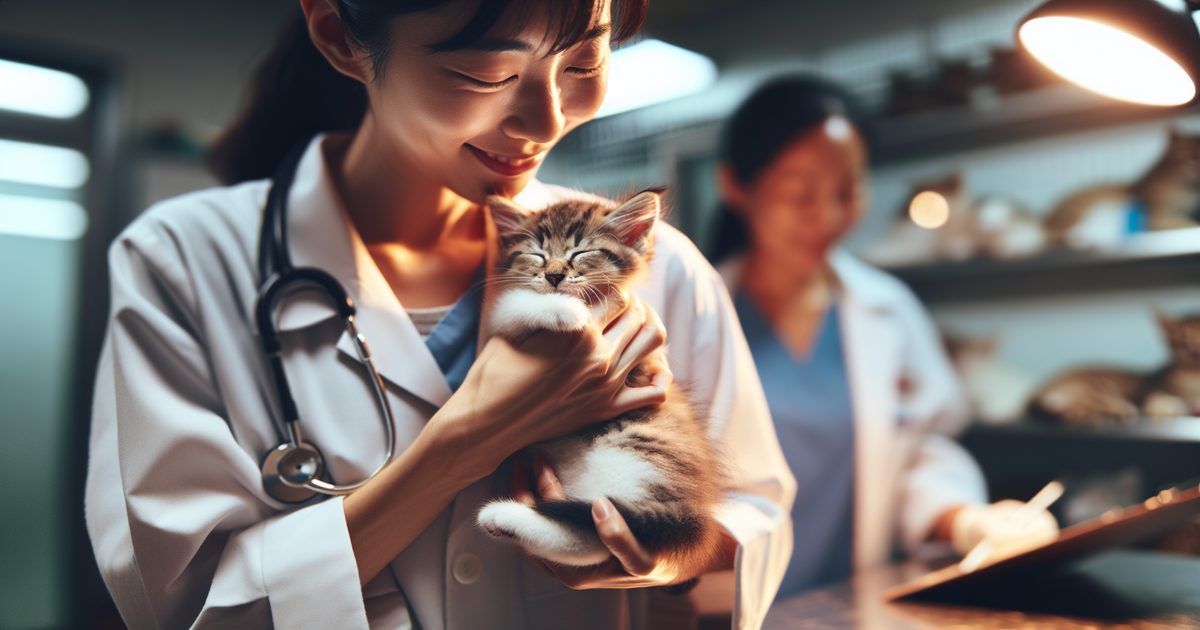
The same intricate immune system that protects a kitten from a virus is a reflection of the delicate, interconnected systems that sustain all life on our planet. Caring for one small creature connects your heart to the vast web of health we all share.
The Micro-Act
Step outside for 60 seconds, take a deep breath, and consciously observe one living thing—a bird, an insect, a plant. Silently acknowledge your shared connection to this single planet.
The Village Map
The Kindness Mirror
A 60-second video shows a community scientist gently collecting data on a local pollinator population, their careful hands and focused eyes reflecting a deep, quiet kindness for the tiny beings that hold our ecosystems together.
Closing
Mastering the cat vaccination schedule—from kitten shots to adult boosters like FVRCP and rabies—relies on understanding pathways such as PI3K-Akt and NF-κB for optimal immune outcomes. By avoiding common pitfalls and using the toolkit above, owners can enhance their cat's health through targeted biochemical interventions. Always consult a vet for personalized plans, ensuring vaccines align with the cat's lifecycle and environment.
Primary Sources
- Pyles, Mary. (1991). Everyday cat: the complete guide to understanding and enjoying your pet cat. DOI: 10.5962/bhl.title.144983
- Malerczyk, Claudius. (2012). Rabies Pre-Exposure Vaccination in Rabies Endemic Countries. DOI: 10.4172/2157-7560.1000e114
Related Articles
- "FVRCP Booster Schedules: Biochemical Insights for Cat Owners"
- "Rabies in Cats: Mechanisms and Prevention Strategies"
- "Kitten Vaccination Essentials: From T-Cell Activation to Long-Term Immunity"