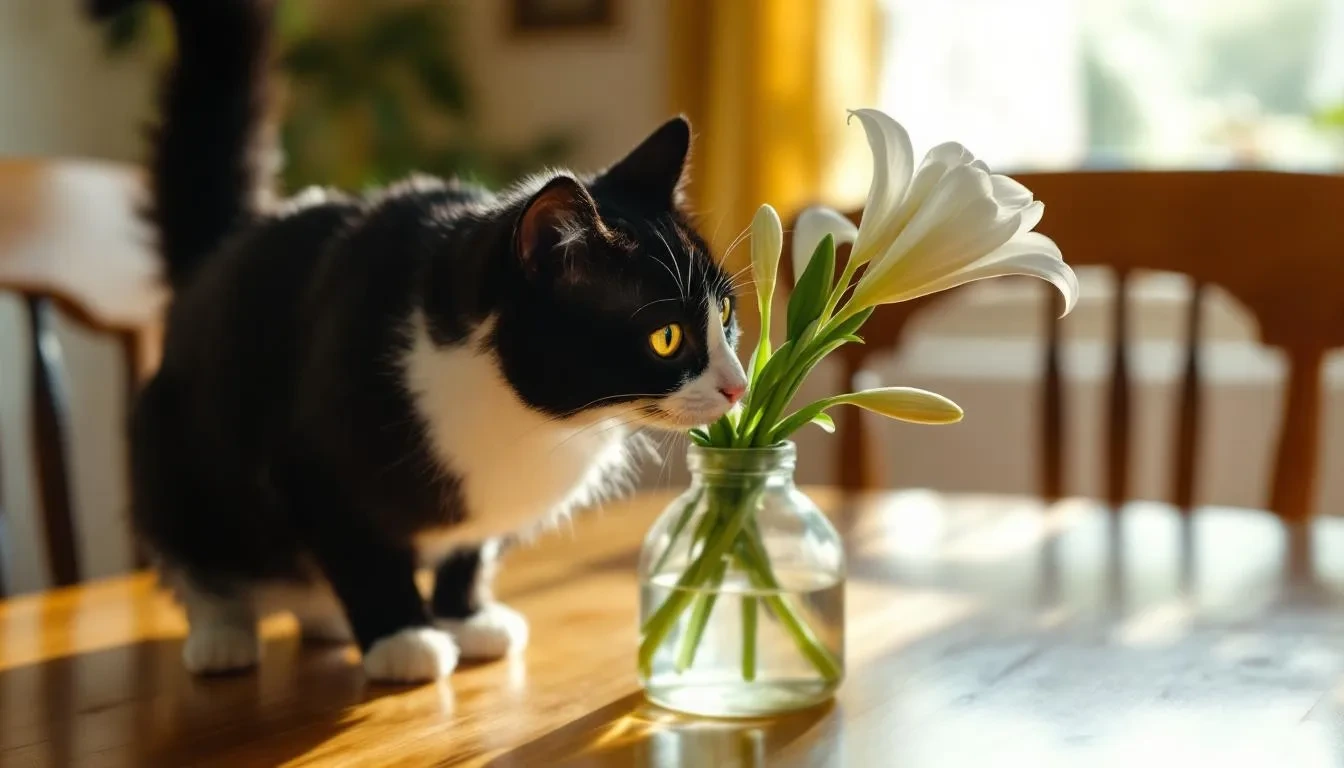
Cat Poisoning: Toxic Foods, Plants, and Emergency Response
Evidence-based science journalism. Every claim verified against peer-reviewed research.
catAIplant
Evidence-based science journalism. Every claim verified against peer-reviewed research.
© 2026 Express Love Inc. — All Rights Reserved. Original research-backed content. Unauthorized reproduction, derivative audio/video adaptations, or use for AI training is strictly prohibited without written consent.
Cats are curious animals that explore their environment through smell and taste, yet this natural behavior places them at risk of ingesting substances that can cause serious harm. A single leaf from a common houseplant or a small piece of food from a family dinner can trigger toxic reactions ranging from mild gastrointestinal distress to organ failure. Understanding which substances pose the greatest danger is not a matter of academic interest alone — it is a practical concern for every person who shares a home with a cat. Toxic plant and food exposures represent a significant proportion of veterinary emergency calls each year, and the clinical outcomes depend heavily on how quickly an owner recognizes the problem (Coulson et al., 2024).
The mechanisms through which plants and foods cause harm in cats are varied. Some substances interfere directly with cellular metabolism, others disrupt the nervous system, and still others cause localized irritation to mucous membranes before being absorbed into the bloodstream. The speed and severity of poisoning depend on the specific toxic compound, the dose ingested relative to the animal's body weight, and the individual animal's metabolic capacity. Cats are particularly vulnerable compared to many other mammals because they lack certain hepatic enzymes needed to detoxify compounds that dogs or humans can process more efficiently (Singh et al., 2020). This metabolic difference means that a substance considered mildly toxic to a dog can be lethal to a cat at a comparable dose.
For cat owners, the practical relevance of this information is immediate. Toxic plants are commonly sold in garden centers and florists without warning labels for pet owners, and many toxic foods are standard kitchen staples. Recognizing early signs of poisoning — drooling, vomiting, lethargy, tremors, or changes in urination — and knowing which household items triggered the episode can significantly improve the speed and accuracy of veterinary treatment. The following sections document the major categories of toxic plants and foods relevant to cat health, drawing on peer-reviewed findings to provide accurate, actionable information (Coulson et al., 2024).
Listen to the Soul of this Article (Narrated)
Cat Poisoning: Toxic Foods, Plants, and Emergency Response
Many ornamental plants documented in clinical and field literature contain compounds that cause toxicity in mammals. Alkaloids, glycosides, and oxalates are among the most frequently identified classes of toxic compounds found in household and garden plants. Plants containing pyrrolizidine alkaloids, for example, are documented to cause hepatotoxicity — damage to liver cells — following ingestion, with effects that may not become clinically obvious until significant organ damage has already occurred (Coulson et al., 2024). In cats, liver damage is especially dangerous because their reduced capacity for glucuronidation means toxic metabolites accumulate more readily than in other species.
Certain wild and cultivated plants also contain nitrates, saponins, and phenolic compounds that carry measurable toxic risk. Research measuring nutritional and toxic factors in selected wild edible plants found that multiple plant species contained substances that could cause adverse effects in animals consuming them in appreciable quantities (Guil et al., 1997). While this research focused on human nutrition and animal foraging, the underlying chemistry applies directly to domestic cats that chew on houseplants or access garden areas. Oxalate-containing plants, for instance, cause intense irritation and swelling of the mouth and throat upon contact with mucous membranes, which can lead to difficulty swallowing, excessive drooling, and in severe cases, airway compromise (Guil et al., 1997).
Field observations in animals have further documented how access to toxic vegetation leads to rapid-onset clinical symptoms. Studies involving ostriches found that ingestion of toxic plants produced neurological signs, gastrointestinal distress, and in some cases death, demonstrating that the toxic compounds within these plants are capable of causing systemic harm across multiple mammalian and avian species (Cooper et al., 2007). While cats are physiologically distinct from ostriches, these observations reinforce the principle that many commonly available plants carry genuine biological hazard for animals that ingest them.
Beyond plants, a number of foods regularly consumed by humans have been documented as toxic to cats. Onions, garlic, and other members of the Allium family contain organosulfur compounds that damage feline red blood cells, leading to hemolytic anemia. Cats are more sensitive to Allium toxicity than dogs because their red blood cells contain a higher proportion of hemoglobin vulnerable to oxidative damage. Clinical signs including weakness, pale gums, rapid breathing, and collapse have been observed in cats following Allium ingestion even in relatively small amounts (Singh et al., 2020).
Certain other foods carry toxic risk through different mechanisms. Ethanol, found in alcoholic beverages and fermented products, causes central nervous system depression in cats at doses far lower than those affecting humans. Even small ingestions can produce ataxia, hypothermia, and respiratory depression. Xylitol, an artificial sweetener found in sugar-free gum, baked goods, and some peanut butters, causes dangerous drops in blood glucose and has been documented to cause acute liver failure in some species, with cats considered at risk based on the metabolic pathways involved (Coulson et al., 2024). Caffeine and theobromine — found in coffee, tea, and chocolate — act as methylxanthine stimulants that cats metabolize far more slowly than humans, resulting in prolonged toxic exposure that can cause cardiac arrhythmias, muscle tremors, and seizures (Singh et al., 2020).
Clinical signs of plant and food poisoning in cats vary depending on the toxic compound involved but commonly include vomiting, diarrhea, hypersalivation, lethargy, ataxia, tremors, and changes in heart rate or respiratory pattern. Neurological signs such as seizures or collapse indicate severe systemic involvement and require emergency veterinary attention immediately. In cases of plant ingestion, bringing a sample or photograph of the plant to the veterinary clinic has been documented as clinically useful because it allows the treating veterinarian to identify the specific toxic compound and apply targeted treatment rather than purely supportive care (Coulson et al., 2024).
Treatment protocols depend on the timing and nature of the exposure. Decontamination through induced emesis is appropriate in some cases but contraindicated in others, particularly when the ingested substance causes esophageal irritation upon regurgitation, as is the case with oxalate-containing plants. Activated charcoal is used to limit further absorption of certain toxins, while intravenous fluid therapy supports renal function and assists with toxin elimination (Singh et al., 2020).
The most effective strategy for preventing toxic exposures is environmental modification. Cat owners can audit their homes and gardens against verified lists of toxic plants, removing or relocating species that pose documented risk. Securing human foods — particularly those from the Allium family, caffeinated products, and anything containing xylitol — in closed containers eliminates a significant category of accidental exposure. Owners who observe any sudden behavioral change, drooling, vomiting, or neurological symptom in a cat that may have accessed plants or human food should contact a veterinarian promptly, as early intervention consistently produces better clinical outcomes than delayed treatment (Coulson et al., 2024). Understanding the specific toxins involved, the mechanisms through which they cause harm, and the early warning signs they produce gives cat owners the knowledge needed to act quickly and effectively when it matters most.
Watch the heartwarming journey of a shelter dog who finds love and joy after seven long years, reminding us all of the transformative power of kindness. This touching reunion will warm your heart and inspire you to spread love!
Watch on dedicated video page →In this touching moment, watch as a man with little love for pets finds an unexpected connection when he bravely rescues a frozen dog, reminding us all that compassion can blossom in the most surprising ways. Join us in celebrating this heartwarming act of kindness that transcends boundaries.
Watch on dedicated video page →Join us for a heartwarming glimpse into the lives of adorable foxes as they express their unique personalities and communicate with their delightful screams. This charming video showcases the beauty of nature and the special bond we share with our furry friends.
Watch on dedicated video page →James Coulson
Cardiff and Vale University Health Board
Cardiff, UK. Competing interests: none declared
Poisoning by toxic plants and fungi — Medicine
Mandeep Singh
Jaipur National University
Rajasthan, India
Environmental Conservation and Sustainability: Strategies for a Greener Future — International Journal for Multidimensional Research Perspectives
J. L. Guil
University of Almería
Universidad de Almería, Spain
Nutritional and toxic factors in selected wild edible plants — Plant Foods for Human Nutrition
Manjeet Singh
Cardiff University
Cardiff, UK. Competing Interests: none declared
Poisoning by toxic plants and fungi — Medicine
Ross G. Cooper
University of Zimbabwe
Zimbabwe, Africa.
Poisoning in ostriches following ingestion of toxic plants - field observations — Tropical Animal Health and Production
Roman Pavela
Juliane Benz
Graziano Fiorito
Julianne Holt-Lunstad, Ph.D.
Brigham Young University
Provo, Utah, USA
"Social-connection indicators predict mortality more strongly than several common clinical risk-factor benchmarks across 148 studies and 300,000+ participants."
Junaid Ali Siddiqui
Muhammad Ayaz
Kevin D. Hyde
Kunming Institute of Botany
Kunming 650201, People's Republic of China
The amazing potential of fungi: 50 ways we can exploit fungi industrially — Fungal Diversity
More from Animal Conservation

Senior cats experience arthritis through chronic joint inflammation driven by upregulated matrix metalloproteinases (MMPs) that degrade cartilage via collagenase activity, often triggered by oxidative stress from...
Rabbit dental health depends on high-fiber hay that wears down continuously growing teeth. Prevent malocclusion and abscesses with proper diet and veterinary care guidelines.

Hamster care requires a cage setup that prioritizes natural behaviors, such as providing at least 600cm² of floor space with 25cm-deep bedding made from paper or aspen to enable burrowing and nesting, as supported by...
Share this article
Cat Poisoning: Toxic Foods, Plants, and Emergency Response
Cat poisoning occurs when felines ingest toxic substances like chocolate or lilies, disrupting key biochemical pathways such as theobromine's inhibition of phosphodiesterase enzymes, which elevates cyclic AMP levels and...
12 published papers · click to read
8,452
combined citations
James Coulson
Cardiff and Vale University Health Board
Cardiff, UK. Competing interests: none declaredPoisoning by toxic plants and fungi — Medicine
1 citations
Mandeep Singh
Jaipur National University
Rajasthan, IndiaEnvironmental Conservation and Sustainability: Strategies for a Greener Future — International Journal for Multidimensional Research Perspectives
13 citations
J. L. Guil
University of Almería
Universidad de Almería, SpainNutritional and toxic factors in selected wild edible plants — Plant Foods for Human Nutrition
134 citations
Manjeet Singh
Cardiff University
Cardiff, UK. Competing Interests: none declaredPoisoning by toxic plants and fungi — Medicine
3 citations
Ross G. Cooper
University of Zimbabwe
Zimbabwe, Africa.Poisoning in ostriches following ingestion of toxic plants - field observations — Tropical Animal Health and Production
15 citations
Roman Pavela
History, presence and perspective of using plant extracts as commercial botanical insecticides and farm products for protection against insects - a review
475 citations
Juliane Benz
Structural Insights into the Effector – Immunity System Tse1/Tsi1 from Pseudomonas aeruginosa
62 citations
Graziano Fiorito
Cephalopods in neuroscience: regulations, research and the 3Rs
163 citations
Julianne Holt-Lunstad, Ph.D.
Brigham Young University
Provo, Utah, USA“Social-connection indicators predict mortality more strongly than several common clinical risk-factor benchmarks across 148 studies and 300,000+ participants.”
Social Relationships and Mortality Risk: A Meta-analytic Review — PLoS Medicine
5,345 citations
Junaid Ali Siddiqui
Insights into insecticide-resistance mechanisms in invasive species: Challenges and control strategies
246 citations
Muhammad Ayaz
Internet-of-Things (IoT)-Based Smart Agriculture: Toward Making the Fields Talk
1,201 citations
Kevin D. Hyde
Kunming Institute of Botany
Kunming 650201, People's Republic of ChinaThe amazing potential of fungi: 50 ways we can exploit fungi industrially — Fungal Diversity
794 citations
Researchers identified from peer-reviewed literature indexed in Semantic Scholar · OpenAlex · PubMed. Each card links to the original published paper.