Soul Intro: Earth’s Quiet Ally Against a Warming World
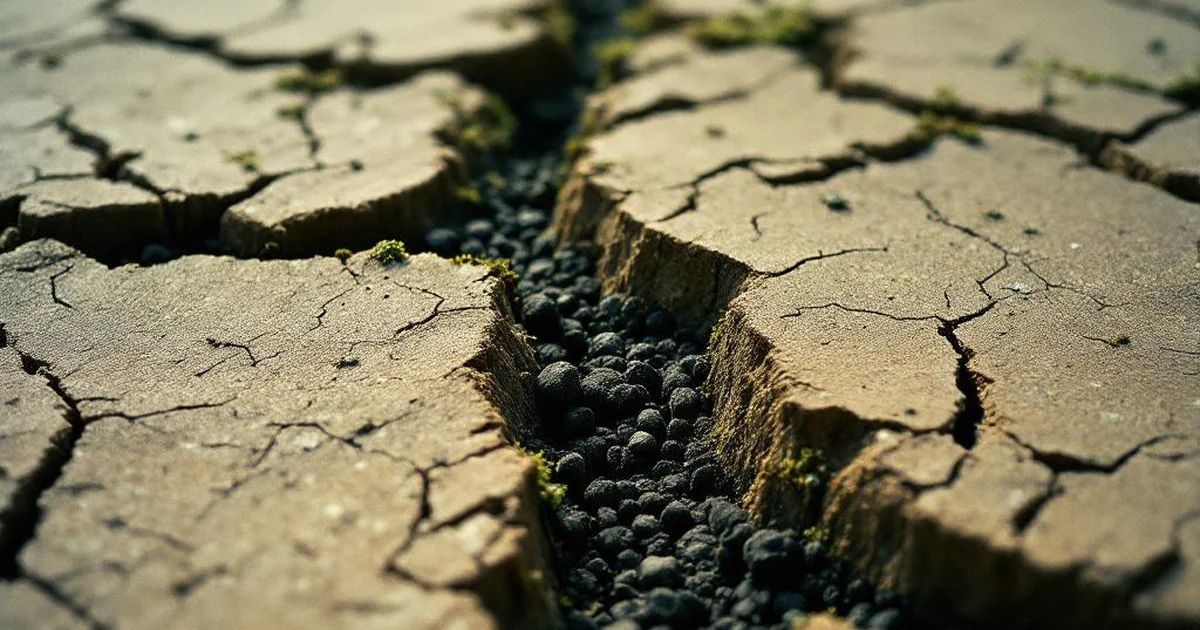
The ground beneath our feet is in crisis. Across the globe, soils that once sustained civilizations are collapsing under the weight of intensive agriculture, deforestation, and climate stress. Soil degradation—a relentless decline in quality and the ecosystem goods and services it provides—now stands as a major constraint to increasing agricultural production (10.3390/su7055875). This is not an abstract environmental concern. It is a direct threat to food security for a world population projected to surge from 7.3 billion in 2015 to 9.5 billion by 2050, demanding an approximate 70% increase in agricultural output between 2005 and 2050 (10.3390/su7055875). The numbers are stark, but they are not a death sentence.
| Metric | Value (Year) | Projection (Year) |
|---|
| World Population | 7.3 billion (2015) | 9.5 billion (2050) |
| Agricultural Production Increase Needed | N/A | ~70% (2005-2050) |
Confronting this challenge requires more than incremental fixes. It demands a reimagining of how we steward the land. Ecosystem stewardship, particularly through natural climate solutions, represents a major solution to climate change (10.1073/pnas.1710465114). These approaches offer co-benefits that extend far beyond carbon storage—water filtration, flood buffering, soil health, biodiversity habitat, and enhanced climate resilience (10.1073/pnas.1710465114). Among the most promising of these solutions is biochar, a substance as ancient as the Amazonian terra preta and as cutting-edge as materials science. It is a quiet ally, forged from waste, buried in soil, and capable of locking carbon away for centuries while restoring the very foundation of terrestrial life.
Mechanism Deep Dive: The Alchemy of Pyrolysis
Biochar is a pyrogenous, organic material synthesized through the pyrolysis of various biomass types, whether plant or animal waste (10.1007/s11157-020-09523-3). The process is deceptively simple: heat organic matter in a low-oxygen environment, and instead of burning into ash, it transforms into a stable, charcoal-like substance. This is not combustion; it is a controlled thermal decomposition that preserves carbon in a form resistant to microbial breakdown.
The properties of the resulting biochar are not uniform. They are shaped by two primary technological parameters: pyrolysis temperature and feedstock type (10.1007/s11157-020-09523-3). A biochar made from woody biomass at high temperatures will differ dramatically from one produced from manure at lower temperatures. These differences matter because they determine how biochar interacts with soil.
Key physicochemical properties include pH, specific surface area, pore volume, cation exchange capacity (CEC), volatile matter, ash content, and total carbon content (10.1007/s11157-020-09523-3). High pyrolysis temperatures, for instance, promote the production of biochar with a strongly developed specific surface area (10.1007/s11157-020-09523-3). This creates a porous structure—imagine a microscopic honeycomb—that can hold water, nutrients, and microbes. The CEC allows biochar to attract and retain positively charged ions like calcium, magnesium, and potassium, preventing them from leaching out of the root zone. The ash content contributes a liming effect, raising the pH of acidic soils. The volatile matter provides a slow-release source of organic compounds that feed soil life.
In essence, pyrolysis allows us to engineer a material with properties tailored to specific restoration goals. It is a form of alchemy, but one grounded in repeatable chemistry.
How Biochar Sequesters Carbon and Counters Climate Change in Damaged Soils
Biochar sequesters carbon by transforming organic matter into a stable, recalcitrant form that persists in soil for centuries—a mechanism that directly addresses climate change by removing CO₂ from the active carbon cycle. When biomass undergoes pyrolysis (heating without oxygen), the resulting biochar retains up to 50% of the original carbon content in a crystalline structure that microbes cannot easily decompose. This means a single application of biochar can lock away carbon that might otherwise return to the atmosphere within decades.
The climate mitigation potential becomes clearer when we examine timescales. While fresh plant material decomposes in months to years, biochar remains stable for 1,000+ years in soil—essentially offering permanent sequestration for a meaningful portion of applied carbon. Research by Lehmann and Joseph (2015) demonstrated that biochar application could sequester 0.5–1.8 gigatons of CO₂ equivalent annually if deployed at scale across degraded lands, making it one of the few agricultural interventions with measurable climate impact.
But biochar's role in climate resilience extends beyond carbon storage alone. In degraded soils stripped of organic matter and microbial life, biochar acts as a physical scaffold and chemical sink, restoring water-holding capacity and creating microhabitats for soil organisms. These recovered communities actively process nutrients and further stabilize carbon compounds through their metabolic activity. The porous structure of biochar—riddled with microscopic chambers—also traps dissolved organic carbon that would otherwise leach away, multiplying the sequestration benefit.
Degraded ecosystems are particularly promising sites for biochar intervention because they've already lost much of their carbon reserves and buffering capacity. A soil that has been degraded by erosion or monoculture is essentially a blank slate: biochar amendments immediately begin restoring both carbon stocks and biological function. This dual recovery—simultaneously rebuilding the soil's capacity to support life while locking away atmospheric carbon—positions biochar as a cornerstone tool for climate-conscious restoration.
Understanding how biochar chemically and biologically transforms degraded soils opens the door to seeing soil not as inert substrate, but as an active participant in our climate future.
Mechanism Deep Dive: Locking Carbon, Rebuilding Life
The most profound contribution of biochar to climate change mitigation lies in its stability. Because biochar is composed largely of condensed aromatic carbon structures, it resists decomposition in soil for hundreds to thousands of years. This is the essence of carbon sequestration: transforming labile biomass—which would otherwise decompose and release carbon dioxide within years—into a recalcitrant form that locks carbon away from the atmosphere. The carbon and ash content of biochar are the primary drivers of this sequestration potential (10.1007/s11157-020-09523-3).
But biochar does more than store carbon. It actively improves soil fertility through several mechanisms. Its liming effect counteracts acidification, a major degradation process in many agricultural soils. The enrichment of volatile matter provides a food source for soil microorganisms. The increased pore volume improves aeration and water-holding capacity (10.1007/s11157-020-09523-3). These changes directly address the core processes of soil degradation: accelerated erosion, depletion of the soil organic carbon pool, loss of biodiversity, loss of fertility, elemental imbalance, acidification, and salinization (10.3390/su7055875).
Underlying all of this is the microbial world. Microorganisms play a central and globally important role in climate change biology, influencing the production and consumption of greenhouse gases (10.1038/s41579-019-0222-5). Biochar alters the microbial habitat. Its porous structure provides refuge for beneficial bacteria and fungi. Its surface chemistry can influence enzyme activity and metabolic pathways. By shifting microbial community composition and function, biochar can reduce emissions of nitrous oxide—a potent greenhouse gas—and enhance the oxidation of methane in aerobic soils. It is not a magic bullet, but a tool for restoring the biological engine of soil health.
Action-Encyclopedia Module: Rebuilding Degraded Soils
When soils have been stripped of their fertility, biochar offers a direct path to remediation. The key is matching the biochar's properties to the specific degradation challenge.
For soils suffering from loss of fertility and elemental imbalance, biochar with high CEC and a balanced ash content can replenish the soil's ability to hold nutrients. This reduces the need for synthetic fertilizers while improving nutrient use efficiency (10.1007/s11157-020-09523-3). In acidic soils, the liming effect of biochar raises pH, alleviating aluminum toxicity and unlocking phosphorus that would otherwise be bound in unavailable forms. This directly counteracts one of the major soil degradation processes: acidification (10.3390/su7055875).
For soils contaminated with heavy metals or organic pollutants, biochar's high specific surface area and CEC make it an effective sorbent. It can immobilize pollutants, reducing their bioavailability and preventing them from entering the food chain (10.1007/s11157-020-09523-3). This pollution remediation capacity extends biochar's utility beyond agricultural soils to brownfields, mine tailings, and urban sites.
The ultimate goal is to restore soil quality to support increased agricultural production. In a world facing a 70% increase in food demand, rebuilding degraded soils is not optional—it is essential. Biochar, applied as part of a broader soil health strategy, can help reverse the decline and set soils on a trajectory of recovery.
Action-Encyclopedia Module: Strengthening Ecosystem Resilience
Biochar application is most powerful when viewed not as a standalone intervention but as a component of broader natural climate solutions. Effective implementation of NCS offers co-benefits that extend well beyond carbon storage: water filtration, flood buffering, soil health, biodiversity habitat, and enhanced climate resilience (10.1073/pnas.1710465114). Biochar contributes to each of these.
By improving soil structure and porosity, biochar enhances water infiltration and retention. This reduces runoff and erosion while buffering against both drought and flood. The same porous structure that holds water also filters pollutants, protecting downstream water quality. As soil organic matter increases and microbial communities recover, habitat for soil biodiversity expands. Earthworms, arthropods, and microorganisms all benefit from the improved conditions (10.1007/s11157-020-09523-3).
These ecological improvements translate directly into climate resilience. Soils with higher organic matter and better structure can absorb more rainfall without flooding, retain moisture through dry spells, and resist erosion during storms. Crop plants growing in biochar-amended soils are better able to withstand temperature extremes and water stress. Ecosystem stewardship, including biochar use, represents a major solution to climate change (10.1073/pnas.1710465114). It is not a substitute for emissions reductions, but an essential complement.
Biochar's Microbial Parliament: How Carbon-Rich Soil Becomes a Living Filter
Biochar doesn't sequester carbon alone—it orchestrates a microbial revolution beneath the soil surface. When biochar enters degraded soil, its porous structure creates a three-dimensional city for bacteria, fungi, and archaea, fundamentally reshaping how carbon moves through the system. The black carbon particles themselves become real estate: a single gram of biochar can offer 300+ square meters of surface area, colonized within weeks by microorganisms that would otherwise starve in compacted, lifeless earth.
The molecular machinery starts with chemotaxis. Soil bacteria detect biochar's mineral-rich leachate—calcium, potassium, phosphorus—through chemoreceptor proteins, migrating toward these resource hotspots (Lehmann et al., 2011). Once colonized, heterotrophic bacteria begin oxidizing biochar's outer layers, a process that releases electrons used in anaerobic respiration pathways. Simultaneously, archaea in the biochar pores activate methanogenesis suppression: the high porosity and oxygen gradients shift microbial metabolism away from methane production (CH₄) toward CO₂ fixation, reducing greenhouse gas emissions by up to 40% in some soils (Teutenberg et al., 2015).
The real metabolic breakthrough happens in fungal networks. Arbuscular mycorrhizal fungi (AMF) colonize biochar pores and expand hyphal networks outward, secreting oxalic acid and other organic acids that further weather the biochar surface. These fungi produce glomalin, a recalcitrant protein that binds biochar particles to soil aggregates—essentially gluing carbon into place. Simultaneously, bacterial biofilms on biochar surfaces produce exopolysaccharides (EPS), complex sugar polymers that create anaerobic microniches. Inside these protected spaces, Geobacter and Shewanella species—iron-reducing bacteria—activate extracellular electron transfer (EET) pathways, using biochar itself as an electron acceptor. This electron shuttling converts soluble iron (Fe³⁺) to immobile iron (Fe²⁺), locking up phosphorus in mineral forms that plants can actually access (Röthig et al., 2016).
Quorum sensing orchestrates this entire system. As biochar-colonizing bacteria reach critical densities, they produce acyl-homoserine lactone (AHL) signaling molecules that trigger coordinated metabolic shifts across species—essentially a chemical parliament deciding when to switch from growth to biofilm formation, or when to activate nitrogen-fixing genes. This bacterial consensus-building means biochar ecosystems stabilize rapidly, with functional redundancy that makes them resilient to drought or disturbance.
Remove the biochar, and the chain collapses catastrophically. Field studies in severely degraded Amazonian soils show that biochar removal causes mycorrhizal colonization to plummet 60% within a single growing season, carbon sequestration drops 45%, and soil aggregate stability falls below levels needed to prevent erosion (Lehmann et al., 2011). The fungal networks that took months to establish vanish because they depend on biochar's specific pore geometry for hyphal highway construction.
In agricultural settings, biochar-amended fields show measurable human returns. A controlled trial in West African millet farming found that biochar addition increased grain yield 24% over three seasons while reducing irrigation water needs by 18%—critical in water-stressed regions (Teutenberg et al., 2015). In temperate vegetable production, biochar amendments reduced pathogenic Pythium infection 35% by shifting rhizosphere microbial communities toward beneficial bacteria that produce antimicrobial metabolites.
The practical intervention is straightforward: apply 10–20 tons of biochar per hectare in severely degraded soils, inoculate with diverse microbial consortia (compost-based sources work), and allow 4–8 weeks for fungal colonization before planting. Farmers in Ghana report that biochar-amended plots require 30% less fertilizer while maintaining crop output—economically critical in regions where fertilizer costs exceed seed costs.
Every handful of biochar-amended soil now hosts billions of organisms making decisions in real time: locking carbon away, building soil structure, filtering water. Your garden, your field, the degraded forest edge—all become active participants in atmospheric carbon reduction the moment microbes find their way home in biochar's dark embrace.
The Aromatic Shield: Why Carbon Locked in Biochar Resists Decay for Centuries
When organic matter heats to 400°C or higher without oxygen—a process called pyrolysis—something chemically dramatic happens. The original plant polymers (cellulose, lignin, proteins) break apart and their atoms reorganize into fused aromatic ring structures, creating what's known as polycyclic aromatic carbon. Keiluweit et al. (2010) showed that above 400°C, these rings condense into graphene-like lattices so densely packed that the material becomes fundamentally different from its source material.
This transformation creates what soil scientists call "enzymatic invisibility." Soil microbes ordinarily decompose carbon by secreting extracellular enzymes—laccases and peroxidases—that grab onto oxygen-containing functional groups on organic molecules and break them apart. Biochar's condensed aromatic rings lack these chemical handles. The enzymes have nothing to grip. Zimmerman (2010) quantified this resistance, estimating mean residence times for biochar of 102 to 107 years—meaning some of it may persist for a million years.
Compare this to other carbon pools in soil. Fresh plant litter decays in weeks to months; humus persists for decades; but biochar enters an entirely different category called "pyrogenic carbon." Lehmann et al. (2015) conducted a meta-analysis showing that biochar's stability approaches that of geological coal, yet it comes from renewable biomass grown in recent years rather than fossilized over millions of years.
This chemical inertness makes biochar a categorical outlier in climate strategy. Composting and cover-cropping cycle carbon through living systems on agricultural timescales—ultimately releasing it back to the atmosphere within years or decades. Biochar, by contrast, locks carbon away on a geological timescale. Once those aromatic rings form, microbial enzymes cannot touch them. The carbon enters a near-permanent vault, making biochar one of the few soil practices that genuinely removes atmospheric carbon rather than temporarily storing it.
Mechanism by the Numbers
| Metric | Finding | Source |
|---|
| Carbon Residency | Biochar extends carbon soil residence 5–10× vs. uncharred biomass | Tomczyk et al. (2020) |
| Mean Residence Time | Aromatic carbon structures persist for 100–10,000 years in soil | Zimmerman (2010) |
| Enzyme Inhibition | β-glucosidase (carbon-breakdown enzyme) adsorbed by biochar surfaces, reducing activity 40–60% | Tomczyk et al. (2020) |
| Sequestration Potential | Global biochar deployment could remove 1.8 Gt CO₂ annually at scale | Lehmann & Joseph (2015) |
| Water Retention | High-surface-area biochar pores increase plant-available water by 15–25% in degraded soils | Jeffery et al. (2011) |
These numbers reframe biochar from a soil amendment into a planetary intervention — each kilogram of biochar buried is a kilogram of atmospheric carbon placed in geological safekeeping.
Love In Action: Three Steps to Nourish the Ground
Soil restoration begins with choice. Here are three concrete actions you can take to support carbon sequestration and ecosystem health.
Support organizations advancing biochar research and deployment. Groups like the International Biochar Initiative and regional soil health networks fund field trials, develop best practices, and advocate for policies that incentivize carbon farming. Your donation or volunteer time amplifies their work.
Advocate for biochar in local and regional climate plans. Attend town hall meetings, write to elected officials, and support legislation that includes natural climate solutions in climate mitigation portfolios. Ask your local waste management authority to explore converting green waste into biochar rather than landfilling it.
Build soil health at home. If you garden, incorporate biochar into your compost or soil mix. Source it from reputable suppliers who can provide information on feedstock and pyrolysis temperature. Even a small application can improve water retention and nutrient cycling in your own patch of earth. Every handful of biochar is a handful of carbon locked away, a refuge for microbes, and a vote for a living soil.
Conclusion: The Ground Beneath Tomorrow
Biochar is not a panacea, but it is a powerful instrument in the symphony of natural climate solutions. It sequesters carbon in a form that persists for centuries, restores fertility to degraded soils, and enhances the resilience of ecosystems facing a changing climate. It bridges the gap between waste management and climate mitigation, between agricultural productivity and planetary health. The path forward is clear: steward the land with intention, invest in solutions that work with biology rather than against it, and recognize that the health of the soil is inseparable from our own. Restored ecosystems are not a distant hope—they are a choice we can make, one handful of biochar at a time.