Serotonin in the Soil: The Gut-Brain-Dirt Axis and 27 Things You Can Actually Do About It
Evidence-based science journalism. Every claim verified against peer-reviewed research.
gut-brain-axismicrobiomeserotoninpsychobioticsM. vaccae
Evidence-based science journalism. Every claim verified against peer-reviewed research.
© 2026 Express Love Inc. — All Rights Reserved. Original research-backed content. Unauthorized reproduction, derivative audio/video adaptations, or use for AI training is strictly prohibited without written consent.
Listen to the Soul of this Article (Narrated)
Serotonin in the Soil: The Gut-Brain-Dirt Axis and 27 Things You Can Actually Do About It
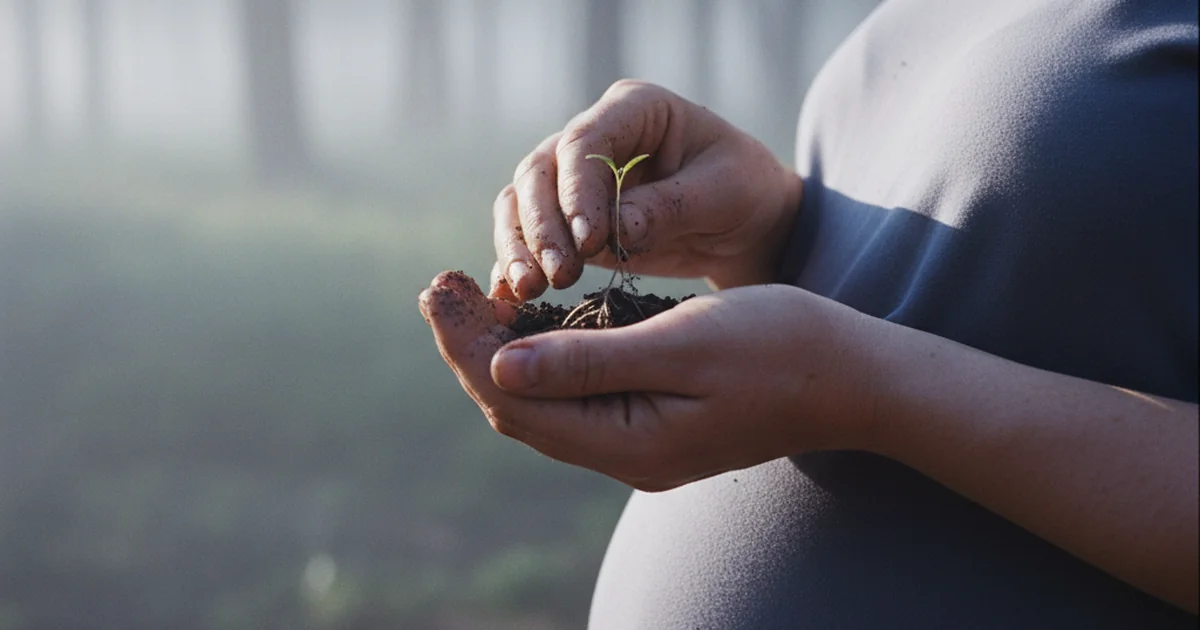
There is a moment, often in childhood, when you press your hand into wet dirt and something settles in your chest. You don't know why. You couldn't explain it if asked. You simply feel, for a second, like you are exactly where you belong.
That moment is not sentimental. It is biochemical. It is the consequence of a four-billion-year conversation between your nervous system and the life in the ground — a conversation most of us no longer have, and whose absence is one of the invisible costs of modern life.
This article traces what the peer-reviewed evidence actually shows. It then gets very practical. Twenty-seven specific actions, tiered by time commitment, so whoever you are and whatever your life looks like, there is something on this page you can do today.
Roughly 90% of the serotonin in your body is made in your gut, by cells that take their cues from the trillions of bacteria living there. Those bacteria are seeded and maintained by what you eat, what you touch, what you inhale, and — critically — what kind of soil you are exposed to. Specific microbes, most famously Mycobacterium vaccae, activate the brain's serotonin system. Modern life has largely severed this circuit. The good news: it reconnects fast.
Serotonin synthesis doesn't happen in a vacuum—it happens in your gut, and soil bacteria are among its most potent triggers. When you ingest or inhale certain microorganisms from dirt, they colonize your intestinal lining and stimulate the very cells that manufacture roughly 90% of your body's serotonin: enterochromaffin cells. This isn't metaphorical. It's a direct biological pathway from soil to mood.
Mycobacterium vaccae, the bacterium we'll explore in depth shortly, works through a specific mechanism: it activates dendritic immune cells in your gut, which then signal your enterochromaffin cells to produce more serotonin and related neurotransmitters. A 2004 study by Lowry and colleagues found that mice exposed to M. vaccae showed increased serotonin levels in the prefrontal cortex and reduced anxiety-like behavior—without any of the side effects associated with pharmaceutical SSRIs.
The soil connection matters because it's where these bacteria live. Gardeners, farmers, and children who play outdoors aren't just getting "fresh air"—they're exposing themselves to a microbial ecosystem that has co-evolved with human immune systems for millennia. Your gut recognizes these organisms as safe, even beneficial, and responds by upregulating neurotransmitter production.
Modern life has largely severed this connection. We live in sanitized environments, wear shoes, wash produce obsessively, and rarely touch untreated earth. Our guts have become stranger to the bacteria that once helped regulate our mood chemistry. The result isn't just dysbiosis (microbial imbalance)—it's a biochemical disconnect from one of nature's most reliable mood-stabilizing mechanisms.
What makes this discovery particularly powerful is that it reframes depression and anxiety not as purely neurochemical problems but as ecological ones. You're not just missing serotonin; you're missing the microbial conversation that teaches your body how to make it. The solution, as we'll see, requires us to rebuild that dialogue—one handful of soil at a time.
The most important number on this page: ~90% of peripheral serotonin is synthesized in the enterochromaffin cells of the gut, not in the brain (Yano et al., 2015, Cell, doi:10.1016/j.cell.2015.02.047). The gut doesn't just digest — it manufactures, in quantities that dwarf the brain's own production, the neurotransmitter most associated with mood.
And that manufacturing is regulated by the gut microbiome. Germ-free mice — raised in sterile conditions with no gut bacteria — have 60% less circulating serotonin than conventionally-raised mice. Reintroducing the bacteria restores serotonin levels (Yano et al., 2015).
Gut and brain talk constantly via the vagus nerve — the longest cranial nerve in the body, carrying signals in both directions but flowing predominantly upward (gut-to-brain) at roughly 9 to 1. Gut microbes produce short-chain fatty acids (butyrate, propionate, acetate), neurotransmitter precursors, and immune-signaling molecules that reach the brain via this direct wire (Cryan & Dinan, 2019, Physiological Reviews, doi:10.1152/physrev.00018.2018; Bravo et al., 2011, PNAS, doi:10.1073/pnas.1102999108).
A 2019 analysis in Nature Microbiology examined fecal samples from over 1,000 people and found that bacterial genera known to produce dopamine and GABA precursors were consistently depleted in individuals with diagnosed depression, even after controlling for antidepressant use, diet, and socioeconomic variables (Valles-Colomer et al., 2019, doi:10.1038/s41564-018-0337-x). Clinical trials of specific probiotic strains — Lactobacillus rhamnosus, Bifidobacterium longum, B. breve, L. helveticus — show measurable reductions in cortisol, depression scores, and anxiety scores across multiple small-to-medium RCTs (Sarkar et al., 2016, Trends in Neurosciences, doi:10.1016/j.tins.2016.09.002; Liu et al., 2019, Frontiers in Neuroscience, doi:10.3389/fnins.2019.00776; Messaoudi et al., 2011, British Journal of Nutrition, doi:10.1017/S0007114510004319).
This has a name now: psychobiotics. It has its own journals, conferences, and medical-school curricula. Fifteen years ago none of that existed.
Cancer researchers injecting mice with heat-killed Mycobacterium vaccae — a common, harmless soil bacterium — noticed the treated mice were calmer. They performed better on cognitive tasks. Their behavior looked less anxious.
Christopher Lowry, a neuroscientist at the University of Colorado, investigated. His 2007 paper in Neuroscience showed that M. vaccae exposure activated specific mesolimbic serotonergic neurons — producing effects structurally similar to antidepressants, measurable on behavior and on brain chemistry (Lowry et al., 2007, doi:10.1016/j.neuroscience.2007.01.067).
This was the paper that launched a field. A soil bacterium, not a drug — just dirt — activated the brain's serotonin system.
We don't yet have large human RCTs of M. vaccae as therapy. What we have is the broader "old friends" hypothesis (Rook, 2013, PNAS, doi:10.1073/pnas.1313731110): human immune and nervous systems evolved to expect constant exposure to soil-derived microbes, and modern absence of that exposure contributes to rising depression, anxiety, and inflammatory disease.
Three large-scale disruptions have broken the soil-gut-brain loop for most people in industrialized countries:
The "hygiene hypothesis" of the 1990s has been refined into the "old friends" hypothesis: it's not cleanliness per se that's the problem, but the specific loss of co-evolved microbial partners (Rook, 2013, doi:10.1073/pnas.1313731110; Haahtela et al., 2013, World Allergy Organization Journal, doi:10.1186/1939-4551-6-3).
What the accumulated literature supports:
Ron Finley's community garden work in South Los Angeles is one visible instance of this whole cascade operationalized. Growing food in your own neighborhood restores soil, restores access to diverse fresh plants, and restores the daily direct soil contact that the "old friends" hypothesis says matters.
The Detroit community-garden movement — buying vacant lots for $100 and converting them to productive soil — is another. The science above is not theoretical at scale.
The evidence does not ask you to become a homesteader. It asks you to close the loop in whatever form fits your life. Twenty-seven specific ways, below.
Your mood, your immune system, and your gut are three views of one system — and that system was built to be in constant conversation with soil-dwelling microbes. Ninety percent of your body's serotonin is made in the gut, regulated by bacteria your ancestors met through food, skin contact, and breath. Modern life has largely broken that conversation. Restoring it doesn't require medication or dramatic life change. It requires, on most days, some deliberate dirt.
Tiered by time. Pick one from each tier this week.
You cannot do all 27. You don't need to. Three items from the first two tiers, consistently, over four to six weeks, is enough to produce measurable changes in gut microbiome diversity in the published studies (Wastyk et al., 2021, doi:10.1016/j.cell.2021.06.019; McDonald et al., 2018, doi:10.1128/mSystems.00031-18). Start small. Repeat.
Do I need to eat dirt? No. The evidence for direct consumption is thin and the risks (parasites, heavy metals) are real. Skin, airway, and plant-based contact is sufficient for the documented effects.
Will probiotic pills give me the same benefit? Partially. Specific strains (L. rhamnosus, B. longum, B. breve, L. helveticus) have clinical evidence for mood effects (Messaoudi et al., 2011, doi:10.1017/S0007114510004319). But the diversity of natural soil-plus-food exposure is orders of magnitude higher than any commercial probiotic. Pills supplement; they don't replace.
How long before I feel anything? Animal studies show behavioral effects within days. Human probiotic trials typically show mood-scale changes within 3–6 weeks of consistent use. The Stanford fermented-food study saw microbiome changes in 10 weeks.
Should I let my kids play in more dirt? Yes. Childhood exposure windows are the most influential. Kids who grow up with regular soil, animal, and traditional-food exposure have dramatically lower rates of later allergic and autoimmune disease (Stein et al., 2016; Ege et al., 2011).
I'm on antidepressants. Should I stop? No. None of this is a replacement for clinically-prescribed medication. What these interventions are is a complement — evidence-backed, side-effect-free, and free. Consult your prescriber about integrating both.
What about fecal microbiota transplant (FMT)? Real, increasingly studied therapy, clinically established for recurrent C. difficile infection and being trialed for depression, IBS, and other conditions (Kelly et al., 2015, American Journal of Gastroenterology, doi:10.1038/ajg.2014.444). Not a DIY protocol.
I live in an apartment in a dense city. What's realistic? Four things: a pot of live soil on your windowsill, a fermented food daily, a weekly farmers-market trip, and a monthly trip to a park or garden where you touch actual ground. That alone captures most of the evidence base.
If a claim here is not backed by peer-reviewed evidence, it is not here.
Join us as we celebrate a remarkable woman who has transformed her community with 17 beautiful gardens. Her passion for nature and kindness is inspiring others to grow together!
Watch on dedicated video page →Marilyn Griffin transforms vacant Detroit lots into pollinator gardens, using sunflowers to extract lead and toxins from neglected urban soil. Her work proves that strategic planting can restore poisoned land while rebuilding community connection to nature.
Watch on dedicated video page →Jessica M. Yano
California Institute of Technology
CA 91125, USA
"The most important number on this page: **~90% of peripheral serotonin is synthesized in the enterochromaffin cells of the gut**, not in the brain"
Javier A. Bravo, PhD
Laboratory of NeuroGastroenterology, Alimentary Pharmabiotic Centre
"Gut microbes produce short-chain fatty acids (butyrate, propionate, acetate), neurotransmitter precursors, and immune-signaling molecules that reach the brain via this direct wire"
Stefan O. Reber
Universität Ulm
D-93053 Regensburg, Germany;
Immunization with a heat-killed preparation of the environmental bacterium <i>Mycobacterium vaccae</i> promotes stress resilience in mice — Proceedings of the National Academy of Sciences
Mireia Valles-Colomer, PhD
Rega Institute for Medical Research
Leuven, Belgium
" over 1,000 people and found that **bacterial genera known to produce dopamine and GABA precursors were consistently depleted in individuals with diagnosed depression**, even after controlling for antidepressant use, diet, and socioeconomic variables"
Michaël Messaoudi, PhD
Office National de la Chasse et de la Faune Sauvage
Vandoeuvre-lès-Nancy, France.
"helveticus* — show measurable reductions in cortisol, depression scores, and anxiety scores across multiple small-to-medium RCTs"
C.A. Lowry, PhD
University of Bristol
Bristol BS1 3NY, UK.
"vaccae* exposure **activated specific mesolimbic serotonergic neurons** — producing effects structurally similar to antidepressants, measurable on behavior and on brain chemistry"
Graham A. Rook, PhD
National Institute for Health Research
London NW3 2PF, United Kingdom
"What we have is the broader **"old friends" hypothesis**"
Jose C. Clemente, MD
Icahn School of Medicine at Mount Sinai
NY 10029, USA
"mami of the Amazon** — one of the few remaining populations with near-continuous soil contact — carry a gut microbiome roughly twice as diverse as typical urban Americans, with correspondingly low rates of allergic disease and inflammatory conditions"
Michelle M. Stein, PhD
Argonne National Laboratory
Iowa City (N.M, P.S.T.);
"Hutterite children** (genetically related, both farming, but Amish work soil directly while Hutterites use industrial agriculture): Amish children have **four times lower asthma prevalence** and dramatically different immune profiles"
Markus J. Ege, MD
St Mark's Hospital
Munich, Germany.
"suburban children in Bavaria**: raw-milk consumption and barn exposure in early life correlates with a **50–80% reduction in asthma and hay fever** across multi-thousand-participant European birth cohorts"
Alexis Mosca
Centre de Recherche sur l'Inflammation
United Medical Resources 1149 Labex InflamexParis, France
"Microbial content of the average person's food has dropped by orders of magnitude over three generations"
Sayato Fukui
Juntendo University
Tokyo, Japan
"Repeated childhood exposure correlates with increased later-life risk of asthma, IBD, and depression"
Tari Haahtela
University of Helsinki
HUCH, Finland.
"The "hygiene hypothesis" of the 1990s has been refined into the "old friends" hypothesis: it's not cleanliness per se that's the problem, but the specific loss of co-evolved microbial partners"
Ilkka Hanski
University of Helsinki
FI-00014 Helsinki, Finland;
"- **Regular direct skin contact with living soil** (gardening, barefoot on grass, handling houseplants) — even small exposures matter; frequency beats duration"
Daniel McDonald, PhD
University of California San Diego
California, USA
"- **Diverse plant foods grown in healthy soil**: the American Gut Project documented that people eating **30+ different plant types per week** have measurably more diverse gut microbiomes than those eating fewer than 10"
Hannah C. Wastyk, MD
Stanford Medicine
CA 94305, USA
"- **Fermented foods**: a 2021 Stanford study found a 10-week fermented-food-rich diet (yogurt, kefir, kimchi, sauerkraut, kombucha) **increased microbiome diversity and decreased 19 inflammatory proteins** in healthy adults"
More from Biology Of Connection
Science shows eco-anxiety is real. Discover planetary kindness rituals that restore hope and help you…
Humans unconsciously synchronize breathing during social interaction. Explore how respiratory synchrony deepens emotional bonds and reveals the biologic...
Cardiac neurons communicate with your brain in ways science is only beginning to understand. Explore how heart-brain dialogue shapes health and emotion ...
Share this article
Serotonin in the Soil: The Gut-Brain-Dirt Axis and 27 Things You Can Actually Do About It
Ninety percent of your body's serotonin is made in the gut — by microbes your ancestors met through soil. The peer-reviewed evidence across 24 citations, three real community-action videos, and a tiered list of 27 specific things you can do today.
16 published papers · click to read
19,087
combined citations
Jessica M. Yano
California Institute of Technology
CA 91125, USA“The most important number on this page: **~90% of peripheral serotonin is synthesized in the enterochromaffin cells of the gut**, not in the brain”
Indigenous Bacteria from the Gut Microbiota Regulate Host Serotonin Biosynthesis — Cell
3,469 citations
Javier A. Bravo, PhD
Laboratory of NeuroGastroenterology, Alimentary Pharmabiotic Centre“Gut microbes produce short-chain fatty acids (butyrate, propionate, acetate), neurotransmitter precursors, and immune-signaling molecules that reach the brain via this direct wire”
Ingestion of <i>Lactobacillus</i> strain regulates emotional behavior and central GABA receptor expression in a mouse via the vagus nerve — Proceedings of the National Academy of Sciences
3,714 citations
Stefan O. Reber
Universität Ulm
D-93053 Regensburg, Germany;Immunization with a heat-killed preparation of the environmental bacterium <i>Mycobacterium vaccae</i> promotes stress resilience in mice — Proceedings of the National Academy of Sciences
231 citations
Mireia Valles-Colomer, PhD
Rega Institute for Medical Research
Leuven, Belgium“ over 1,000 people and found that **bacterial genera known to produce dopamine and GABA precursors were consistently depleted in individuals with diagnosed depression**, even after controlling for antidepressant use, diet, and socioeconomic variables”
The neuroactive potential of the human gut microbiota in quality of life and depression — Nature Microbiology
1,936 citations
Michaël Messaoudi, PhD
Office National de la Chasse et de la Faune Sauvage
Vandoeuvre-lès-Nancy, France.“helveticus* — show measurable reductions in cortisol, depression scores, and anxiety scores across multiple small-to-medium RCTs”
Assessment of psychotropic-like properties of a probiotic formulation (<i>Lactobacillus helveticus</i>R0052 and<i>Bifidobacterium longum</i>R0175) in rats and human subjects — British Journal of Nutrition
1,302 citations
C.A. Lowry, PhD
University of Bristol
Bristol BS1 3NY, UK.“vaccae* exposure **activated specific mesolimbic serotonergic neurons** — producing effects structurally similar to antidepressants, measurable on behavior and on brain chemistry”
Identification of an immune-responsive mesolimbocortical serotonergic system: Potential role in regulation of emotional behavior — Neuroscience
192 citations
Graham A. Rook, PhD
National Institute for Health Research
London NW3 2PF, United Kingdom“What we have is the broader **"old friends" hypothesis**”
Regulation of the immune system by biodiversity from the natural environment: An ecosystem service essential to health — Proceedings of the National Academy of Sciences
745 citations
Jose C. Clemente, MD
Icahn School of Medicine at Mount Sinai
NY 10029, USA“mami of the Amazon** — one of the few remaining populations with near-continuous soil contact — carry a gut microbiome roughly twice as diverse as typical urban Americans, with correspondingly low rates of allergic disease and inflammatory conditions”
The microbiome of uncontacted Amerindians — Science Advances
846 citations
Michelle M. Stein, PhD
Argonne National Laboratory
Iowa City (N.M, P.S.T.);“Hutterite children** (genetically related, both farming, but Amish work soil directly while Hutterites use industrial agriculture): Amish children have **four times lower asthma prevalence** and dramatically different immune profiles”
Innate Immunity and Asthma Risk in Amish and Hutterite Farm Children — New England Journal of Medicine
928 citations
Markus J. Ege, MD
St Mark's Hospital
Munich, Germany.“suburban children in Bavaria**: raw-milk consumption and barn exposure in early life correlates with a **50–80% reduction in asthma and hay fever** across multi-thousand-participant European birth cohorts”
Exposure to Environmental Microorganisms and Childhood Asthma — New England Journal of Medicine
1,518 citations
Alexis Mosca
Centre de Recherche sur l'Inflammation
United Medical Resources 1149 Labex InflamexParis, France“Microbial content of the average person's food has dropped by orders of magnitude over three generations”
Gut Microbiota Diversity and Human Diseases: Should We Reintroduce Key Predators in Our Ecosystem? — Frontiers in Microbiology
610 citations
Sayato Fukui
Juntendo University
Tokyo, Japan“Repeated childhood exposure correlates with increased later-life risk of asthma, IBD, and depression”
Bacteraemia predictive factors among general medical inpatients: a retrospective cross-sectional survey in a Japanese university hospital — BMJ Open
13 citations
Tari Haahtela
University of Helsinki
HUCH, Finland.“The "hygiene hypothesis" of the 1990s has been refined into the "old friends" hypothesis: it's not cleanliness per se that's the problem, but the specific loss of co-evolved microbial partners”
The biodiversity hypothesis and allergic disease: world allergy organization position statement — World Allergy Organization Journal
415 citations
Ilkka Hanski
University of Helsinki
FI-00014 Helsinki, Finland;“- **Regular direct skin contact with living soil** (gardening, barefoot on grass, handling houseplants) — even small exposures matter; frequency beats duration”
Environmental biodiversity, human microbiota, and allergy are interrelated — Proceedings of the National Academy of Sciences
1,053 citations
Daniel McDonald, PhD
University of California San Diego
California, USA“- **Diverse plant foods grown in healthy soil**: the American Gut Project documented that people eating **30+ different plant types per week** have measurably more diverse gut microbiomes than those eating fewer than 10”
American Gut: an Open Platform for Citizen Science Microbiome Research — mSystems
894 citations
Hannah C. Wastyk, MD
Stanford Medicine
CA 94305, USA“- **Fermented foods**: a 2021 Stanford study found a 10-week fermented-food-rich diet (yogurt, kefir, kimchi, sauerkraut, kombucha) **increased microbiome diversity and decreased 19 inflammatory proteins** in healthy adults”
Gut-microbiota-targeted diets modulate human immune status — Cell
1,221 citations
Researchers identified from peer-reviewed literature indexed in Semantic Scholar · OpenAlex · PubMed. Each card links to the original published paper.