1. The Core Principles: From Control to Coexistence
Rewilding represents a paradigm shift in conservation. Unlike traditional "habitat management," which often seeks to freeze an ecosystem in a specific historical state, rewilding focuses on Facilitation. It is the science of letting go.
The Trophic Cascade: The Top-Down Effect
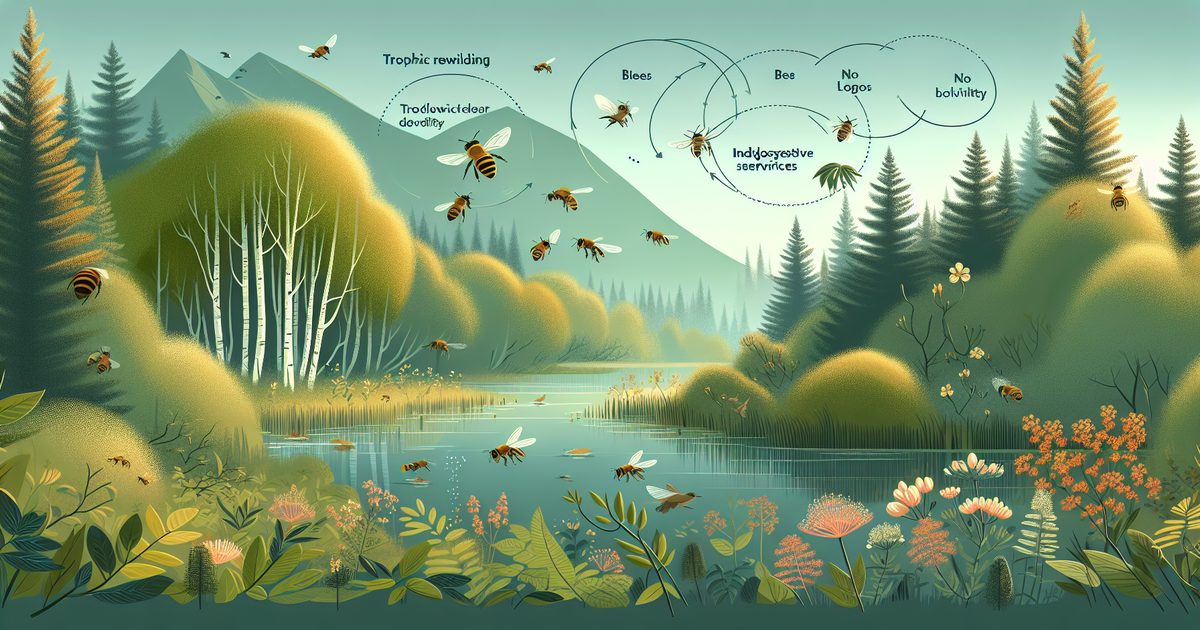
At the heart of rewilding is Trophic Rewilding. This principle recognizes that large predators and herbivores (apex species) are the primary regulators of an ecosystem's health. When a keystone species like the wolf or the European bison is reintroduced, it triggers a Trophic Cascade:
The Apex Regulator: Predators control herbivore populations, preventing overgrazing.
The Structural Engineer: Large herbivores (like bison) create "disturbances" by wallowing and trampling, which creates micro-habitats for thousands of insect and plant species.
The Result: A self-sustaining, self-regulating "wilder" landscape that requires zero human intervention to maintain its biodiversity.
2. The Practice: Engineering with Keystone Kin
In 2026, rewilding has moved from a fringe theory to a global restoration standard. The practice focuses on three primary pillars: Core Areas, Connectivity, and Co-existence.
A. Core Areas and Ecosystem Engineers
We identify and protect large "Core Areas" where nature can take the lead. Within these areas, we prioritize the reintroduction of "Ecosystem Engineers"—animals whose daily lives physically transform the environment for the benefit of all.
The Beaver (Water Architect): By building dams, beavers create wetlands that filter water, sequester carbon, and prevent downstream flooding.
The Vulture (Clean-up Crew): By consuming carcasses, vultures prevent the spread of disease and cycle nutrients back into the soil, acting as the forest's "Immune System."
B. Connectivity: Breaking the Concrete "Islands"
Wilderness cannot thrive in isolation. In 2026, the focus has shifted to Wildlife Corridors—strips of habitat that connect fragmented landscapes. These corridors allow species to migrate in response to climate change, ensuring the genetic health of populations and the resilience of the entire planetary network.
C. Co-existence: The Social-Ecological Shift
Rewilding is not about removing humans; it is about re-integrating them. The most successful projects of 2024–2026, such as those in the Iberian Highlands and the Scottish Highlands, are built on "Bear-Smart" and "Wolf-Aware" communities. We are learning to share space with our kin again, moving from a culture of fear to a culture of curiosity.
🕒 Pause & Reflect
Close your eyes and imagine a landscape with no fences. No mowed lawns. No straight lines. Visualize the "messy" beauty of a forest that has been left to its own devices—fallen trees, wild thickets, and the sound of a river finding its own path. Acknowledge that this "mess" is actually the highest form of order. How does it feel to realize that "control" is often just a mask for our own fear of the unknown?
Love In Action
1. Pause & Reflect
Place your hand on a fence, a wall, or a paved surface. Realize that these are the boundaries we created to keep the "wild" out. Take a deep breath and mentally "dissolve" those barriers. Acknowledge that the same life-force that moves through the wolf moves through you. You are a part of the wild.
2. ⚡ 60-Second Micro-Act: The Wilding Gaze
The next time you see a "weed" growing through a crack in the pavement, don't look away. Stop for 60 seconds and observe the life it supports—perhaps an ant, a beetle, or a speck of pollen.
The Science: This shift in perception (from "pest" to "pioneer") is the psychological foundation of rewilding. You are witnessing the Earth's relentless effort to facilitate its own recovery.
3. The Village Map (Rewilding Kin)
Rewilding Europe: A leading organization pioneering rewilding across the continent, focusing on large-scale landscapes and wildlife comeback.
Rewilding Britain: Advocating for the restoration of natural processes and the reintroduction of keystone species across the UK.
The Global Rewilding Alliance: A network of over 150 organizations working to rewild the planet for climate, biodiversity, and people.
4. The Kindness Mirror
A time-lapse of a fenced, industrial sheep farm. The fences are removed. European bison are released. Within years, the short, green grass is replaced by a mosaic of scrub, wildflowers, and young saplings. Wolves appear on a distant ridge. The camera pulls back to show a human family walking on a trail through the thicket, their faces filled with awe rather than fear. The wild has returned, and the world is whole.
Take Action Today
The future of our planet depends on immediate, decisive action. Rewilding offers a powerful pathway to restore ecological health and reconnect with the natural world. This isn't just about preserving what remains; it's about actively rebuilding the vibrant, resilient ecosystems that sustain all life.
A Shocking Reality: Since 1970, the average population sizes of mammals, birds, amphibians, reptiles, and fish have seen an alarming 69% decline globally, representing a profound loss of biodiversity. This urgent crisis demands our immediate engagement.
Your Rewilding Journey: 1-Minute, 1-Hour, 1-Day
Every step, from the smallest observation to a significant commitment, contributes to a larger ecological recovery.
| Action Level | Time Commitment | Specific Action