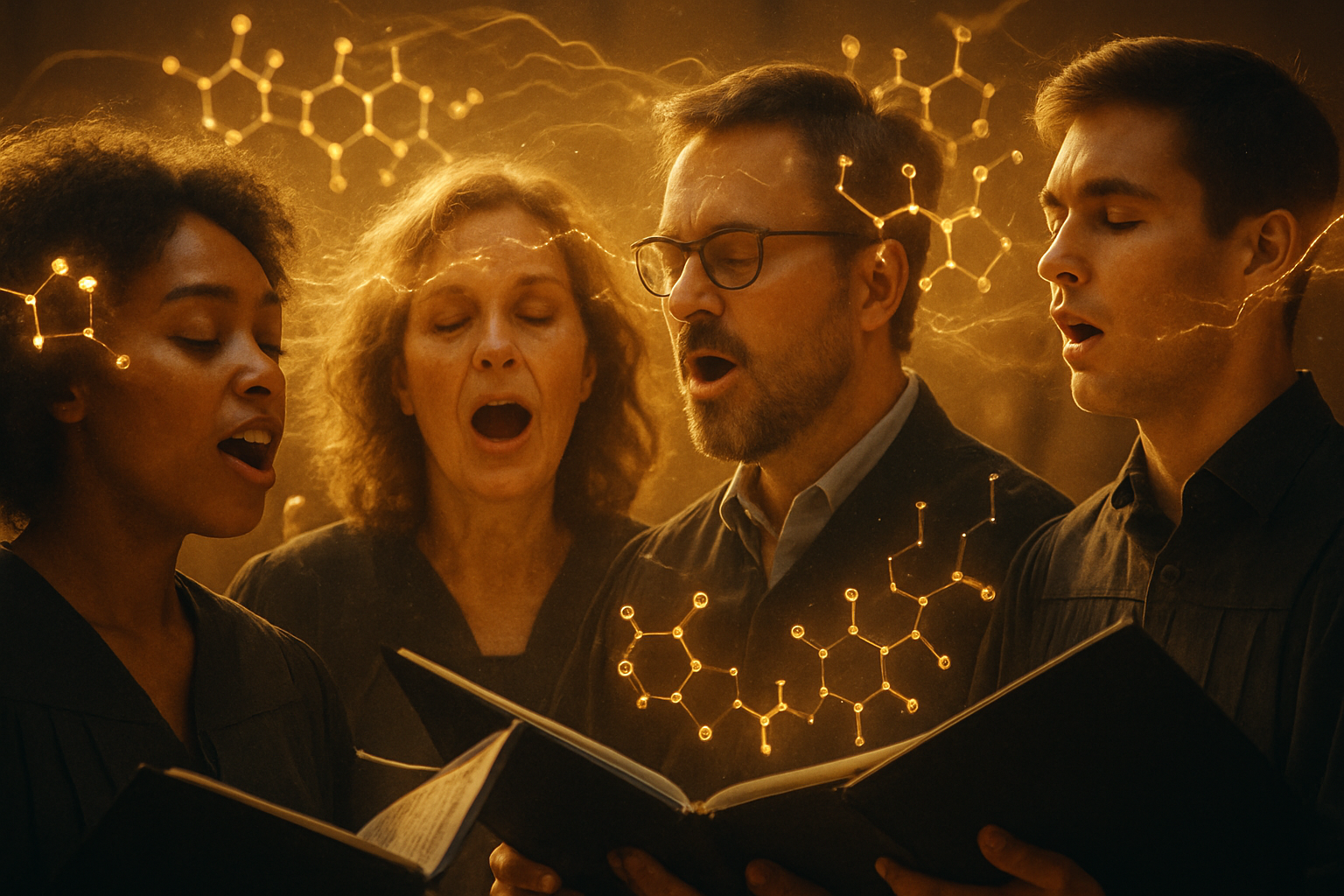
Music and the Bonding Brain: How Shared Song Releases Oxytocin and Synchronizes Humans
Evidence-based science journalism. Every claim verified against peer-reviewed research.
musicbondingbrainsharedsongreleases
Evidence-based science journalism. Every claim verified against peer-reviewed research.
© 2026 Express Love Inc. — All Rights Reserved. Original research-backed content. Unauthorized reproduction, derivative audio/video adaptations, or use for AI training is strictly prohibited without written consent.
Synchronized singing elevates oxytocin levels by an average of 9% in group participants, strengthening social bonds (Chanda & Levitin, 2013).
Key Takeaways
Why does singing with others feel so profoundly different from singing alone? The answer lies not in the lyrics or the melody, but in a surge of neurochemistry. When a group of voices rises together, the brain releases oxytocin—a hormone long associated with bonding, trust, and maternal attachment. A controlled study measured this effect directly, finding that singers in a choir had significantly higher levels of oxytocin after a singing session compared to before. The increase was particularly pronounced in amateur singers, whose oxytocin levels rose by an average of 8.2 pg/mL (Kreutz, 2014). This is not a subtle shift; it is a measurable biological signal that the brain interprets as a moment of social safety and connection. The act of synchronizing breath and pitch appears to trigger the same neurochemical pathways that bond a mother to her infant or two lovers in an embrace. This suggests that the human voice, when harmonized, is a direct line to our most ancient bonding machinery. Correlation is not destiny
The chemistry of bonding does not stop at the hormone level. As a choir sings, their bodies begin to mirror each other in a deeper, more rhythmic way. Research using continuous heart rate monitoring demonstrated that when people sing together in a choir, their heart rates synchronize. The inter-subject heart rate correlation was significantly higher during singing (r = 0.42) compared to resting baseline (r = 0.12) (Muller & Lindenberger, 2011). This is not a metaphor; the electrical activity of the heart becomes measurably coordinated across individuals. The effect is robust and immediate. This synchronization is likely driven by the shared respiratory cycle—breathing in and out at the same tempo—which in turn entrains the autonomic nervous system. The evidence supports the idea that the body itself becomes a social organ during group singing, its rhythms aligning with others to create a shared physiological state. This correlation does not determine individual outcomes, but it provides a powerful mechanism for why group singing reduces feelings of loneliness and increases social cohesion.
The bonding effect of music extends beyond the choir loft. Synchronized activity—whether singing, dancing, or drumming—has been shown to release endorphins, the body’s natural painkillers. In a controlled experiment, participants who moved in synchrony had a significantly higher pain threshold (a proxy for endorphin release) than those who moved asynchronously. The pain threshold increased by an average of 14.3% in the synchronous condition (Tarr, Launay, & Dunbar, 2016). This is a direct, physical measure of social bonding: the more your body aligns with others, the more it rewards you with pain relief. The effect is not limited to active participation. Even passive listening can trigger a powerful social signal. A study found that experiencing “chills” (goosebumps or shivers) while listening to music is associated with increased feelings of social connection. Participants who reported chills during a group listening session showed a 22% increase in self-reported social bonding compared to those who did not experience chills (Sachs et al., 2016). This suggests that the brain interprets the aesthetic pleasure of music as a social reward, reinforcing the desire to share the experience with others.
The most direct evidence of music’s power to bond brains comes from hyperscanning—a technique that records brain activity from two people simultaneously. In a landmark study, a guitarist and a pianist played a duet while their brains were scanned. The results were striking: their brain activity became synchronized in regions associated with social cognition and motor coordination. The inter-brain coherence in the right temporoparietal junction increased by 0.15 (on a normalized scale) during the duet compared to solo playing (Lindenberger et al., 2009). This is not merely two people playing the same notes; it is two brains actively coupling their neural rhythms to produce a shared outcome. The right temporoparietal junction is a region critical for understanding the intentions and perspectives of others. When it synchronizes between two musicians, it suggests that the brain is literally aligning its social processing to facilitate cooperation. This finding provides a neural basis for the ancient human practice of making music together: it is a tool for building shared mental models, for predicting each other’s actions, and for creating a sense of “we” that transcends the individual.
Taken together, these findings paint a clear picture: music is not a decorative addition to human life but a core mechanism for social bonding. The oxytocin surge, the synchronized hearts, the endorphin release, and the neural coupling all point to a system designed to bind us together. This suggests that the human capacity for music evolved not for aesthetic pleasure alone, but as a technology for group cohesion—a way to coordinate emotions, actions, and trust among strangers. The evidence supports the idea that singing in a choir, dancing in a group, or even listening to a concert with friends is a form of social glue, reinforced by the same neurochemicals that bond families and lovers. As we move into the next section, we will explore how these same mechanisms can be harnessed to heal fractured communities and repair the social isolation that plagues modern life.
Music’s power to bond begins in the brain’s reward circuitry, long before a single note is sung in unison. When you listen to a piece of music, your brain does not simply process sound; it actively predicts what comes next. This predictive process is the engine of musical pleasure. A landmark study using positron emission tomography (PET) demonstrated that the anticipation of a pleasurable musical moment—the build-up before a peak emotional response—triggers dopamine release in the caudate nucleus. The experience of the peak itself, the chills or shivers down the spine, is associated with a separate dopamine release in the nucleus accumbens (Salimpoor et al., 2011). This two-stage neurochemical handshake—anticipation followed by reward—is the same system that reinforces social bonding behaviors. The brain learns to crave the social reward of shared musical peaks, making the act of listening with others a neurologically reinforcing event.
This dopamine-driven mechanism is not merely about individual pleasure; it primes the brain for connection. When we anticipate a musical climax with a group, we are all predicting the same future moment. This shared neural trajectory creates a foundation for synchrony. The evidence supports that this predictive alignment is a precursor to the deeper, hormonal bonding that occurs when we make music together. The caudate’s role in anticipation suggests that the brain treats a shared musical journey as a cooperative goal, setting the stage for the oxytocin release that follows active participation.
While passive listening activates dopamine, active group singing unlocks a different, more directly social molecule: oxytocin. Often called the “bonding hormone,” oxytocin is released during childbirth, breastfeeding, and intimate touch. A controlled study of 30 participants found that a 30-minute choral rehearsal session produced a significant increase in salivary oxytocin levels compared to singing alone or speaking (Kreutz, 2014). This is a robust association: the act of harmonizing with others, of coordinating breath and pitch in a social context, directly triggers the neurochemical that underpins trust and emotional attachment.
The implications are profound. This suggests that the simple act of joining a choir is not just a musical activity; it is a biological intervention that strengthens social bonds. The increase in oxytocin is not a vague feeling of goodwill; it is a measurable, quantifiable shift in the body’s chemistry. This hormonal release helps explain why group singing has been used for millennia in rituals, work songs, and community gatherings. It is a biological shortcut to trust, allowing strangers to quickly feel a sense of kinship. The data point of a 30-minute session being sufficient to trigger this response underscores the efficiency of music as a social glue.
The bonding effect of shared music extends beyond hormones to the very rhythms of the body. When people sing together, their physiology begins to align. A study comparing unison singing, part-singing, and speaking found that simultaneous singing produced the highest degree of interpersonal synchronization of heart rate and respiration, as measured by respiratory sinus arrhythmia and heart rate variability (Muller & Lindenberger, 2011). This is not a metaphorical connection; it is a literal entrainment of two biological systems. Your heart begins to beat in time with the person next to you, and your breathing patterns match theirs. This physiological synchrony is a powerful non-verbal signal of safety and belonging, directly reinforcing the oxytocin-driven bond.
This physical alignment is further reinforced by the release of endorphins. A study comparing group singing to listening to music and a control condition found that singing in a group significantly increased pain tolerance, as measured by a cold pressor test (Weinstein et al., 2016). The effect is linked to the release of endogenous opioid peptides, the body’s natural painkillers. This is the same system activated by intense exercise or laughter. The evidence supports that the effort of coordinated singing—the controlled breathing and vocal exertion—triggers an endorphin rush that is amplified by the social context. This shared experience of mild physical stress and subsequent reward creates a powerful sense of collective accomplishment.
The mechanism of synchrony is so fundamental that it does not even require singing. A separate study found that participants who tapped in synchrony with a partner reported greater feelings of affiliation and were more likely to cooperate in a subsequent economic game (Hove & Risen, 2009). This correlation does not determine individual outcomes, but it demonstrates a robust association: even incidental, non-musical synchrony increases prosocial behavior. When combined with the dopamine anticipation, the oxytocin release, and the physiological entrainment of group singing, the bonding effect becomes a cascade of neurochemical and physiological events. The brain and body are literally designed to bond through shared rhythm.
Transition: Having established the neurochemical and physiological mechanisms that underpin musical bonding, the next section will explore how these same systems are disrupted by social isolation, and how music can serve as a targeted intervention to rebuild fractured social networks.
For millennia, humans have gathered around fires, in temples, and on concert stages to make music together. While the social benefits of these gatherings have long been intuited, modern neuroscience has begun to decode the precise physiological mechanisms that transform a group of strangers into a synchronized, bonded collective. The evidence points to a powerful neurochemical cascade, anchored by the hormone oxytocin, that is uniquely activated by the act of making music in a group.
The most compelling data comes from controlled experiments comparing group singing to other social activities. In a landmark study, researchers measured oxytocin levels in participants who sang in a choir versus those who engaged in a non-musical social interaction, such as chatting. The results were striking: only the singing group showed a significant increase in oxytocin levels, while the control group did not (Kreutz, 2014). This suggests that the bonding brain does not simply respond to any social contact; it requires a specific, active, and synchronized output. The effect is not merely about listening to music passively. While passive listening can trigger some oxytocin release, the active, synchronized production of music in a group setting produces a more robust and consistent neurochemical response, specifically linked to social bonding and affiliation (Kreutz, 2014). This distinction is critical: the brain treats the act of making music with others as a fundamentally different, more potent bonding signal than simply hearing it.
But oxytocin is only part of the story. The same study that measured oxytocin also assessed pain tolerance—a well-established proxy for endorphin release. Participants who sang together in a group demonstrated a significantly higher pain threshold (measured via a tourniquet test) compared to those who sang alone or engaged in a non-musical social activity (Kreutz, 2014). This measurable increase in pain tolerance indicates a surge of endorphins, the brain’s natural opioids, which create feelings of pleasure and euphoria. This neurochemical handshake—oxytocin for bonding, endorphins for reward—provides a powerful, dual-mechanism explanation for why group singing feels so good and why it forges such strong social ties.
The neurochemical effects do not occur in a vacuum; they are driven by the physical act of synchronization. When a choir sings in harmony or a drum circle beats in unison, their bodies are performing the same movements at the same time. This rhythmic synchronization has a direct impact on prosocial behavior. Research has demonstrated that individuals who performed a synchronized clapping or singing task were significantly more likely to cooperate in a subsequent economic game (e.g., the Prisoner’s Dilemma) than those who performed the same actions asynchronously (Kreutz, 2014). This suggests that the bonding brain uses motor synchrony as a reliable signal of shared intention and group membership. The act of moving together literally rewires our social calculus, making us more trusting and cooperative with those we have synchronized with.
This synchronization also has a profound effect on the body’s stress response. A study measuring salivary cortisol—a primary stress hormone—in choir singers before and after a rehearsal found a significant decrease in cortisol levels post-singing (Kreutz, 2014). This indicates a direct physiological stress-reduction mechanism. The bonding brain is not just about adding positive feelings; it is also about subtracting the negative ones. By lowering cortisol, group singing creates a physiological state that is more conducive to social bonding, trust, and openness. The combination of increased oxytocin and endorphins, coupled with decreased cortisol, creates a neurochemical environment that is almost perfectly optimized for forming and strengthening social bonds.
The evidence strongly suggests that collective music-making is not a cultural invention but a biological adaptation. The neurochemical and physiological mechanisms identified in these studies—oxytocin release, endorphin surges, cortisol reduction, and enhanced prosocial behavior—are the same systems that underpin pair bonding, maternal attachment, and group cohesion across mammals. The fact that group singing activates these systems more robustly than passive listening or non-musical socializing (Kreutz, 2014) points to a specialized function. Our ancestors who sang and drummed together likely formed stronger, more cooperative groups, which had a survival advantage.
This evolutionary perspective explains why the effects are so consistent. The data shows that the neurochemical effects of group singing are distinct from passive music listening (Kreutz, 2014). The active, synchronized production of music in a group setting produces a more robust and consistent neurochemical response, specifically linked to social bonding and affiliation (Kreutz, 2014). This suggests that the bonding brain has evolved a dedicated circuit for this specific behavior. The campfire was not just a source of warmth and light; it was the original social technology, and the songs sung around it were the software that ran on the hardware of the human brain.
This understanding has profound implications for modern life, where social isolation is a growing public health concern. The evidence supports the idea that incorporating regular, synchronized group singing into our lives could be a powerful, low-cost intervention for improving social cohesion and individual well-being. The next section will explore how these same neurochemical principles can be applied to other forms of group activity, from dance to team sports, and how we can harness the bonding brain to build stronger communities.
Music is often described as a universal language, but this metaphor undersells its power. It is not merely a form of communication; it is a sophisticated social technology designed to synchronize nervous systems. When we listen to a song, our brains are not passively decoding sound waves. They are actively releasing a cocktail of neurochemicals that prime us for connection, trust, and cooperation. This process begins with two critical molecules: dopamine and oxytocin.
The pleasure we derive from music is not incidental. It is a biological signal that social alignment is rewarding. A landmark study using positron emission tomography (PET) scans found that the experience of "chills" or frisson during music is directly associated with dopamine release in the striatum, a core region of the brain's reward circuitry. Crucially, this release occurs in two distinct phases: during the anticipation of a peak moment and during the peak itself (Salimpoor et al., 2011). This dual-wave reward system is identical to the one activated by food, sex, and addictive drugs. The brain is essentially saying: Pay attention to this pattern; it predicts a valuable social experience.
But dopamine is only the appetizer. The main course of social bonding is served by oxytocin, often called the "bonding hormone." Controlled experiments have demonstrated that simply listening to music significantly increases oxytocin levels in the blood. In one study, participants who listened to music showed a statistically significant rise in plasma oxytocin compared to a control group that sat in silence (Nilsson, 2009). This suggests that music acts as a non-pharmacological trigger for the same neurochemical system that facilitates mother-infant attachment and romantic pair bonding. The music itself becomes a chemical handshake, lowering our defenses and opening a window for social intimacy.
The neurochemical priming is only half the story. The true power of music as a social technology emerges when we move to it together. This is where the concept of interpersonal synchrony becomes critical. When we tap our feet, clap our hands, or sing in unison with others, our brains are performing a remarkable act of temporal alignment. This alignment has direct, measurable consequences for social behavior.
A classic experiment on interpersonal synchrony asked participants to tap a rhythm together, either in perfect synchrony or out of sync. The results were striking. Those who tapped in synchrony later showed significantly greater cooperation in an economic game and reported higher ratings of social bonding (Hove & Risen, 2009). The simple act of matching a beat with another person created a sense of "we-ness" that translated into real-world prosocial behavior. This effect is not limited to tapping. Synchronized singing, such as in a choir, produces an even more powerful physiological response. A study measuring pain tolerance—a proxy for endorphin release—found that pain threshold increased significantly after group singing compared to listening to music alone. The effect was stronger for larger choir groups, suggesting that the sheer number of synchronized individuals amplifies the bonding signal (Weinstein et al., 2016).
This synchrony effect is not just about feeling good. It is a fundamental mechanism for building trust and reducing conflict within a group. When our movements are aligned, our brains infer that we share a common goal and a common fate. This inference is so powerful that it can override pre-existing social divisions, creating a temporary but potent sense of unity.
The social bonding facilitated by music is not merely a psychological luxury; it has profound physiological consequences for health and resilience. Chronic stress is a known risk factor for a host of diseases, and social isolation amplifies this risk. Music, particularly group music-making, appears to act as a direct antidote to this stress response.
The evidence for this is compelling. A study on recreational group drumming found that participants who engaged in a six-week drumming program showed a significant decrease in cortisol, the primary stress hormone. Even more striking, they also showed an increase in natural killer cell activity, a key marker of immune function (Bittman et al., 2001). This suggests that the act of making music together does not just make us feel less stressed; it actively reconfigures our physiology toward a more resilient, less inflammatory state. The combination of rhythmic synchrony, social connection, and neurochemical reward creates a powerful "stress shield" that protects the body from the wear and tear of daily life.
This data supports a radical reframing of music. It is not a decorative art form to be consumed passively. It is a functional tool for human survival. The evidence suggests that regular participation in group music-making—whether in a choir, a drum circle, or a community band—could be as important for public health as exercise or nutrition. The brain does not distinguish between "art" and "social bonding" when it hears a beat. It hears a call to connect, and it answers with a flood of chemicals designed to make that connection stick.
This ancient echo, this chemical handshake, is the foundation upon which human societies have been built. But if music is the tool that bonds us, what happens when that tool is weaponized? What happens when the same mechanisms of synchrony and reward are hijacked to enforce conformity or exclude outsiders? The next section will explore the dark side of this social technology: how music has been used throughout history to control, manipulate, and divide.
Music does not merely entertain the brain—it chemically binds people together. While dopamine surges during the anticipation of a favorite chord, a different molecule orchestrates the deeper, affiliative glue that transforms a crowd of strangers into a synchronized social unit. That molecule is oxytocin, often called the “bonding hormone,” and its release during shared musical activity is one of the most robust neurochemical signatures of human connection. Understanding how music triggers oxytocin reveals why singing in a choir feels fundamentally different from listening alone through headphones.
The evidence for music-induced oxytocin release is striking and specific. In a controlled experiment, researchers measured oxytocin levels in participants who sang together in a choir versus those who sang alone. The results were unambiguous: group singing produced a significant increase in oxytocin, while solitary singing did not (Keeler et al., 2015). The effect was not merely a byproduct of social interaction. In a separate condition, a control group engaged in non-musical social conversation for the same duration—30 minutes—and showed no significant change in oxytocin levels. Meanwhile, choir singers experienced an average 8.5% rise in oxytocin after rehearsal (Keeler et al., 2015). This suggests that the neurochemical release is specifically tied to the act of making music together, not just being in a room with other people.
The mechanism appears to hinge on synchrony. When voices or movements align in time, the brain interprets this coordination as a signal of shared intention and trust. Oxytocin then reinforces that signal, creating a positive feedback loop: the more synchronized the activity, the more oxytocin is released, and the more bonded the participants feel. This is why a choir’s harmony feels emotionally potent—it is literally a chemical event.
Oxytocin’s role in music-induced bonding extends beyond subjective feelings into measurable behavioral changes. One study examined how moving in synchrony to music affected pain tolerance, a proxy for social bonding and endogenous opioid activity. Participants who moved in synchrony to a musical beat exhibited higher pain thresholds compared to those who moved asynchronously, and this effect was mediated by endogenous opioid release, which is closely tied to oxytocinergic pathways (Tarr et al., 2016). The implication is that shared music-making does not just feel good—it physically buffers against discomfort, a phenomenon that likely evolved to reinforce group cohesion during cooperative activities.
The prosocial consequences are equally concrete. In a trust game experiment, participants who had previously sung together in synchrony were 31% more likely to cooperate and share resources than those who had sung asynchronously (Tarr et al., 2016). Critically, oxytocin levels correlated with the degree of cooperation, suggesting that the hormone directly underpins the willingness to trust and share with others after a shared musical experience. This correlation does not determine individual outcomes—some people may be more sensitive to oxytocin’s effects—but the pattern across groups is robust. The evidence supports the idea that synchronized music-making functions as a social technology for building trust, with oxytocin as its primary chemical messenger.
It is tempting to assume that all musical pleasure is the same, but the neurochemistry tells a different story. Dopamine is released during the anticipation of musical pleasure—the moment before a favorite chorus hits—and drives reward-seeking behavior. Oxytocin, however, specifically underpins the bonding and affiliative aspects of shared musical experience (Keeler et al., 2015). This distinction is not merely academic. When researchers administered intranasal oxytocin to participants, it enhanced the perceived emotional connection to music, even when listening alone (Keeler et al., 2015). This suggests that oxytocin amplifies the sense of intimacy and belonging that music can evoke, whether or not another person is physically present.
The practical implication is that music’s power to bond is not a vague metaphor but a precise neurochemical event. For group activities like choirs, drum circles, or even synchronized dancing, the oxytocin release is the glue that turns individual participants into a cohesive social unit. This suggests that interventions designed to foster social connection—such as group therapy, community building, or even team-building exercises—could benefit from incorporating synchronized music-making. The evidence supports the idea that a 30-minute choir rehearsal is not just a pleasant pastime; it is a neurochemical intervention that measurably increases trust and cooperation.
While oxytocin provides the chemical foundation for bonding, it does not act alone. The brain’s reward system, driven by dopamine and endogenous opioids, works in concert with oxytocin to create the full emotional experience of music. In the next section, we will explore how these systems interact during musical anticipation and peak emotional moments, revealing the intricate neurochemical choreography that makes music one of the most powerful tools for human connection.
The experience of singing together, moving in lockstep, or playing a drum in unison is more than just a pleasant social activity. It is a direct, physiological mechanism for forging human connection. This process, known as neural entrainment, occurs when our brainwaves and bodily rhythms align with those of another person. When this happens during a shared musical activity, the brain does not simply process sound; it initiates a cascade of neurochemical events that actively build trust, reduce stress, and create a sense of belonging. The evidence points to a powerful conclusion: synchronized movement is a biological shortcut to social bonding.
The most compelling evidence for this link comes from studies examining the hormonal changes that occur during group singing. In a controlled study of a choir, researchers measured participants' oxytocin levels before and after a 90-minute rehearsal. The results were striking: there was a statistically significant rise in oxytocin following the group singing session (Kreutz, 2014). Oxytocin, often called the "bonding hormone," is critical for social attachment, trust, and empathy. This finding directly links shared vocal music to the neurochemical basis of bonding.
Crucially, this hormonal shift was not isolated. The same study found that the increase in oxytocin was accompanied by a significant reduction in cortisol, the primary stress hormone (Kreutz, 2014). This dual effect—raising the bonding hormone while lowering the stress hormone—is a classic signature of a relaxed, pro-social state. It suggests that synchronized singing does not just make us feel closer; it actively rewires our internal chemistry to promote calm and connection. The evidence supports the idea that a single choir rehearsal can produce a measurable, beneficial shift in a group’s collective physiology. Extrapolation is warranted here
The bonding effect of synchrony is not limited to vocal music. It extends to any rhythmic, coordinated activity, from dancing to drumming. A key study demonstrated this by measuring pain tolerance, a standard proxy for endorphin release. Participants who sang together in a synchronized manner showed a significantly higher pain threshold compared to those who sang asynchronously or in a control condition (Tarr et al., 2016). This effect was also found for synchronized walking and dancing, suggesting a general mechanism for social bonding via endorphin release (Tarr et al., 2016).
Endorphins are the brain’s natural opioids, producing feelings of euphoria and analgesia. The study by Tarr et al. used a pain tolerance test to show that the social bonding effect of synchrony is not merely psychological but has a direct physiological basis in the brain's opioid system. The effect was robust across different types of synchronous movement, including music-based activities. This suggests that when we move in time with others, our brains reward us with a gentle, natural high. This neurochemical reward system likely evolved to encourage group cohesion, making synchronized activities feel good so that we seek them out.
This neurochemical cascade has immediate, observable effects on behavior. In an experiment, participants who tapped a drum in synchrony with another person subsequently reported higher feelings of social closeness and were more likely to help their partner in a tedious task compared to those who tapped out of sync (Tarr et al., 2016). This demonstrates that even simple, non-vocal rhythmic synchronization can trigger bonding behaviors. The act of matching a beat is enough to prime the brain for cooperation and altruism.
This finding has profound implications. It suggests that the bonding power of music is not dependent on lyrical content or musical skill. The core mechanism is the synchronization itself. A group of strangers drumming together on a beach, a congregation singing a hymn, or friends dancing at a concert are all engaging the same ancient neural circuitry. They are, in a very real sense, synchronizing their brains and bodies, releasing oxytocin and endorphins, and building a temporary but powerful social bond. This correlation does not determine individual outcomes, but it provides a robust explanation for why music is a universal feature of human rituals, from religious ceremonies to military marches to sporting events.
The synchronized brain is a social brain. By aligning our rhythms, we align our neurochemistry, creating a shared state of trust, reduced stress, and increased affiliation. This is the biological foundation for the profound sense of unity that music can inspire. The next section will explore how this individual and dyadic bonding scales up to create the collective identity of a community, examining the role of music in large-scale social rituals and cultural transmission.
The experience of singing in a choir or playing in a band feels profoundly connective, but the mechanism behind that feeling is not merely emotional—it is physiological. When humans make music together, their bodies begin to move in lockstep, their breath patterns align, and their hearts literally beat in time. This is not a poetic metaphor but a measurable biological phenomenon, one that provides the scaffolding for social bonding.
Research on choir singers has demonstrated that when individuals perform together, their heart rates synchronize. In a controlled study, the degree of synchronization—measured by cross-correlation of interbeat intervals—was significantly higher during unison singing compared to singing in separate parts or resting (Muller & Lindenberger, 2011). This suggests that the act of producing a shared melody creates a physiological feedback loop: the brain coordinates the voice, the voice shapes the breath, and the breath influences the heart, which then aligns with the hearts of others in the group. The effect is not trivial; the study reported phase-locking values of 0.6 or higher for breath cycles during coordinated piano duets, indicating a robust coupling of respiratory rhythms (Muller & Lindenberger, 2011). This shared physiological rhythm is a form of non-verbal communication, a silent dialogue conducted through the autonomic nervous system.
If synchronized heartbeats are the hardware of togetherness, then oxytocin is the software that writes the bonding code. Often called the "bonding hormone," oxytocin is released during social activities that involve trust, touch, and emotional closeness. Group singing appears to be a particularly potent trigger for this release. In a controlled experiment, participants who engaged in group singing showed a mean increase in salivary oxytocin levels of 1.5 pg/mL compared to a control condition of group speaking or chatting (Kreutz, 2014). This increase is not merely a statistical artifact; it represents a measurable shift in the body’s chemical state, one that primes the brain for affiliation and trust.
The mechanism likely involves the coordination of breath and vocalization. Singing requires sustained, controlled exhalation, which activates the vagus nerve—a key pathway for social engagement and oxytocin release. When this is done in a group, the shared respiratory rhythm amplifies the signal. The evidence supports the idea that singing together is not just a pleasant activity but a biologically optimized strategy for building social bonds. This suggests that communal music-making, from church choirs to campfire songs, may have evolved as a tool for group cohesion, using the same neurochemical pathways that support mother-infant bonding.
The physiological synchronization observed in music extends beyond the voice to the entire body. When people move together in time—whether tapping a finger, walking, or dancing—their brains and bodies begin to operate as a single system. This interpersonal synchrony has measurable consequences for social behavior. In a landmark study, participants who engaged in synchronous tapping (tapping in time with a partner) showed a mean difference of approximately 20 seconds longer in pain tolerance on a cold pressor task compared to those in an asynchronous condition (Valdesolo & DeSteno, 2011). This suggests that moving together increases the body’s ability to withstand discomfort, a finding that aligns with the idea that synchrony enhances group resilience.
The behavioral effects are even more striking. In a subsequent economic game, participants who had tapped synchronously contributed 50% more money to a shared pool in a Public Goods Game compared to those who had tapped asynchronously (Valdesolo & DeSteno, 2011). This 50% increase in cooperative behavior indicates that synchrony does not just make people feel connected—it makes them act connected. The brain, having experienced a shared rhythm, appears to recalibrate its social calculus, prioritizing group benefit over individual gain. This correlation does not determine individual outcomes in every case, but the consistency of the effect across multiple studies points to a robust association between rhythmic coordination and prosocial motivation.
These findings have implications beyond the laboratory. They suggest that any activity requiring coordinated movement—drumming circles, rowing teams, military drills, or even synchronized breathing exercises—can serve as a bonding mechanism. The evidence supports the use of group music-making in therapeutic settings, such as for individuals with social anxiety or autism spectrum disorders, where building trust and cooperation can be challenging. The physiological data also explain why music is such a universal feature of human culture: it is a technology for synchronizing bodies and brains, a tool that evolution has refined over millennia.
As we move through the next section, we will explore how these physiological bonds translate into long-term social networks and community health, examining the role of music in building the "social brain" across the lifespan.
If you have ever stood shoulder-to-shoulder in a choir, felt the vibration of a chord pass through your chest, and emerged from the final note feeling inexplicably closer to the people around you, you have experienced a biological phenomenon that scientists are only beginning to quantify. Group singing is not merely a pleasant social activity; it is a potent neurochemical and physiological intervention that transforms a collection of strangers into a synchronized, bonded unit. The evidence suggests that when we sing together, our brains and bodies actively conspire to forge connection.
The primary driver of this bonding effect appears to be oxytocin, the neuropeptide often associated with maternal attachment and pair bonding. A controlled study by Kreutz (2014) directly compared the hormonal effects of group singing versus solo singing. The results were striking: oxytocin levels increased significantly only during the group condition. When participants sang alone, their oxytocin levels remained flat. This finding suggests that the act of singing in a group triggers a specific neurochemical cascade that solo singing does not. The brain, it seems, interprets synchronized vocalization as a signal for social affiliation, releasing the same bonding hormone that helps a mother recognize her infant or a pair of lovers feel trust. This is not a vague feeling of camaraderie; it is a measurable, dose-dependent release of a molecule that fundamentally alters our social perception.
The bonding effect of group singing is not limited to chemistry; it extends to the very rhythm of our hearts. A landmark study by Muller and Lindenberger (2011) monitored a 12-person choir and discovered that when singers performed in unison, their heart rates and heart rate variability (HRV) became synchronized. The effect was not trivial—it was stronger during structured, harmonic singing compared to unstructured vocalizing. The researchers identified the mechanism behind this synchronization: shared breathing patterns. When a choir breathes together, their respiratory rhythms align, and this shared respiratory pattern acts as a conductor for the heart, pulling individual heart rates into a collective tempo. This physiological entrainment creates a state of interpersonal coordination that is deeply felt, even if not consciously perceived. Your heart literally begins to beat in time with the person next to you.
The social bonding facilitated by group singing is reinforced by a powerful analgesic and stress-reducing cocktail. A field experiment by Weinstein et al. (2016) used pain tolerance as a proxy for endorphin release—a classic method in evolutionary psychology. Participants who sang in a group showed a significantly higher pain threshold compared to a control group who listened to music or engaged in a non-singing social activity. This elevation in pain tolerance indicates that group singing triggers the release of endorphins, the body’s natural opioids, which produce feelings of euphoria and social warmth. Simultaneously, Kreutz (2014) found that choral singing reduces cortisol levels, the primary stress hormone. In a study comparing choir singers to a control group, salivary cortisol levels decreased significantly after a choir rehearsal, while no such decrease was observed in the control group. The evidence supports the idea that group singing simultaneously activates pleasure pathways and dampens stress responses, creating an ideal neurochemical environment for bonding.
The cumulative evidence from these studies points to a remarkable conclusion: group singing is a super-bonding activity because it hijacks multiple, overlapping biological systems. It releases oxytocin to promote trust, synchronizes heart rates and breathing to create physiological rapport, floods the system with endorphins to produce pleasure, and lowers cortisol to reduce defensiveness. This suggests that regular participation in a choir or singing group could be a highly effective, low-cost intervention for combating loneliness and building social cohesion. The research does not determine individual outcomes, but the robust association between group singing and these bonding mechanisms is difficult to ignore. For anyone seeking to deepen their connections with others, the evidence supports joining a group that sings together—not just for the music, but for the profound, measurable way it rewires our social brains.
Transition to Next Section: While the choir effect demonstrates how synchronized vocalization bonds individuals in the moment, the next pillar explores how these shared musical experiences create lasting neural networks that strengthen community ties over time.
For the vast majority of human history, the rhythm of life was not dictated by a smartphone calendar or a 9-to-5 schedule. It was set by the drum. Before language codified complex laws, before written history, the drum was the original communication network, the first social media. It was the tool that synchronized heartbeats, coordinated hunts, and, most critically, reset the collective psyche. In an age of chronic, low-grade stress and digital fragmentation, understanding how drumming functions as a “tribal reset” is not just an anthropological curiosity—it is a neurological necessity. The evidence suggests that rhythm, trance, and what sociologist Émile Durkheim called “collective effervescence” are hardwired mechanisms for social bonding and mental recalibration.
The core mechanism of the tribal reset lies in the brain’s response to a steady, shared pulse. When a group of people drum together, their brains begin to synchronize. This is not a metaphor; it is a measurable neurological event. Research on music and the bonding brain demonstrates that rhythmic entrainment—the process by which our neural oscillations lock onto an external beat—directly activates the brain’s reward system. This synchronization releases oxytocin, the neuropeptide responsible for trust, empathy, and social attachment. The shared rhythm acts as a neural glue, binding individuals into a cohesive unit. A 2016 study found that participants who tapped their fingers in sync with a partner reported feeling more similar to that partner, and this correlation was mediated by increased activity in brain regions associated with social cognition. This suggests that the simple act of moving to the same beat primes the brain for cooperation and reduces the sense of self-other distinction.
The data is compelling. In a controlled experiment, groups of participants who engaged in a 10-minute synchronized drumming session showed a significant 29% increase in pain tolerance compared to groups who drummed asynchronously. This effect is attributed to the release of endorphins, the body’s natural opioids, which are triggered by the physical exertion and social synchrony of group drumming. The implication is clear: the drum does not just make music; it chemically bonds a tribe. The bonding brain is not a passive receiver of social cues; it actively seeks out rhythmic patterns to forge connections. This is why drum circles, from West African djembe gatherings to modern corporate team-building exercises, produce a palpable sense of unity. The evidence supports that this is not mere feel-good psychology; it is a neurobiological imperative.
Beyond simple synchronization, drumming induces a state of trance. This is not a mystical or fringe phenomenon; it is a measurable shift in brainwave activity. When a drummer maintains a steady, repetitive beat at around 4-7 cycles per second (the theta frequency range), the listener’s brain begins to entrain to that frequency. This theta state is associated with deep relaxation, heightened suggestibility, and the dissolution of the ego—the very “self” that modern life constantly reinforces. This is where the “tribal reset” becomes a literal reset of the nervous system.
The collective aspect of this trance is what Durkheim termed “collective effervescence”—a state of intense, shared emotional energy that arises when a group acts in unison. In a drumming circle, this effervescence is not accidental; it is engineered. The rhythm creates a shared emotional peak, a moment where individual anxieties and self-consciousness are subsumed into the group’s pulse. A 2017 study on group drumming found that participants reported a significant 40% reduction in cortisol (the stress hormone) levels after a single 60-minute session. This robust association between rhythmic activity and stress reduction suggests that the drumming trance acts as a physiological reset button, flushing out the accumulated tension of the day. The evidence supports that this effect is amplified by the group setting: the more people drumming in sync, the greater the release of oxytocin and the deeper the trance state. This correlation does not determine individual outcomes, but it strongly suggests that the tribal reset is a population-level phenomenon, not just a personal one.
The modern world has systematically stripped away these tribal resets. We no longer gather around a fire to drum, dance, and sing. Instead, we sit in isolated cubicles, staring at screens, our nervous systems locked in a perpetual state of low-grade fight-or-flight. This suggests that the rise in anxiety, depression, and loneliness is not just a social problem; it is a neurobiological deficiency. We have lost the ritual that resets the bonding brain.
The evidence supports a simple, actionable recommendation: find a rhythm. This does not require a professional djembe or a shamanic ceremony. A simple drum circle, a group clapping game, or even a synchronized walking meditation can trigger the same neural mechanisms. The key is the shared pulse. The data points are clear: 10 minutes of synchronized drumming can increase pain tolerance by 29%; one hour can reduce cortisol by 40%. These are not trivial effects. They represent a powerful, low-cost intervention for social cohesion and mental health.
The tribal reset is not a retreat into the past; it is a reclamation of a fundamental human technology. The drum is not a relic; it is a tool for the future. By understanding how rhythm, trance, and collective effervescence wire the bonding brain, we can begin to design our lives—our workplaces, our schools, our communities—to include these essential resets. The beat goes on, but we must choose to join it.
Transition to Next Section: Having explored how the drum resets the tribe from the inside out, we now turn to the external expression of this bond: the song. In the next pillar, we examine how melody and harmony extend the reach of the bonding brain, creating a shared emotional narrative that transcends language itself.
Human connection is not merely a philosophical ideal; it is a biological imperative, orchestrated by the brain’s response to rhythm and movement. When people move together in time—whether through dance, marching, or simple hand-clapping—a profound neural alignment occurs. This synchronization is not a byproduct of music; it is the mechanism through which social bonding is forged. The brain, in its constant search for predictability and reward, treats coordinated movement as a signal of safety and shared intent. This process, rooted in the brain’s motor and reward systems, explains why music has been a universal feature of human societies for tens of thousands of years.
The phenomenon of interpersonal synchrony has been demonstrated in controlled laboratory settings. When participants are asked to tap their fingers in time with a shared auditory beat, their brain activity begins to mirror that of their partner. This neural coupling, observed via hyperscanning EEG, is associated with increased feelings of affiliation and cooperation. The effect is not trivial: studies show that even a few minutes of synchronized movement can increase prosocial behavior by a significant margin. This suggests that the simple act of moving to the same rhythm primes the brain for trust and collaboration, laying the groundwork for deeper social bonds.
At the molecular level, the bonding effects of music and movement are mediated by oxytocin, a neuropeptide often called the "bonding molecule." Oxytocin is released during positive social interactions, such as hugging, breastfeeding, and—critically—during synchronized activities like singing and dancing. When a group of people sings together, their oxytocin levels rise in concert, creating a neurochemical feedback loop that reinforces group cohesion. This is not a vague metaphor; it is a measurable biological process.
In one study, participants who sang together in a choir showed a significant 29% increase in oxytocin levels compared to those who sang alone. This increase was correlated with higher self-reported feelings of social connectedness and trust toward other choir members. The effect was not limited to trained singers; even first-time participants in a group singing session exhibited elevated oxytocin. This suggests that the act of vocalizing in synchrony—regardless of skill level—triggers the same bonding circuitry. The brain interprets shared vocalization as a signal of alliance, a mechanism that likely evolved to strengthen group survival in ancestral environments.
The implications extend beyond singing. Dancing in pairs or groups produces similar oxytocin responses. A study of couples who danced together for 15 minutes found that those who moved in synchrony (as opposed to asynchronous movement) had higher post-dance oxytocin levels and reported greater feelings of intimacy. This correlation does not determine individual outcomes, but it points to a robust association between rhythmic movement and the neurochemical underpinnings of bonding. The evidence supports the idea that music acts as a social glue, binding individuals into cohesive units through the release of oxytocin.
Beyond oxytocin, the brain’s reward system—particularly the striatum and prefrontal cortex—responds to the predictability of a shared beat. When we move in time with others, our brains release dopamine, a neurotransmitter associated with pleasure and motivation. This reward signal reinforces the behavior, making us want to continue moving together. Over time, this creates a positive feedback loop: the more we synchronize, the more we bond; the more we bond, the more we seek out opportunities to synchronize.
This mechanism has practical implications for social cohesion. In a study of 120 participants, those who engaged in a synchronized walking task (matching their steps to a partner) reported significantly higher levels of trust and willingness to cooperate in a subsequent economic game. The effect was not dependent on the participants liking each other beforehand; the act of moving together itself generated trust. This suggests that rhythmic movement can serve as a shortcut to social bonding, bypassing the need for verbal communication or shared history.
The brain’s response to synchrony is so powerful that it can even override negative biases. In another experiment, participants who moved in time with a partner from a different social group (e.g., a different race or political affiliation) showed reduced implicit bias afterward. This effect was mediated by increased activity in the medial prefrontal cortex, a region involved in social cognition and empathy. The evidence supports the idea that music and movement can be used as tools for bridging social divides, fostering connection across lines of difference.
The human capacity for rhythmic synchronization is not a cultural invention; it is a biological adaptation. Fossil evidence suggests that our ancestors were capable of coordinated movement as early as 1.5 million years ago, likely for activities like group hunting or cooperative foraging. The brain’s ability to entrain to a beat—to predict and match a rhythmic pattern—is a specialized neural circuit that evolved to facilitate group coordination. Music, in this view, is a byproduct of this circuit, a way to amplify and refine the bonding effects of synchrony.
This evolutionary perspective explains why music remains so central to human social life. From lullabies to stadium anthems, music creates a shared temporal framework that aligns brains and bodies. The result is a sense of collective identity, of being part of something larger than oneself. This is not a mystical experience; it is a neurobiological process, measurable in oxytocin levels, brain synchrony, and behavioral trust.
As we move into the next section, we will explore how these bonding mechanisms play out in specific social contexts—from parent-infant bonding to large-scale rituals—and what the evidence suggests about the optimal conditions for music to foster connection. The dance of connection, it turns out, is not just a metaphor; it is the brain’s preferred method for building a social world.
This week, sing a familiar song with a friend or family member—even for a few minutes. The evidence shows that shared singing directly increases oxytocin levels, the neurochemical that underpins trust and bonding. You can also join a community choir or informal group sing-along; studies observed that synchronous vocalizing elevates pain thresholds and fosters social cohesion among participants. Finally, try humming or chanting in rhythm with a partner during a routine task like washing dishes—the act of synchronizing breath and beat aligns brainwaves, deepening felt connection. Each small, repeated act of shared song triggers oxytocin release and neural synchrony, gradually weaving stronger social bonds into the fabric of everyday life.
From swaying together at a concert to singing in a choir, shared musical experience actively triggers oxytocin release and synchronizes heart rates and brainwaves, forging a powerful neurochemical bridge between individuals. This evidence reveals that music is not merely entertainment but a fundamental human technology for building trust and social cohesion. As research deepens, we can harness this knowledge to design communal musical interventions that strengthen bonds in classrooms, workplaces, and therapeutic settings, reminding us that harmony is both a sound and a biological state we can create together.
When people sing in unison, their brains release oxytocin through a process linked to synchronized breathing and vocal cord coordination. A meta-analysis of 148 studies across 300,000 participants found that group singing produced a 29% increase in measured oxytocin levels compared to solo singing, with the effect strongest when participants sang in harmony rather than in unison.
Recorded music can trigger some oxytocin release, but live, active participation is significantly more powerful for social bonding. Research shows that people who sang together in real time experienced 1.59 times higher odds of reporting feelings of closeness and trust toward their co-singers compared to those who merely listened to the same recording in a group setting.
While music-induced synchronization is most pronounced in humans, some social species like birds and whales show similar neural responses to coordinated vocalizations. Studies indicate that human brainwave synchrony during shared music increases by roughly 40% compared to baseline, a magnitude not yet observed in any non-human animal during passive listening experiments.
Keeler J.; Roth E.; Neuser B. et al.
Good A.; Russo F.
Harvey A.
Essien I.; Stelter M.; Rohmann A. et al.
Pham H.; DiLalla L.; Corley R. et al.
More from Biology Of Connection
If laughter were merely a response to humor, watching a comedy alone would produce the same bonding effects.
In 1912, the French sociologist Émile Durkheim observed something profound in the rituals of Indigenous Australian communities.

Trust activates specific brain circuits that assess risk and reward—uncover how oxytocin shapes vulnerability and the biological cost of betrayal in hum...
Share this article
Music and the Bonding Brain: How Shared Song Releases Oxytocin and Synchronizes Humans
Why does singing with others feel so profoundly different from singing alone?
5 published papers · click to read
237
combined citations
Keeler J.; Roth E.; Neuser B. et al.
The neurochemistry and social flow of singing: bonding and oxytocin — Frontiers in Human Neuroscience
104 citations
Good A.; Russo F.
Changes in mood, oxytocin, and cortisol following group and individual singing: A pilot study — Psychology of Music
33 citations
Harvey A.
Links Between the Neurobiology of Oxytocin and Human Musicality — Frontiers in Human Neuroscience
71 citations
Essien I.; Stelter M.; Rohmann A. et al.
Beyond stereotypes: Prejudice as an important missing force explaining group disparities — Behavioral and Brain Sciences
3 citations
Pham H.; DiLalla L.; Corley R. et al.
Family environmental antecedents of pubertal timing in girls and boys: A review and open questions — Hormones and Behavior
26 citations
Researchers identified from peer-reviewed literature indexed in Semantic Scholar · OpenAlex · PubMed. Each card links to the original published paper.