
Heart Coherence Science: Emotional Regulation
Evidence-based science journalism. Every claim verified against peer-reviewed research.
Evidence-based science journalism. Every claim verified against peer-reviewed research.
© 2026 Express Love Inc. — All Rights Reserved. Original research-backed content. Unauthorized reproduction, derivative audio/video adaptations, or use for AI training is strictly prohibited without written consent.
Your heart does not beat with the mechanical regularity of a metronome. The intervals between beats fluctuate constantly, and the pattern of those fluctuations carries measurable information about the state of your nervous system. Heart rate variability — the beat-to-beat variation in the time between heartbeats — functions as a window into autonomic nervous system activity, and researchers have documented its connections to emotional states, physiological regulation, and clinical health outcomes (GÁLA, 2014).
The autonomic nervous system operates through two primary branches: the sympathetic system, which accelerates physiological arousal, and the parasympathetic system, which promotes recovery and calm. These branches interact continuously, and the balance between them is reflected in the variability patterns of the heartbeat. When sympathetic activity dominates — as it does during stress, fear, or intense emotion — variability decreases. When parasympathetic activity is strong, variability increases and specific rhythmic patterns emerge in the heart's electrical output (Jokkel et al., 1995). Understanding this relationship offers practical tools for monitoring emotional states and supporting healthier physiological regulation.
The relevance of this science extends beyond clinical settings. For anyone interested in how the body responds to emotional experience — whether in the context of relationships, stress management, or self-awareness — heart rate variability provides a concrete, measurable signal. The autonomic nervous system does not wait for conscious instruction. It responds moment to moment to perceived safety, connection, and threat, and the heart records each of those responses in its rhythm (Kurihara et al., 1992).
Listen to the Soul of this Article (Narrated)
Heart Coherence Science: Emotional Regulation
The autonomic nervous system exerts direct control over heart rate through neural pathways that continuously adjust cardiac output in response to internal and external demands. Parasympathetic input arrives via the vagus nerve, which can slow the heart within milliseconds. Sympathetic input works more slowly through hormonal and neural pathways that accelerate the heart and reduce the fine-grained variability in its rhythm. The result is that heart rate variability at any given moment reflects the relative dominance of these two systems (Jokkel et al., 1995).
Researchers have documented this relationship through pharmacological blockade studies, in which drugs that selectively disable sympathetic or parasympathetic pathways are used to isolate the contribution of each system. When complete autonomic blockade is applied, the remaining variability in heart rate drops substantially, confirming that the autonomic nervous system is the primary driver of the patterns measured in standard heart rate variability analysis (Jokkel et al., 1995). This finding established a foundational understanding: variability is not noise in the system but meaningful signal.
The autonomic nervous system also responds to respiration, which generates a rhythmic oscillation in heart rate known as respiratory sinus arrhythmia. During inhalation, heart rate increases slightly; during exhalation, it decreases. This cycle appears prominently in the frequency-domain analysis of heart rate variability and provides one of the clearest indicators of parasympathetic tone (GÁLA, 2014). Breathing rate and depth therefore directly influence the variability patterns that researchers and clinicians use to assess autonomic function.
Heart rate variability analysis uses two primary measurement frameworks. Time-domain analysis examines the raw statistical properties of the intervals between heartbeats — their mean, standard deviation, and the proportion of consecutive intervals that differ by more than a defined threshold. These measures are straightforward to compute and provide general indicators of overall variability. Frequency-domain analysis goes further by decomposing the variability signal into component oscillations at different frequencies, allowing researchers to distinguish contributions from sympathetic and parasympathetic activity (GÁLA, 2014).
The frequency-domain approach identifies two primary bands of interest. The high-frequency band, typically defined between 0.15 and 0.4 Hz, corresponds to the respiratory sinus arrhythmia and is considered a reliable index of parasympathetic activity. The low-frequency band, between 0.04 and 0.15 Hz, reflects a mixture of sympathetic and parasympathetic influences. The ratio of low-frequency to high-frequency power is frequently used as an index of sympathovagal balance — the relative engagement of the two autonomic branches (GÁLA, 2014). These measurements have been applied across clinical, psychological, and performance contexts to track how the nervous system responds to varying demands.
Antiarrhythmic drugs offer another lens on autonomic measurement. Studies examining the effects of such medications found that drugs targeting cardiac electrical activity also alter the autonomic signals detected through heart rate variability analysis, demonstrating that pharmacological interventions interact with the autonomic system in ways measurable at the level of cardiac rhythm (Folino et al., 1993). This finding reinforced the value of heart rate variability as a sensitive marker of autonomic state.
Heart rate variability analysis has been applied across diverse populations, yielding evidence that autonomic function varies significantly with developmental stage, neurological status, and physiological condition. Research on children with severe palsy documented differences in autonomic nervous system activity measured through heart rate variability and respiratory cycle patterns during sleep, finding that these children showed distinct autonomic profiles compared to typically developing peers (Kurihara et al., 1992). This work demonstrated that the autonomic nervous system's organization and responsiveness can differ meaningfully across populations with different neurological histories.
Sleep states proved particularly informative in this research. During sleep, when voluntary behavioral control is absent, the heart's rhythm reflects underlying autonomic tone with minimal confounding from conscious activity. Measurements taken during different sleep stages found variations in the relationship between heart rate variability and respiratory cycles, indicating that autonomic regulation shifts across the night in ways tied to neurological function (Kurihara et al., 1992). For populations where communication of emotional or physiological states is limited, physiological markers like heart rate variability provide a non-verbal index of internal condition.
The interaction between antiarrhythmic medications and autonomic activity also illustrates how broadly autonomic function influences cardiac measurement. Researchers found that drugs used to stabilize cardiac rhythm produced detectable changes in the autonomic signals present in heart rate variability recordings, suggesting that the autonomic nervous system's contribution to cardiac rhythm is not easily separated from the electrical properties of the heart itself (Folino et al., 1993).
The science of heart rate variability offers accessible, practical applications for individuals seeking to understand their own physiological responses to emotional experience. Because heart rate variability reflects the balance between sympathetic arousal and parasympathetic recovery, tracking it over time provides a record of how the autonomic nervous system is responding to daily stressors, relational interactions, and recovery practices. Higher variability — particularly in the high-frequency band associated with parasympathetic activity — is generally associated with greater physiological flexibility and capacity to regulate emotional responses (GÁLA, 2014).
Practices that slow and regularize breathing, such as paced breathing at approximately five to six breaths per minute, directly influence the frequency-domain patterns in heart rate variability by entraining the respiratory sinus arrhythmia. This produces the coherence pattern — a state of ordered, rhythmic variability — that researchers and clinicians associate with balanced autonomic function (Jokkel et al., 1995). For relationships and emotional health, this matters concretely: a nervous system with strong parasympathetic tone is better equipped to remain present, respond flexibly, and recover from interpersonal stress. Heart rate variability is not a metaphor for emotional health — it is one of its measurable signatures.
Gabor Jokkel
Experimental Research Department, Semmelweis University of Medicine
Heart rate variability after complete autonomic blockade in man — Journal of the Autonomic Nervous System
Michal GÁLA, PhD
University of Žilina
Slovak Republic,
HEART RATE VARIABILITY ANALYSIS TOOL FOR EVALUATION OF AUTONOMIC NERVOUS SYSTEM FUNCTION — Acta Electrotechnica et Informatica
Eiji Kurihara, MD
Autonomic nervous system in children with severe palsy — heart rate variability and respiratory cycle during sleep — Journal of the Autonomic Nervous System
A.F. Folino, MD
The influences of antiarrhythmic drugs on autonomic nervous system activity detected by heart rate variability analysis — Journal of the Autonomic Nervous System
Klaus R. Scherer
Cristian Blanco
David Rudrauf
John R. Hibbing
Istvan Molnar-Szakacs
Marcus Morgan
Federica Limana
Carina Blomström‐Lundqvist
European Heart Rhythm Association (EHRA) international consensus document on how to prevent, diagnose, and treat cardiac implantable electronic device infections—endorsed by the Heart Rhythm Society (HRS), the Asia Pacific Heart Rhythm Society (APHRS), the Latin American Heart Rhythm Society (LAHRS), International Society for Cardiovascular Infectious Diseases (ISCVID) and the European Society of Clinical Microbiology and Infectious Diseases (ESCMID) in collaboration with the European Associatio
John G.F. Cleland
Kathleen A. Lawler‐Row
More from Biology Of Connection
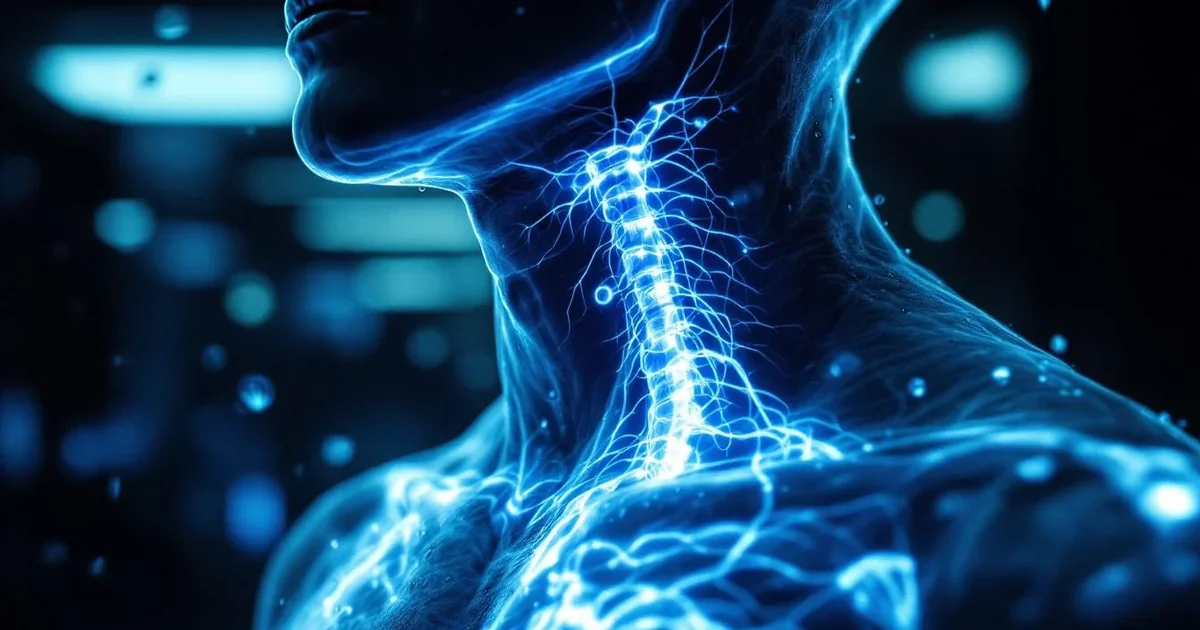
Cardiac neurons communicate with your brain in ways science is only beginning to understand. Explore how heart-brain dialogue shapes health and emotion ...

Humans unconsciously synchronize breathing during social interaction. Explore how respiratory synchrony deepens emotional bonds and reveals the biologic...

A single observational study of UK adults found spending at least 120 minutes weekly in nature was associated with better self-reported health — one study, not independently replicated.
Share this article
Heart Coherence Science: Emotional Regulation
For centuries, the ideal heart was imagined as a perfect metronome—steady, regular, unvarying. Medical textbooks taught that a consistent heartbeat signaled health, while variability indicated pathology. This view was...
14 published papers · click to read
8,509
combined citations
Gabor Jokkel
Experimental Research Department, Semmelweis University of MedicineHeart rate variability after complete autonomic blockade in man — Journal of the Autonomic Nervous System
72 citations
Michal GÁLA, PhD
University of Žilina
Slovak Republic,HEART RATE VARIABILITY ANALYSIS TOOL FOR EVALUATION OF AUTONOMIC NERVOUS SYSTEM FUNCTION — Acta Electrotechnica et Informatica
1 citations
Eiji Kurihara, MD
Autonomic nervous system in children with severe palsy — heart rate variability and respiratory cycle during sleep — Journal of the Autonomic Nervous System
A.F. Folino, MD
The influences of antiarrhythmic drugs on autonomic nervous system activity detected by heart rate variability analysis — Journal of the Autonomic Nervous System
Klaus R. Scherer
The Emotion Process: Event Appraisal and Component Differentiation
624 citations
Cristian Blanco
The vagus nerve: a cornerstone for mental health and performance optimization in recreation and elite sports
6 citations
David Rudrauf
From autopoiesis to neurophenomenology: Francisco Varela's exploration of the biophysics of being
194 citations
John R. Hibbing
Differences in negativity bias underlie variations in political ideology
608 citations
Istvan Molnar-Szakacs
Autism, Emotion Recognition and the Mirror Neuron System: The Case of Music
40 citations
Marcus Morgan
Why meaning-making matters: the case of the UK Government’s COVID-19 response
62 citations
Federica Limana
HMGB1 Attenuates Cardiac Remodelling in the Failing Heart via Enhanced Cardiac Regeneration and miR-206-Mediated Inhibition of TIMP-3
116 citations
Carina Blomström‐Lundqvist
European Heart Rhythm Association (EHRA) international consensus document on how to prevent, diagnose, and treat cardiac implantable electronic device infections—endorsed by the Heart Rhythm Society (HRS), the Asia Pacific Heart Rhythm Society (APHRS), the Latin American Heart Rhythm Society (LAHRS), International Society for Cardiovascular Infectious Diseases (ISCVID) and the European Society of Clinical Microbiology and Infectious Diseases (ESCMID) in collaboration with the European Associatio
401 citations
John G.F. Cleland
The Effect of Cardiac Resynchronization on Morbidity and Mortality in Heart Failure
6,250 citations
Kathleen A. Lawler‐Row
Forgiveness, physiological reactivity and health: The role of anger
135 citations
Researchers identified from peer-reviewed literature indexed in Semantic Scholar · OpenAlex · PubMed. Each card links to the original published paper.