The Hidden World Beneath Our Feet
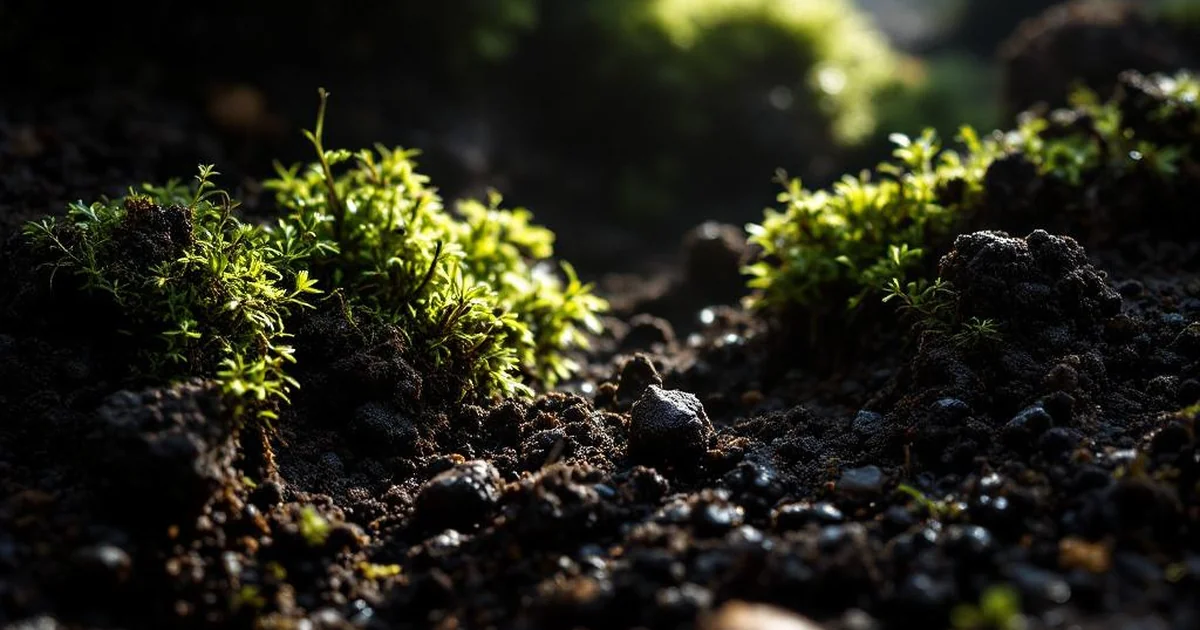
Step outside and look down. The ground beneath you is not inert dirt—it is a living, breathing universe. In a single teaspoon of healthy soil, more organisms exist than there are humans on Earth. This subsurface realm, with its intricate networks of fungal hyphae, bacterial colonies, and burrowing invertebrates, performs the quiet labor that sustains all terrestrial life. Yet we have been treating this living matrix as little more than a medium for plant roots, and the consequences are profound.
Land degradation now threatens food security, livelihoods, and biodiversity conservation on a global scale (10.1007/s12210-023-01155-3). The problem runs deeper than eroded topsoil. Decades of intensive agriculture, deforestation, and poor land management have disrupted the natural dynamic balance between mineral components, organic matter, and microorganisms that defines healthy soil (10.1007/s12210-023-01155-3). When we lose this balance, we lose the capacity for nutrient cycling, water filtration, and carbon storage that soils have provided for millennia.
The good news is that this damage is not permanent. By understanding the biological machinery of soil and applying evidence-based restoration techniques, we can reverse degradation and restore the hidden ecosystems beneath our feet. This is not about surface-level fixes. It is about rebuilding the living infrastructure that supports all life on land.
The Living Soil Matrix: A Delicate Biological Engine
Healthy soil is not a static substance but a dynamic system in constant biological conversation. Its composition—mineral particles, organic matter, water, air, and living organisms—exists in a carefully balanced equilibrium that has evolved over thousands of years. At the heart of this system lies the soil food web, a complex network of interactions where microorganisms play the starring role.
Soil microbiology is the engine that drives nutrient cycling, decomposes organic matter, and makes essential elements available to plants (10.3390/su7010988). Bacteria and fungi break down complex organic compounds, releasing nitrogen, phosphorus, and other nutrients in forms that plant roots can absorb. Mycorrhizal fungi form symbiotic partnerships with plant roots, extending their reach into the soil in exchange for carbon compounds. Protozoa and nematodes graze on bacteria, releasing nutrients in their waste. This microscopic metropolis operates with remarkable efficiency—when it is allowed to function properly.
The problem is that human pressures and poor land use systematically dismantle this biological infrastructure (10.1007/s12210-023-01155-3). Conventional agricultural practices are particularly destructive. Tillage tears apart fungal networks that have taken years to establish. Synthetic fertilizers disrupt the nutrient cycling relationships between plants and microbes. Pesticides kill beneficial organisms alongside target pests. The result is a cascade of degradation that extends far below the surface.
The specific impacts of conventional agriculture on soil health are well-documented and alarming. These practices increase soil compaction, making it harder for roots to penetrate and for water to infiltrate (10.3390/soilsystems6040087). They accelerate water erosion, washing away the nutrient-rich topsoil that took centuries to form. Salinization from irrigation and fertilizer application creates toxic conditions for soil organisms. Soil organic matter—the carbon-rich foundation of soil fertility—declines precipitously. Nutrient content drops, and soil biodiversity plummets (10.3390/soilsystems6040087). Each of these effects reinforces the others, creating a downward spiral that can take decades to reverse.
Understanding this biological machinery is the first step toward restoration. When we recognize that soil is not a chemical medium to be managed with inputs but a living system to be nurtured, the path forward becomes clear. We must work with soil biology, not against it.
Deep Soil Restoration: Moving Beyond Topsoil to Unlock Subsurface Regeneration
Conventional soil restoration focuses on the top six inches—the familiar dark layer where most gardeners and farmers work—but the real biological powerhouse extends far deeper. Restoring subsurface soil layers, which can reach depths of three feet or more, unlocks access to microbial communities, fungal networks, and mineral-cycling processes that topsoil restoration alone cannot activate. This distinction matters because deep soil layers store carbon, filter water, and host distinct microbial populations that operate on different timescales and respond to different restoration triggers than surface soil.
The mechanism is elegantly straightforward: when we apply restoration techniques only to topsoil, we're essentially capping a degraded system below. Deep compaction, depleted mineral reserves, and anaerobic zones in subsoil can persist untouched, limiting the vertical extent of root penetration and mycorrhizal networks. Research by Richter and Markewitz (2001) demonstrated that subsurface soil contains 50% of total soil carbon in many ecosystems, meaning restoration that ignores these depths leaves half the carbon storage potential dormant.
Beyond-topsoil techniques work by creating conditions for biological penetration downward. Deep-rooted cover crops, particularly perennials like alfalfa and comfrey, physically break compacted layers while their residues feed microbial communities at depth. Biochar amendments mixed into deeper soil layers provide stable carbon scaffolding where bacteria and fungi can establish long-term populations. Mycorrhizal fungi naturally extend hyphal networks three to four feet down when conditions allow, essentially creating underground highways for nutrient and water transport that rejuvenate previously isolated soil zones.
The transformation doesn't happen overnight—subsoil restoration typically requires 5-10 years of consistent practice—but the payoff compounds. When deep soil recovers its biological function, surface soil health stabilizes more durably because the entire soil column works as an integrated system. Roots grow deeper, water infiltrates further, and the soil's capacity to buffer climate stress multiplies.
The remaining sections of this article explore specific techniques designed to activate this deep restoration potential, moving from individual amendments to whole-system approaches that recognize soil as a living continuum rather than a two-dimensional surface.
Rebuilding with Organic Amendments: Feeding the Soil Food Web
Degraded or disturbed soils are characterized by a fundamental lack of organic matter compared to their undisturbed counterparts (10.4141/cjss2010-064). This organic matter deficit is both a symptom and a cause of degradation—without it, the soil food web cannot function, nutrient cycling stalls, and soil structure collapses. Restoring organic matter is therefore the foundation of any serious soil restoration effort.
Organic amendments offer a direct and effective way to rebuild this critical resource. These materials add carbon and nutrients to the soil while improving its physical structure, water-holding capacity, and biological activity (10.4141/cjss2010-064). When we add organic matter, we are not just fertilizing plants—we are feeding the entire soil ecosystem.
The range of effective organic amendments is surprisingly broad. Livestock manure has been used for millennia and remains one of the most accessible sources of organic matter and nutrients. Biosolids from wastewater treatment provide a concentrated source of stabilized organic carbon. Pulp and paper mill by-products, often considered industrial waste, can be excellent soil conditioners. Wood residuals—bark, sawdust, wood chips—decompose slowly, building long-term soil organic matter. Crop residues returned to the field after harvest recycle nutrients and maintain soil cover (10.4141/cjss2010-064).
The key is matching the amendment to the specific needs of the soil and the restoration goals. High-nitrogen materials like manure provide a quick nutrient boost, while high-carbon materials like wood chips build long-term organic matter. The biological response can be dramatic—within months of application, microbial populations rebound, earthworm activity increases, and soil structure begins to improve.
Forest Management for Carbon Sequestration: Protecting the Largest Terrestrial Carbon Sink
Forest soils are not just habitat for trees—they are one of the most important carbon reservoirs on Earth. Almost half of the total organic carbon in terrestrial ecosystems is stored in forest soils (10.1016/j.foreco.2020.118127). This carbon, accumulated over centuries through the decomposition of plant material and the activity of soil organisms, represents a critical buffer against climate change. How we manage forests determines whether this carbon stays in the ground or returns to the atmosphere.
Forest management activities have profound effects on soil carbon stocks, and these effects vary dramatically depending on context (10.1016/j.foreco.2020.118127). The table below summarizes the key findings from a comprehensive review of land-use change and forest management impacts on soil organic carbon.
| Previous Land Use | Forest Management Activity | Impact on Soil C Stocks |
|---|
| Cropland | Afforestation | Increase |
| Grassland/Peatland | Afforestation | Unchanged or Reduced |
| Primary Forest | Conversion to Secondary Forest | Reduction |
| Forest | Clear-cut Harvesting | Reduction |
The patterns reveal a nuanced picture. Afforestation of former croplands generally increases soil carbon stocks—the trees add organic matter to degraded agricultural soils, and the cessation of tillage allows soil structure to recover (10.1016/j.foreco.2020.118127). But afforestation of grasslands or peatlands tells a different story. In these ecosystems, the existing soil carbon stocks are already high, and planting trees can disturb the soil and release stored carbon, resulting in unchanged or reduced stocks.
The conversion of primary forests to secondary forests, especially when preceded by agricultural land-use, consistently reduces soil carbon stocks (10.1016/j.foreco.2020.118127). The mechanical disturbance of harvesting, the removal of biomass, and the exposure of soil to erosion all contribute to carbon losses. Clear-cut harvesting is particularly damaging, leading to significant reductions in soil carbon that can persist for decades.
For deep soil restoration, these findings have clear implications. Protecting existing forests—especially primary forests and those on organic soils—is the most effective strategy for maintaining soil carbon stocks. When restoration is the goal, context matters: afforestation of former croplands can be a powerful tool, but planting trees in grasslands or peatlands may do more harm than good.
Conservation Agriculture for Holistic Soil Health: A Systems Approach
Conventional agricultural practices have created a crisis of soil degradation, but a proven alternative exists. Conservation Agriculture (CA) is a sustainable farming system specifically designed to overcome the adverse effects of conventional practices on soil health (10.3390/soilsystems6040087). It represents a fundamental shift from treating soil as a medium to be exploited to nurturing it as a living system to be sustained.
Conservation Agriculture is built on three core principles: minimal soil disturbance, permanent soil cover, and crop rotation. Each principle directly addresses a specific pathway of degradation. Minimal soil disturbance—replacing tillage with direct seeding—preserves soil structure, protects fungal networks, and reduces erosion. Permanent soil cover, typically through crop residues or cover crops, shields the soil from rain impact, moderates temperature, and provides habitat for soil organisms. Crop rotation breaks pest cycles, improves nutrient cycling, and maintains soil biodiversity (10.3390/soilsystems6040087).
The evidence for CA's effectiveness is compelling. By eliminating tillage, CA prevents the compaction and structural degradation that plagues conventionally tilled soils. Permanent soil cover dramatically reduces water erosion, even on sloping land. The continuous input of organic matter from crop residues and cover crops rebuilds soil organic matter levels over time. Nutrient content improves as biological cycling replaces chemical inputs. And soil biodiversity—from bacteria to earthworms—rebounds as the habitat conditions that support them are restored (10.3390/soilsystems6040087).
The benefits extend beyond soil health. Conservation Agriculture can maintain or even increase crop yields while reducing input costs for fuel, fertilizer, and pesticides. It improves water infiltration and storage, making farms more resilient to drought. And it sequesters carbon in the soil, contributing to climate change mitigation. For farmers looking to restore their soil while maintaining productivity, CA offers a practical, evidence-based path forward.
Love In Action: Supporting the Hidden Life Beneath
The restoration of deep soil is not something that happens only on farms and in forests. Every person who touches the earth can contribute to the revival of subsurface biodiversity. Here is how to put this knowledge into action:
Feed the soil, not just the plants. In gardens and landscapes, apply organic amendments—compost, aged manure, leaf mulch—to build soil organic matter. Avoid synthetic fertilizers that bypass the soil food web and disrupt biological nutrient cycling.
Stop disturbing the soil. Minimize or eliminate tilling and digging. Use no-dig gardening methods that preserve soil structure and protect fungal networks. Walk on designated paths to prevent compaction.
Keep the soil covered. Mulch garden beds with wood chips, straw, or leaves. Plant cover crops in vegetable gardens during the off-season. Bare soil is eroding soil—always keep a protective layer on the surface.
Support sustainable land management. Choose food grown using conservation agriculture or regenerative practices. Advocate for policies that protect forests, especially primary forests and peatlands. Support research into soil biology and restoration techniques.
Each of these actions sends ripples through the soil food web. A single application of compost can support billions of microorganisms. A season without tillage allows fungal networks to reconnect. A covered soil surface protects the habitat of every creature beneath. The cumulative effect of millions of people making these choices is a planetary-scale restoration of the living skin of the Earth.
A Future Rooted in Healthy Soil
Deep soil restoration is not a luxury—it is a necessity for a thriving planet. The soil beneath our feet stores carbon, filters water, cycles nutrients, and supports the biodiversity that makes life possible. When we degrade it, we undermine the foundations of civilization. When we restore it, we build resilience against climate change, food insecurity, and biodiversity loss.
The science is clear: recovery is possible. Through organic amendments, thoughtful forest management, and conservation agriculture, we can reverse the damage of decades and rebuild the living infrastructure of the soil. The process is not quick—nature works on its own timescale—but it is certain. Every gram of organic matter returned to the soil, every fungal network allowed to regrow, every earthworm that tunnels through restored ground is a victory for the hidden world beneath our feet.
Beneath the surface, a revolution is already beginning. The soil remembers what it once was. With our help, it can become that again.